How To Tell Humpback, Southern Right And Blue Whales Apart On The Water
You cannot reliably judge a whale by shape, colour or blow from a moving deck. What you can do is use the calendar, the departure town and the species each operator names to narrow the possibilities before the boat leaves the ramp.
Short answer
From Dunsborough, operators name humpback and southern right whales from about August or September to November, blue whales from October onwards, and minke whales as a chance in October and November. Augusta cruises name southern right and humpback whales only. The month you sail and the town you leave from do most of the identifying work.
Whale identification from a boat is harder than the documentaries suggest. The animal surfaces for seconds, the boat is moving, the light is flat, and by the time you have lifted your camera the distinguishing moment is gone. Most confident identifications on a whale cruise do not come from passengers at all: they come from the crew, who read the animal's behaviour and position over several surfacings.
That does not leave you helpless. Three things narrow down what you are almost certainly looking at long before anyone shouts "whale ahead": the month you are sailing, the town you departed from, and the species the operator itself names for that trip. This guide works through those three filters for the Geographe Bay and Augusta cruises covered on this site, then gives you a set of questions to ask the crew on the day. It deliberately does not describe fins, blows, markings or body shapes: what follows is built only on what the operators and the official sources state, because a field guide's worth of half-remembered detail helps nobody on a rolling deck.
One point of law before anything else, because it shapes every sighting you will have. Western Australia's Biodiversity Conservation Regulations 2018 set approach distances, and they apply to every cruise discussed here. A person must stay at least 100 m from a whale; a vessel must stay at least 300 m from a whale within a 60 degree arc to the front or rear of the animal, and at least 100 m to the side. That distance affects identification too: at 100 m or more, judging size and shape is genuinely hard, which is one more reason the crew's call matters.
Which Whales Do Dunsborough Operators Actually Name?
The Dunsborough operators themselves name four whale species for Geographe Bay: humpback whales, southern right whales, blue whales from October onwards, and minke whales as a chance in October and November. Dolphins are also named as a regular presence at the bow wave. No other whale species is named on any Dunsborough cruise page covered here, and none should be expected.
That four-species shortlist is the single most useful identification tool you have. If a large whale surfaces off a Dunsborough cruise between August and November, it is one of those four, and the month usually cuts the list further. Blue whales are described by Naturaliste Charters as appearing "from October onwards", while All Sea Charters calls them "occasional". Minke whales are "chance encounters" in October and November on the Naturaliste page. Humpback and southern right whales are the backbone of the season, described by the operators as present in the bay from about mid-August or September through November.
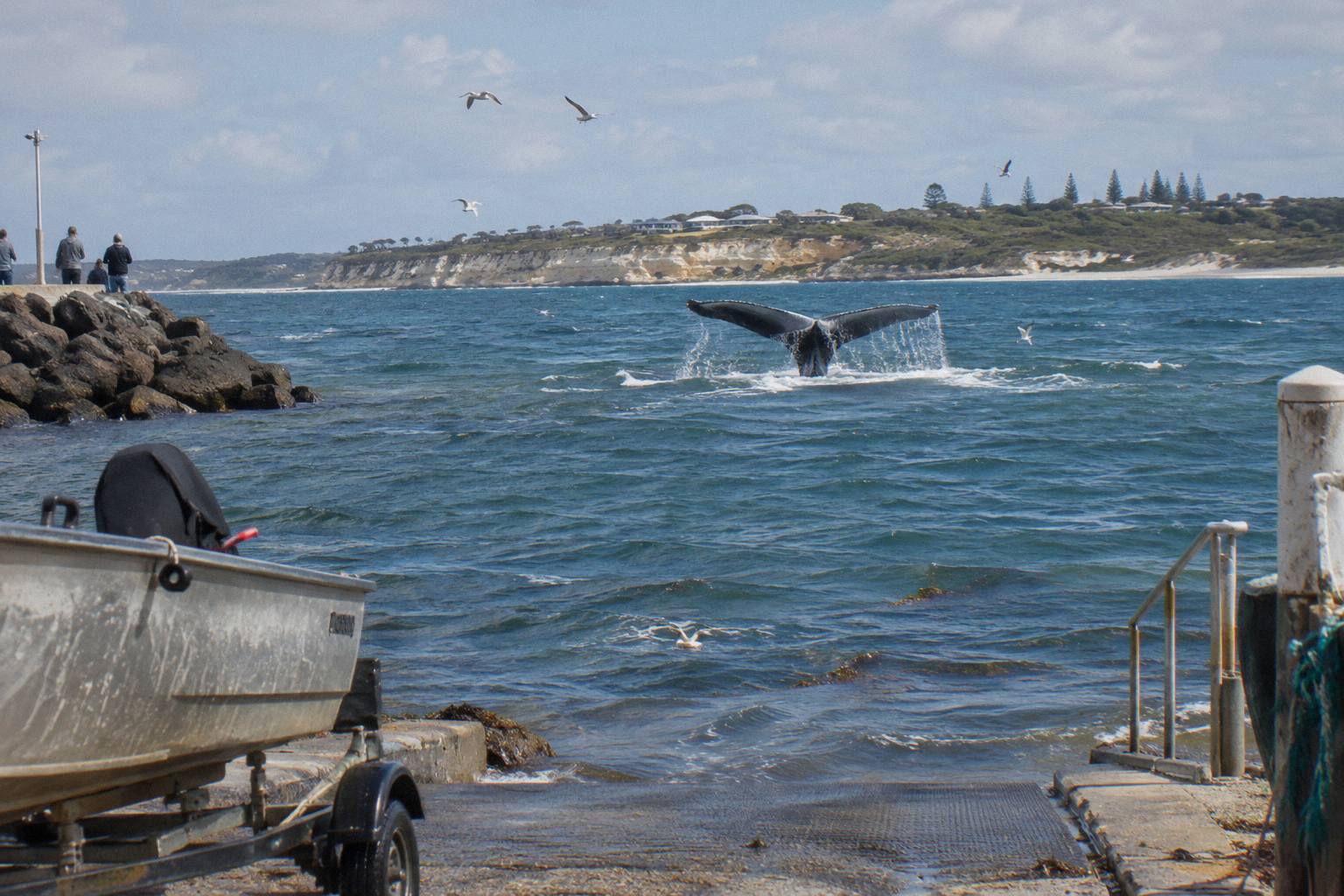
The southern right whale part of that mix has a biological reason behind it. The International Marine Mammal Habitat factsheet for the Geographe Bay and Eucla Shelf coastal waters notes that southern right whales breed and nurse in sheltered south coast waters including Geographe Bay, and the operators describe mothers and calves resting in the bay on the southward return leg of the migration. The Department of Biodiversity, Conservation and Attractions makes the same point about humpbacks beginning their southern migration past this coast. A calf alongside an adult, in late spring, close to shore, is the classic configuration the operators describe, though the species call on the day still belongs to the crew.
Here is what each operator's own pages state, species by species. This table is the identification shortlist in its most compact form, and it is worth screenshotting before you board.
| Operator and trip | Species named on the operator's own page | Timing stated |
|---|---|---|
| Naturaliste Charters, Dunsborough | Humpback, southern right, blue (from October), minke (October and November, "chance encounters"), dolphins often at the bow wave | Season August to November, "mid-August to the end of November" on the FAQ |
| All Sea Charters, Dunsborough | Humpback, southern right; blue whales "occasionally" | "Mid August to early December", with the main window stated as September to early November |
| Naturaliste Charters, Augusta | Southern right and humpback whales | From May to mid-August |
| All Sea Charters, Augusta | Southern right and humpback whales | May to mid-August |
Notice what is not in that table: any operator claiming a species outside those four. If a page, review or social post tells you to expect orcas or sperm whales from Geographe Bay, that is not coming from the operators covered here, and you should treat it accordingly. For a deeper look at the seasonal pattern, our Geographe Bay whale season month by month guide breaks the calendar down in full.
Humpback Vs Southern Right Whale: How Timing And Place Narrow It Down
Both species are named in Geographe Bay across the same broad window, roughly August or September to November, so month alone rarely separates them. What separates them more often is behaviour the crew will read aloud: the operators describe mothers and calves resting in the bay on the southern return, and southern right whales breed and nurse in sheltered south coast waters including this bay. Timing and place give you the probabilities; the crew gives you the verdict.
Start with the calendar. The Dunsborough season runs about August to the end of November. In the earlier weeks, roughly August into September, the animals moving through are predominantly northbound-then-turning humpbacks on migration past the Cape. From September onwards, and especially October and November, the operators describe the bay filling with resting groups: mothers with calves pausing on the southward journey. That behavioural context, a slow animal staying put near shore versus animals moving with purpose through the bay, is the strongest identification signal a passenger actually gets, and the crew narrates it in real time.
Place matters as much as month. Augusta, 90 km and roughly an hour and a quarter by road south of Dunsborough, runs its season from May to mid-August, before the Dunsborough season properly peaks, and its operators name southern right and humpback whales and nothing else. The two bays share species but not schedule. If you sailed Augusta in June and Dunsborough in October, you had two different whale experiences with overlapping species lists, and the month told you most of that before you booked.
For humpbacks specifically, our humpback whales in Geographe Bay guide covers the migration context, and the southern right whales on the Dunsborough coast guide does the same for the other half of the pair. The short version for identification purposes: in spring, late in the Dunsborough season, both species are legitimately possible on the same cruise, and the operators' own pages do not promise one over the other. Any cruise that names both, which both Dunsborough operators do, is being straight with you.
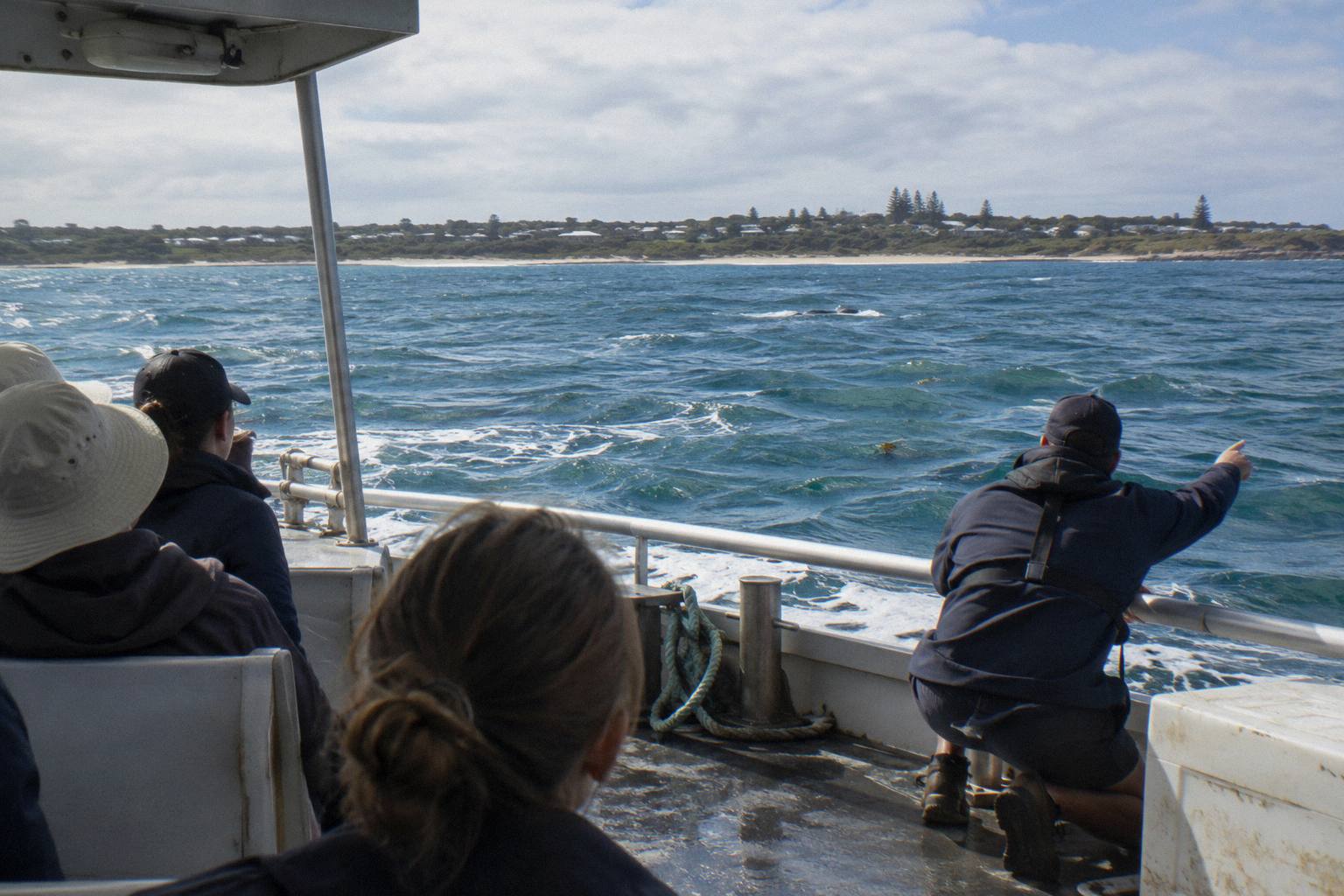
The honest answer to "which one was that?" is usually whatever the crew announced over the PA. The Augusta booking page for Naturaliste Charters lists expert commentary and a marine biologist on board for that trip; beyond that, the level of on-board expertise is not stated for every cruise, so ask when you book. That is not a dodge, it is how the information actually flows on the water.
Blue Whales: The Spring Variable In Geographe Bay
Blue whales are the third species on the Dunsborough shortlist, but they run on a later clock: Naturaliste Charters says "from October onwards", All Sea Charters says "occasionally", and the safe general wording is that blue whales pass through Geographe Bay in spring, mostly from October to December. A cruiser sailing August or September has effectively a two-species field; a cruiser sailing late October or November has three.
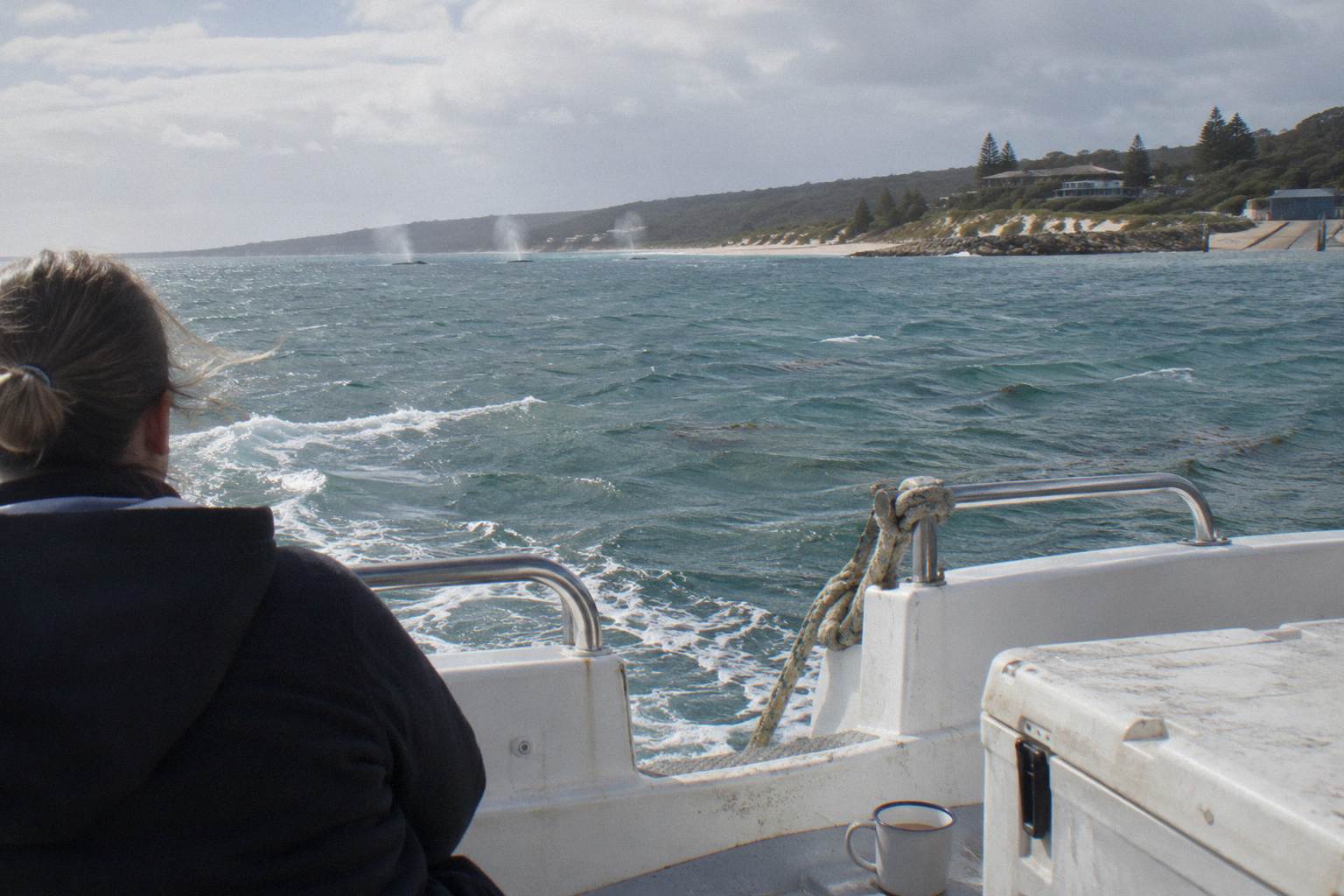
The blue whale story in this bay is real and documented, not marketing. The IMMA factsheet for these coastal waters states that "large numbers of pygmy blue whales ... with calves use Geographe Bay and the Naturaliste Plateau as a narrow transit corridor", gives the eastern Indian Ocean population estimate as 662 to 1,559 animals (McCauley and Jenner 2010), and lists the species as Endangered. A 2014 SouWEST and IFAW research report recorded blue whale song and sightings in Geographe Bay during November surveys. So the animals are here, in a defined spring window, and the operators' cautious wording tracks the research: October onwards, occasionally.
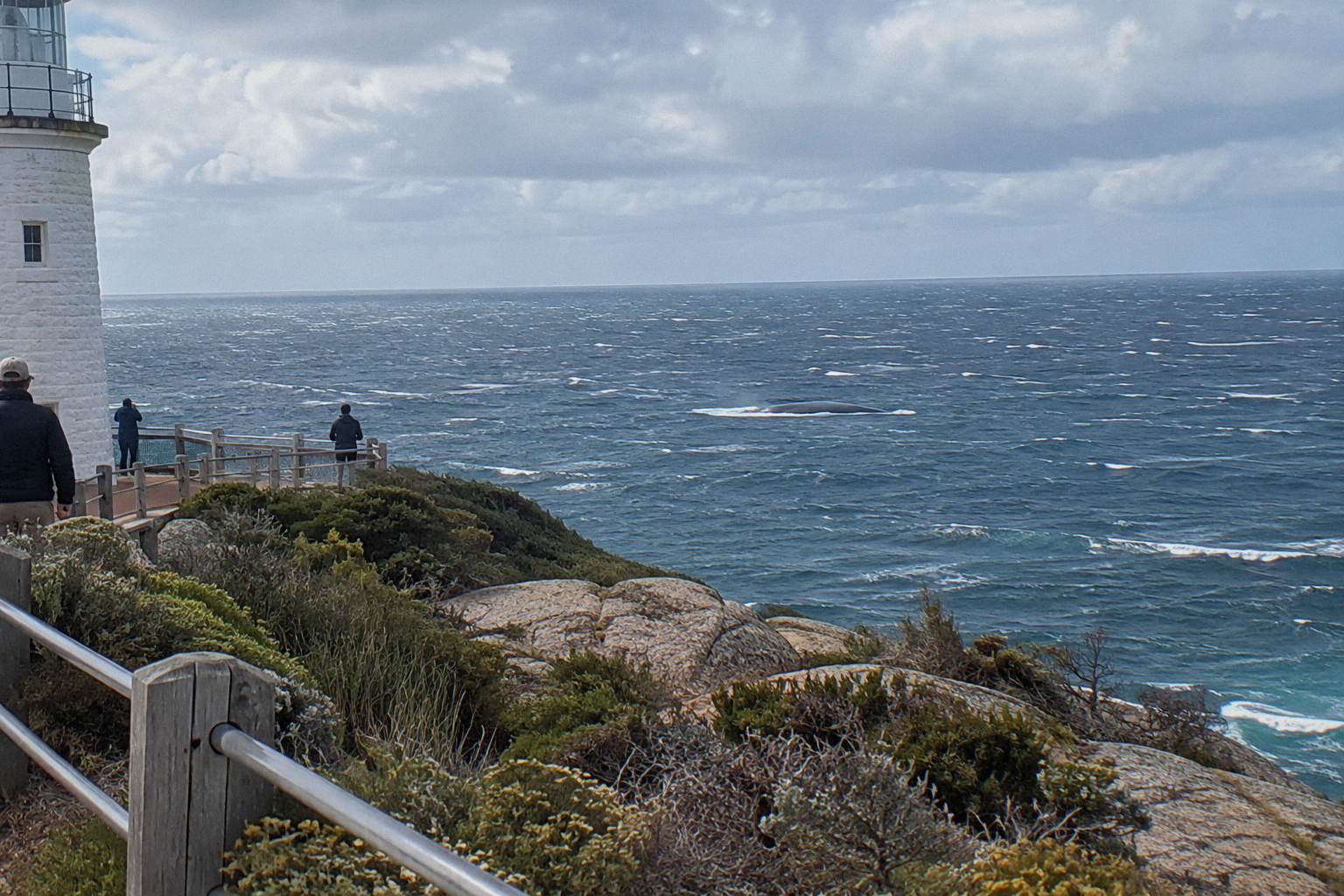
For identification purposes, blue whales are the one species where passengers most often get the call wrong, and the reason is the legal approach distance. At 100 m or more from the vessel, with an animal that surfaces briefly, most people see a back, a blow and a guess. The crew, who track surfacing intervals and direction over minutes, are far better placed. If a blue whale is announced, believe the announcement; if the crew says "large whale, working it out", accept that honesty. Our blue whales off the Naturaliste canyon page goes deeper on this species and why it is genuinely rare to see one.
If seeing a blue whale is the specific goal, the practical reading of everything above is: book late in the Dunsborough season, October or November, accept "occasionally" as the honest odds, and ask the office directly before booking how blue whale sightings have been running. That last part is a question, not a statistic, and no operator page covered here prints sighting rates you could rely on. For the pure probability question, our what are the odds of seeing a whale on a cruise post covers what is and is not promised.
Timing, then, is your first identification tool, and choosing a cruise is where it starts.
Augusta: A Different Bay With A Shorter, Simpler List
Augusta whale cruises name exactly two species, southern right and humpback whales, in a season that runs from May to mid-August. If you sailed from Augusta Boat Harbour, there is no blue whale variable and no minke chance on the operators' pages: the identification question collapses to one of two animals, which is why many first-time whale watchers find Augusta the easier classroom.
The Augusta season ends almost exactly where the Dunsborough season gets going, and that is not a coincidence: it is the same population of animals moving down the coast as winter turns to spring. Naturaliste Charters' Augusta trip departs daily at 10am and 2pm from Augusta Boat Harbour on Leeuwin Road, runs about 2 to 2.5 hours, and its booking page lists expert commentary and a marine biologist on board. The booking page shows AUD 71 per person, listed at 2 hours, with free cancellation up to 24 hours. It is rated 3.9 across 14 reviews, a small pool taken at face value, nothing more.
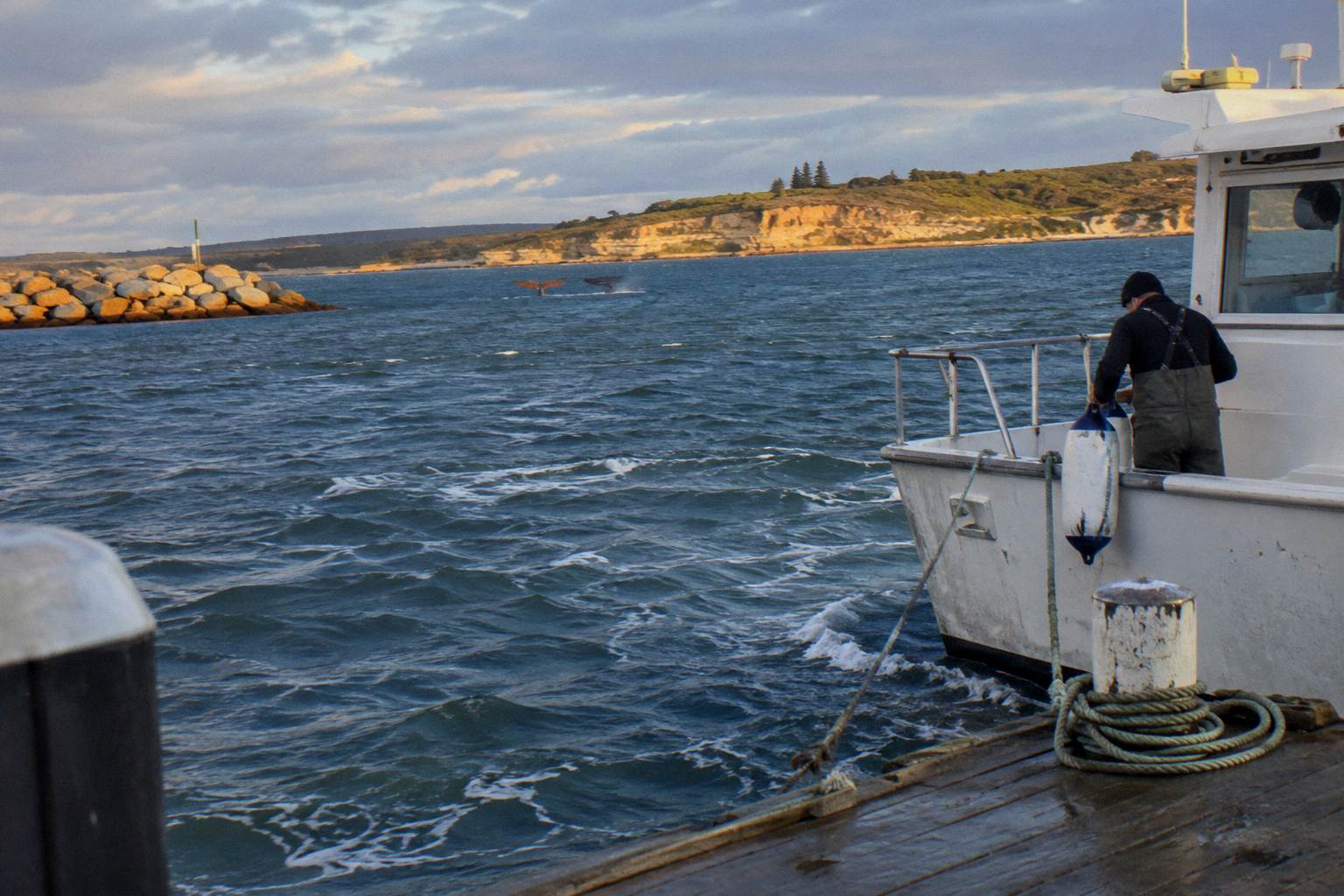
From Dunsborough, Augusta is about 90 km and 1 hour 10 minutes to 1 hour 30 minutes by road, so the two are plausibly combined in one south-west trip on different days. Travellers weighing the two towns against each other should read our Dunsborough or Augusta for a whale cruise comparison; the short identification-relevant point is that Augusta's shorter species list is a feature for a beginner, not a limitation.
One caution on geography, because the booking pages can blur it. The All Sea Charters cruise is sold with three departure options, Busselton, Augusta or Dunsborough, but Naturaliste Charters states plainly that its own tours no longer depart from Busselton. Species expectations do not change between the towns on the same operator's pages, but departure logistics do, and the two operators' Busselton situations are different. Our Busselton or Dunsborough for a whale cruise guide works through that choice in full.
What The Crew Can Tell You On The Day
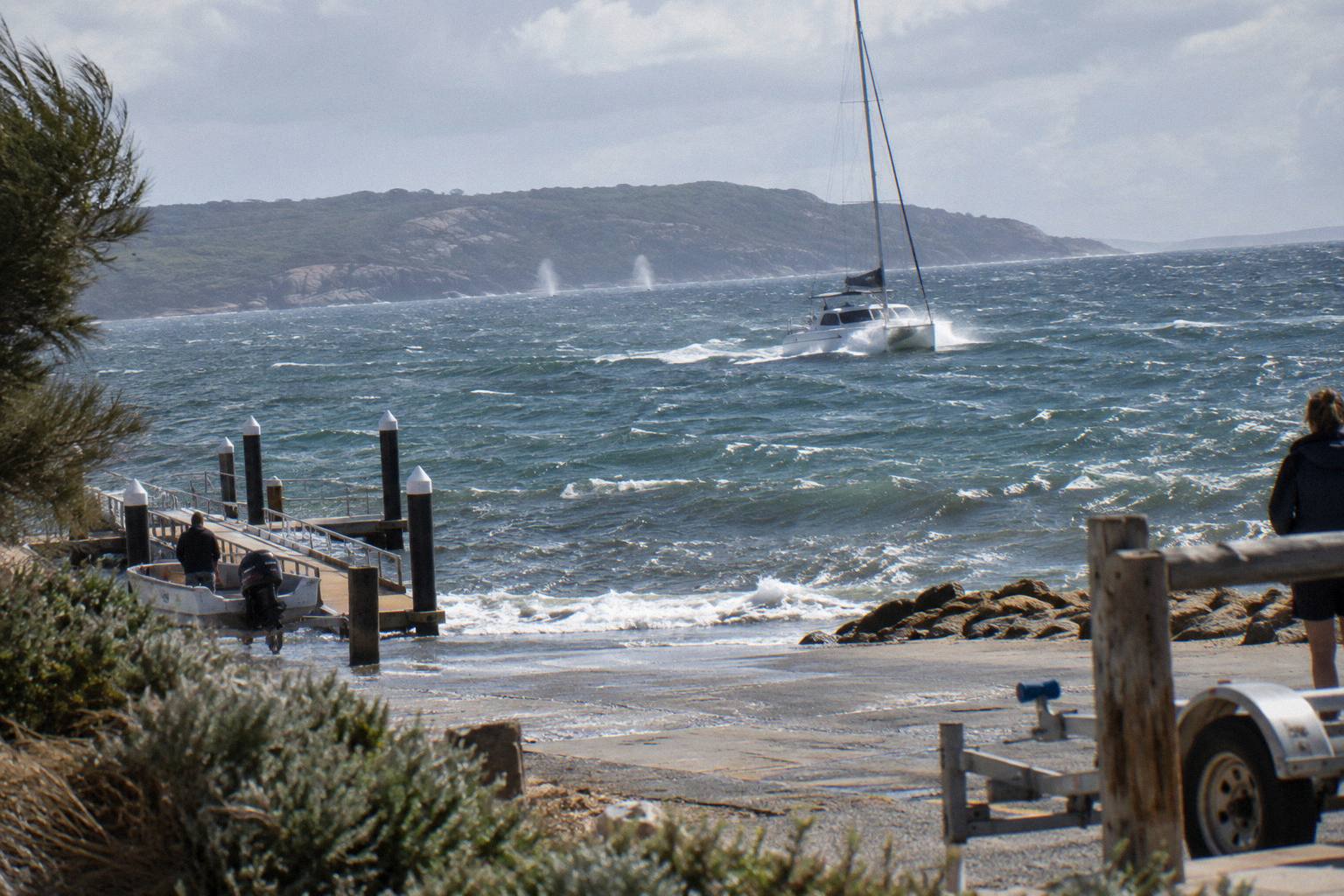
The species verdict on any cruise comes from the crew, not the passengers: skippers track surfacing intervals, direction and group composition over minutes, and announce what they conclude. Beyond Augusta's stated expert commentary and marine biologist on board, the level of on-board expertise on each cruise is not stated, so ask the operator at booking who narrates the trip and how identifications are called.
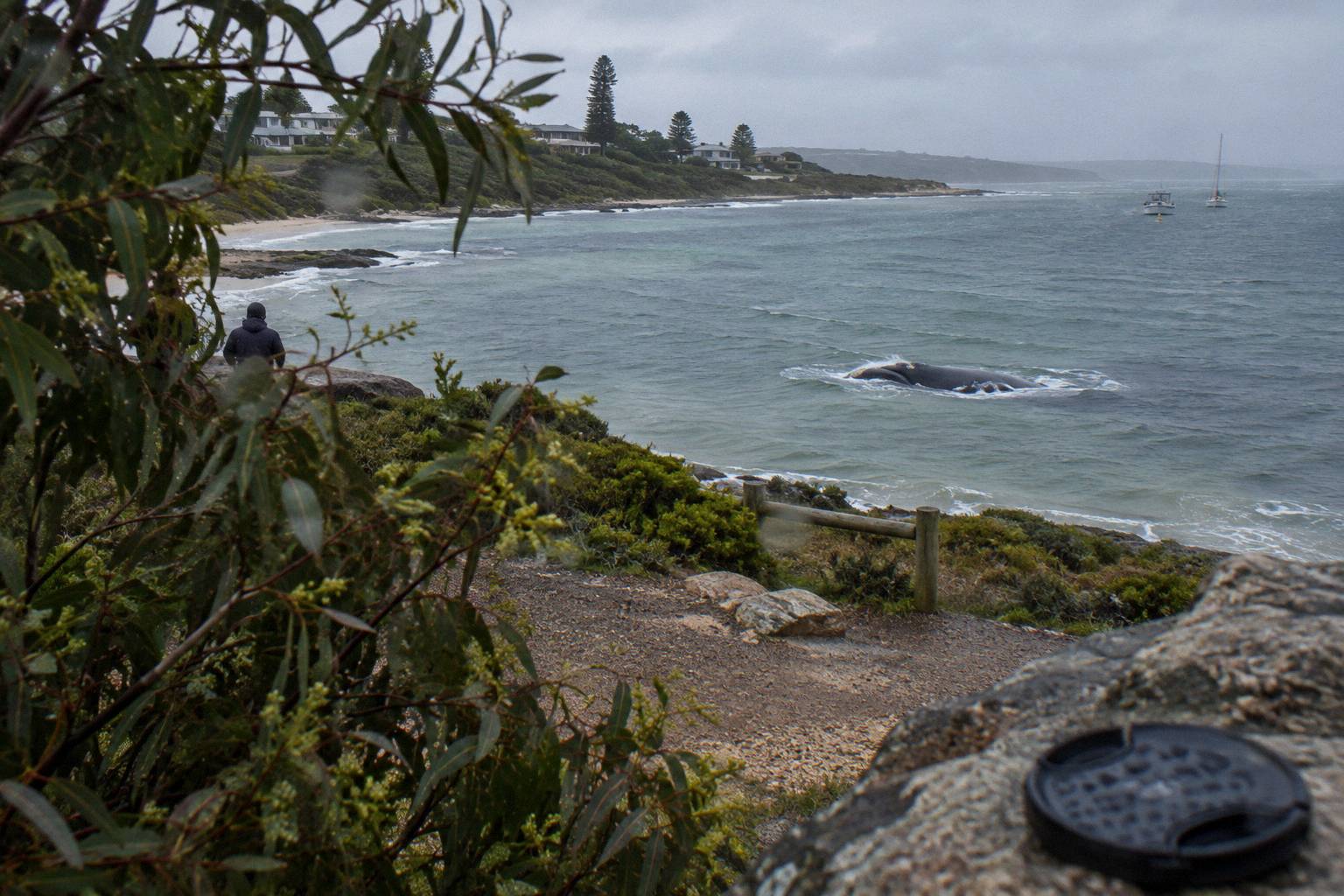
This is the part of whale identification no field guide covers, and it is the part that matters most from a moving deck. A crew member who has run the bay all season recognises individual animals, knows which mother-and-calf pairs have been resting in the bay, and can often tell you what you are looking at before it fully surfaces. Passengers see seconds; the crew sees the whole morning. On both Dunsborough operators' trips, that accumulated knowledge is the identification service you are implicitly buying.
So ask. Before you book, ask the office who commentates and what their background is. On the day, ask the deckhand what the animal is doing, not just what it is: "is it staying in the bay or moving through?" gets you the behavioural context the operators themselves use to describe the season. After a sighting, ask what sealed the identification. Crews on wildlife cruises generally enjoy the question, and the answer teaches you more than any checklist would.
There is also a question worth asking about what happens when nothing is sighted. All Sea Charters' own page states: "If whales are not seen on your first whale-watching cruise, you can come back for free another time," though the full terms are not printed on the page. Naturaliste Charters has a no-sighting policy page of its own; read it direct rather than relying on a summary. Our sighting guarantee and what it covers guide explains how these policies differ and what to check before you count on one.
The Distance Rules That Shape Every Sighting
Under WA's Biodiversity Conservation Regulations 2018, a person must stay at least 100 m from a whale and a vessel at least 300 m ahead of or behind one, and 100 m to the side; a drone must stay 60 m away. Staying closer is an offence carrying a fine of AUD 5,000. If a whale approaches, the skipper must cut to neutral or move away at no more than 6 knots.
These rules matter for identification as much as for safety. At the distances the law requires, the features a shore-based observer would use to separate species are compressed into brief glimpses, which is precisely why this guide leans on timing, place and crew knowledge instead of field marks. The rules also explain something passengers sometimes misread as disinterest: a boat that slows, drifts or turns away from a whale is complying with regulation 114, not abandoning the sighting.
| Who or what | Distance from a whale | Source |
|---|---|---|
| Person in the water | At least 100 m | Schedule 5, Biodiversity Conservation Regulations 2018 (WA) |
| Vessel, front or rear 60 degree arc | At least 300 m | Schedule 5 |
| Vessel, to the side | At least 100 m | Schedule 5 |
| Drone | At least 60 m | Schedule 5 |
| Person from a dolphin | At least 50 m | Schedule 5 |
| Vessel from a dolphin | At least 100 m | Schedule 5 |
The penalty for breaching the distances is a fine of AUD 5,000 under regulation 113. The official text lives in the legislation PDF on the WA legislation site, and it is the authority for every figure in the table above. Note that regulation 112 exempts activity authorised under a licence, which is how the licensed in-water humpback program at Ningaloo exists; that is a licence for a different coast, and no such swim is offered in Geographe Bay. The DBCA page on swimming with humpback whales states it plainly: under State legislation it is illegal for individuals to swim within 100 m of a whale, and licensed in-water humpback interactions happen only in Ningaloo Marine Park State waters and the Muiron Islands Marine Management Area.
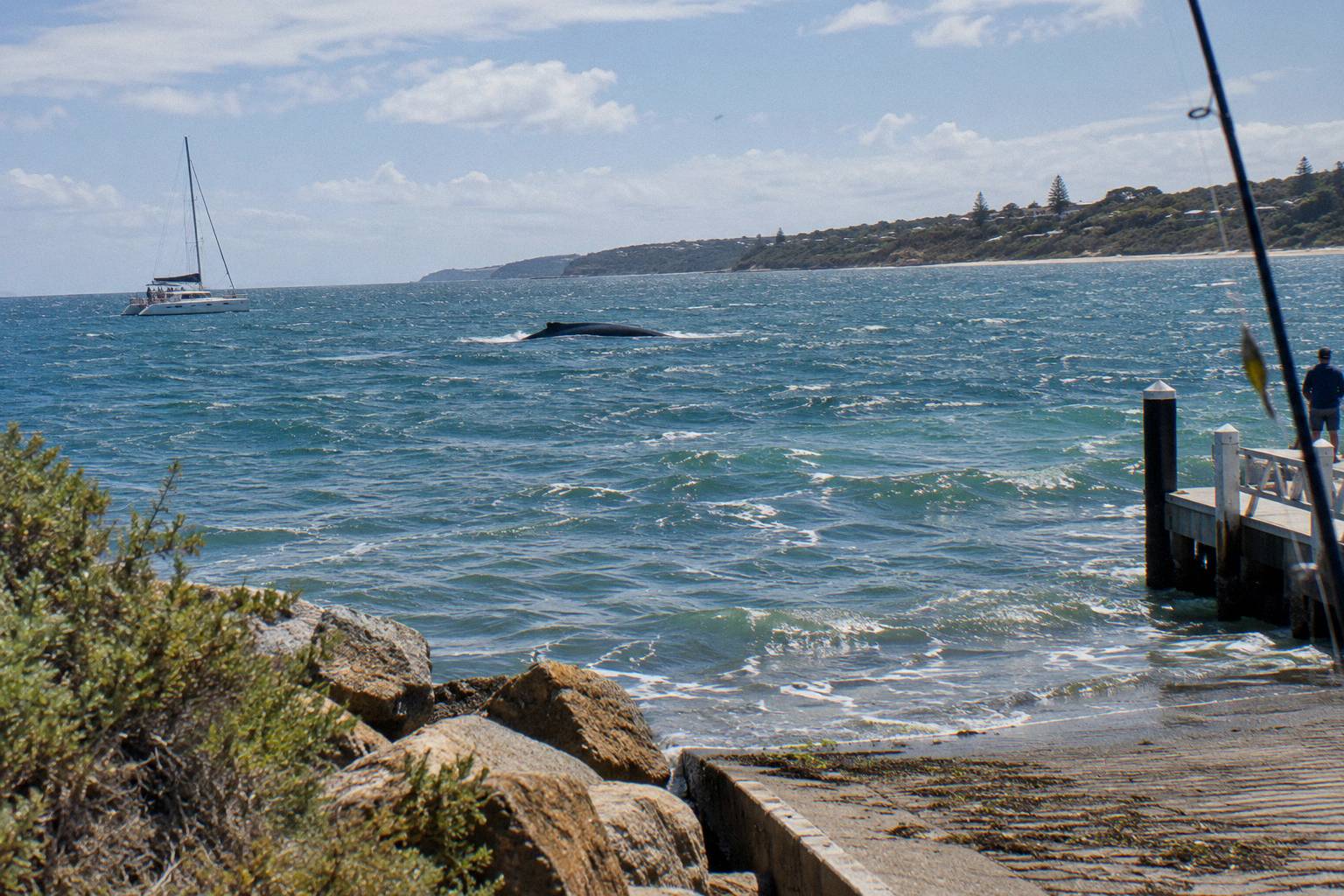
The operator side of this is deliberately quiet. Naturaliste Charters says only that its vessels keep "a specific distance" and prints no figure, so the numbers above are the law's, not the operator's promise. For the fuller treatment of how close the animals come to boats here, and whether whales ever approach within the rules, see how close can whale cruise boats legally get.
Which Cruise Suits Which Kind Of Whale Watcher?
A first-timer wanting the simplest species question should look at Augusta's two-species, May-to-mid-August season; a spring visitor chasing the three-species possibility should be in Dunsborough from October; a traveller wanting a wider wildlife context has land-based and eco options. The Dunsborough Whale Watching Tour With Naturaliste Charters, rated 4.7 across 137 reviews and showing AUD 71 per person on the booking page, is the featured pick for the classic bay cruise.
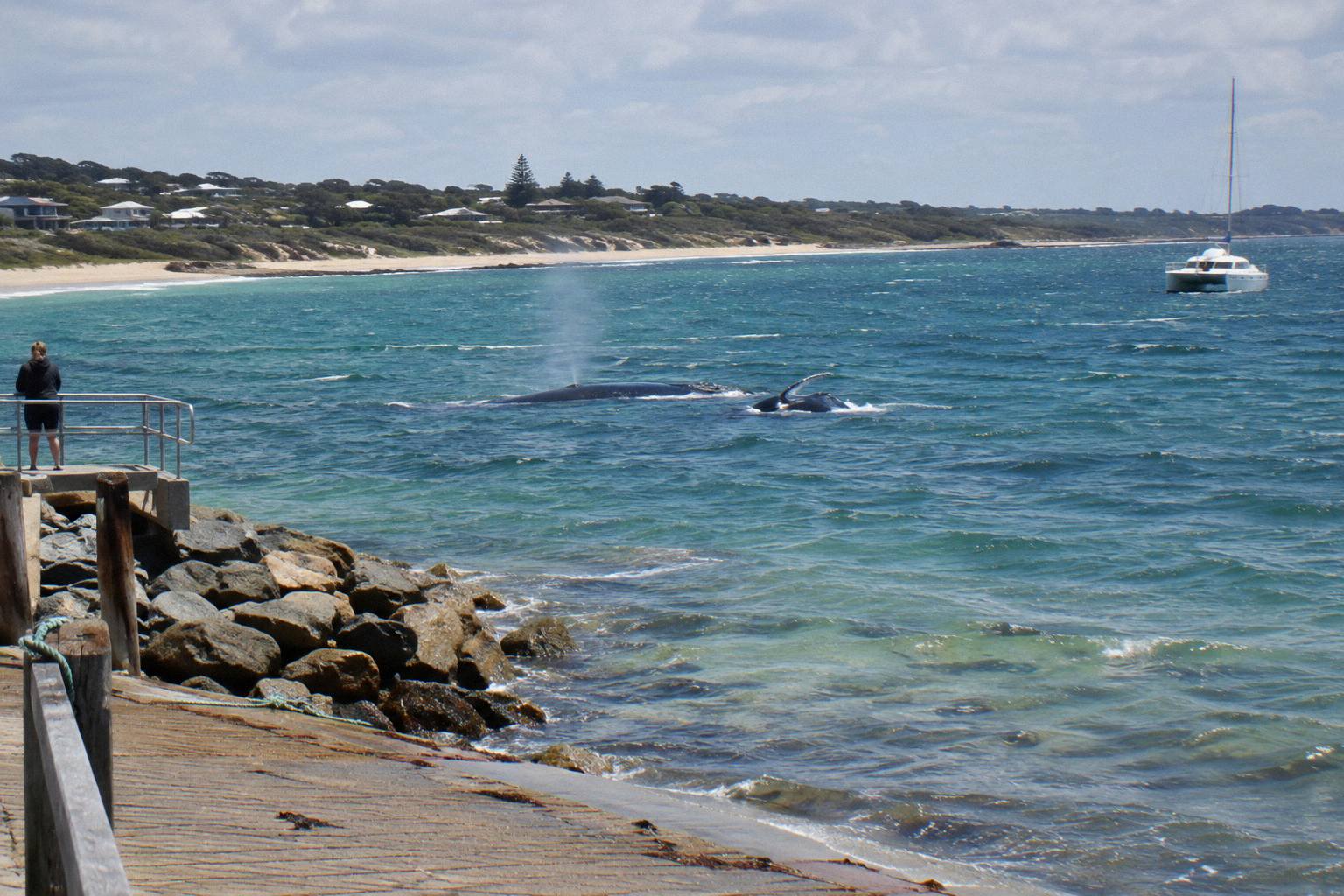
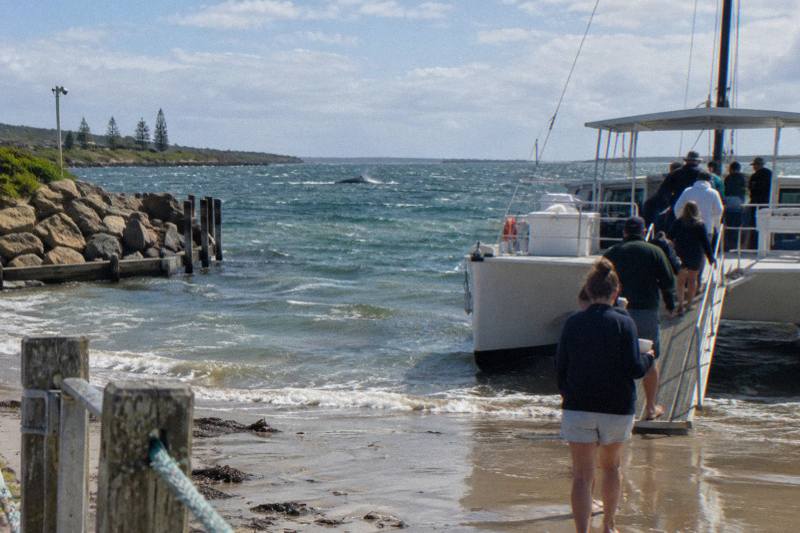
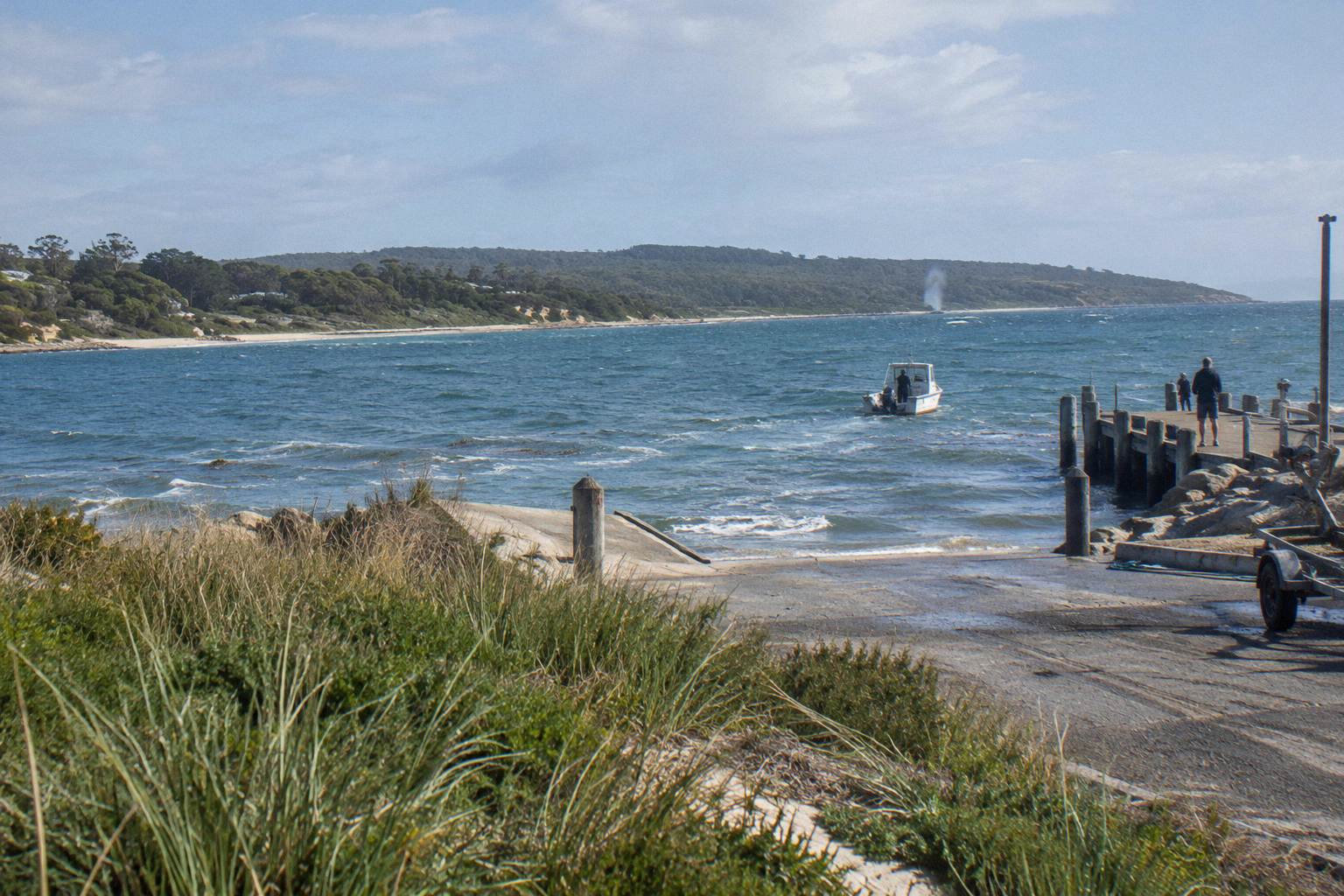
The featured tour is the one this site points most travellers at: a listed 2.5-hour cruise on the Alison Maree, a 23 m catamaran, boarding from the beach at the Quindalup ramp via a handrailed transfer boat, with morning or afternoon tea and a guided tour, daily at 10am and 2pm in a season running mid-August to the end of November. Free cancellation runs to 24 hours on the booking page, and the price shown there can change, so treat AUD 71 as the listed figure rather than a promise. The operator names all four Dunsborough species for the trip, which makes it the natural choice for the "which whale was that" traveller.
The alternative with the deepest review pool is the All Sea Charters cruise, rated 4.8 across 438 reviews, listed at 2 to 2.5 hours, with three departure options across Busselton, Augusta and Dunsborough, tea and coffee on board, anti-nausea wristbands available and hotel pickup and drop-off listed; which departure option carries the hotel pickup is not stated, so ask, and the price is shown on the booking page rather than printed here.
Not every wildlife traveller wants a whale cruise at all, and two roster options sit outside the whale category. The Geographe Bay Eco And Snorkel Trip, is a 2-hour eco boat trip with optional snorkel and a minimum age of 6. The Coastal Wildlife Eco Tour, is a 3.5-hour land-based coastal walk and drive with pickup included, water and morning tea provided. Both carry free cancellation up to 24 hours; neither is a whale cruise, so neither carries a whale species promise. This is Dunsborough Whale Watching's home territory, but the honest framing is that whales are one wildlife layer of this coast, not all of it.
| Trip | Species named | Season stated | Listed length | Booking-page figure |
|---|---|---|---|---|
| Dunsborough Whale Watching Tour With Naturaliste Charters | Humpback, southern right, blue from October, minke chance, dolphins | Mid-August to end of November | 2.5 h | AUD 71, 4.7 across 137 reviews |
| All Sea Charters, Busselton/Augusta/Dunsborough | Humpback, southern right, blue occasionally | Mid August to early December | 2 to 2.5 h | Price at booking, 4.8 across 438 reviews |
| Augusta Whale Watching Tour With Naturaliste Charters | Southern right and humpback | May to mid-August | 2 h | AUD 71, 3.9 across 14 reviews |
| Geographe Bay Eco And Snorkel Trip | Not a whale cruise, no species list | Not stated | 2 h | Price at booking |
| Coastal Wildlife Eco Tour | Land-based, no whale promise | Not stated | 3.5 h | Price at booking |
Families have a further wrinkle: the Dunsborough booking page states no minimum age, with the operator describing the trip as open to all ages, while the eco snorkel trip carries a minimum age of 6. The full picture is in our whale cruise with kids from Dunsborough guide.
A Pre-booking Checklist For The Identification-minded
Before you book any cruise on this coast, ask five questions: which species does the operator itself name for this exact trip, what has the month historically meant for the mix, who narrates the trip and calls the identifications, what happens if nothing is sighted, and what are the cancellation terms. Every operator page answers some of these and none answers all, so the gaps are your question list.
Work through it in order. The species question is answered above for every roster cruise, but confirm it against the live listing when you book, because operator pages change. The month question is really a self-check: if seeing a blue whale is the goal, an August booking answers it before you pay. The narrator question matters because identifications come from the crew, and Augusta's marine-biologist claim is the only expertise statement in the set. The no-sighting question matters because a free-return offer, where one exists, changes the arithmetic of a short-season gamble. The cancellation question matters because terms differ: every roster cruise shows free cancellation up to 24 hours on its booking page, but one operator's cancellation policy could not be found at all.
| Question to ask | Why it matters for telling whales apart |
|---|---|
| "Which species do you name for this trip?" | Confirms your shortlist against the live listing, not a summary |
| "What's usually moving through the bay this month?" | Converts the operator's season wording into your date's expectations |
| "Who calls the identifications on board?" | The crew is your identification service; know what you are getting |
| "What happens if we see nothing?" | Free-return offers, where stated, change the risk of a one-off booking |
| "What are the cancellation terms for my booking?" | Booking-page and direct terms differ; check the one that applies to you |
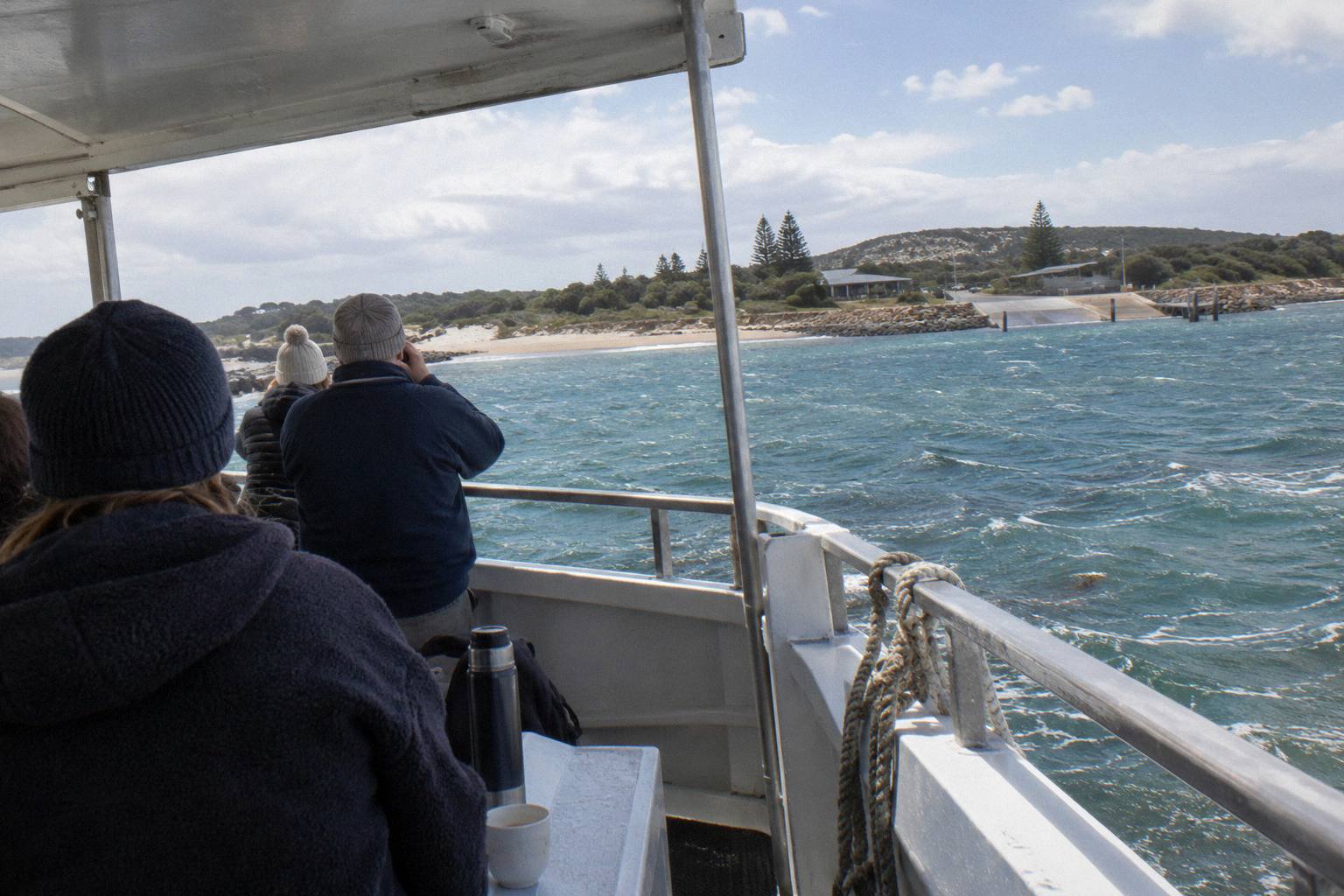
Two final practical notes from the verified pages. Beach boarding at Quindalup means walking a handrailed ramp onto a transfer vessel, so the Dunsborough trip states that guests with limited mobility may need further assistance, and the booking page says it is not suitable for mobility impairments. And whatever the month, dress in layers and bring sun protection and a camera, which is the operators' own stated advice and matches the Cape Naturaliste climate averages, where mean daily maxima run from 16.6 °C in August to 21.6 °C in November. Neither note identifies a whale, but both identify a better day on the water.
With the filters set, the month chosen and the questions asked, the last step is picking the boat.
Common Questions About Telling Whales Apart
How Do You Tell A Humpback From A Southern Right Whale From A Boat?
On the water, most identifications come from the crew, who track the animal over several surfacings. Passengers get further by using context: the operators describe mothers and calves resting in Geographe Bay on the southern return in spring, and southern right whales breed and nurse in sheltered south coast waters including this bay. Ask the crew what the animal is doing, staying or moving through, and what sealed the call.
Can You See Blue Whales From Dunsborough?
Yes, as a spring possibility. Naturaliste Charters names blue whales "from October onwards" and All Sea Charters calls them "occasional". The safe general wording is that blue whales pass through Geographe Bay in spring, mostly from October to December, and a research report has recorded blue whale song and sightings in the bay in November surveys.
Which Whales Do You See In Augusta?
Augusta operators name two species only, southern right and humpback whales, in a season running from May to mid-August. There is no blue whale or minke claim on the Augusta pages.
Does The Month Matter For Which Whale You See?
It is the strongest filter you have. August and September from Dunsborough put humpback and southern right whales on the shortlist; October and November add blue whales and a minke chance; Augusta's May-to-mid-August window is southern right and humpback only.
How Close Does The Boat Get To The Whales?
WA law requires a vessel to stay at least 300 m from a whale within a 60 degree arc to the front or rear, and at least 100 m to the side. If a whale approaches closer, the skipper must cut to neutral or move away at no more than 6 knots. The operator says only that its vessels keep "a specific distance" and prints no figure.
Who Identifies The Whale On A Cruise?
The crew. Beyond the Augusta trip's stated expert commentary and marine biologist on board, the level of expertise is not stated for every cruise, so ask the operator at booking who narrates the trip.