Southern Right Whales On The Dunsborough Coast
Southern right whales are named by every whale cruise operator working out of Dunsborough, and the marine habitat science says the south coast's sheltered waters, Geographe Bay included, are where the species breeds and nurses its calves. Here is what the sources state, what they do not, and how to plan around both.
Short answer
Yes, southern right whales are part of the stated mix on Dunsborough whale cruises from mid-August or September to November, alongside humpbacks. The International Marine Mammal Habitat factsheet says southern rights breed and nurse in sheltered south coast waters including Geographe Bay. Augusta cruises, May to mid-August, name them too.
Southern right whales occupy a curious place in Dunsborough whale watching. Ask an operator and the species is named without hesitation, listed on Dunsborough and Augusta trip pages alike. Ask a marine habitat scientist and Geographe Bay sits inside the sheltered south coast waters where the species breeds and nurses its young. Yet the detailed natural history most readers expect, the size figures, the population counts, the behaviour breakdowns, is simply not part of what these sources state, and this guide will not invent it.
What follows is built only from what the operators themselves publish, what the Western Australian regulations set down in law, and what the International Marine Mammal Habitat factsheet records. Where something is not stated anywhere in those sources, that is said once, plainly, and the planning logic carries the rest. A reader asking whether right whales show up is really checking what a cruise from Dunsborough will actually find, and that question deserves a straight answer built on stated facts rather than enthusiasm.
Are Southern Right Whales Actually Seen Off Dunsborough?
Yes, southern right whales are a named species on Dunsborough whale cruises. Naturaliste Charters lists humpback, southern right, blue and minke whales for its Dunsborough trips, and All Sea Charters describes both humpback and southern right whales in the bay. The International Marine Mammal Habitat factsheet records that southern right whales breed and nurse in sheltered south coast waters, and it names Geographe Bay among them.
That is the honest core of it. Two independent operators, publishing their own trip pages, both put southern right whales in Geographe Bay's seasonal mix, and the habitat science agrees the bay is the right kind of water for the species. The IMMA factsheet for the Geographe Bay and Eucla Shelf coastal waters is the strongest external source here, and its wording on southern rights is about breeding and nursing in sheltered south coast waters rather than about numbers or sighting rates. That distinction matters for planning, which this guide returns to below.
It is worth being precise about what is and is not stated, because whale content on the internet is full of confident filler. The table below separates what a source actually says from what no source here says at all.
| Claim about southern right whales | Source that states it | Wording used |
|---|---|---|
| Present on Dunsborough cruises | Naturaliste Charters trip page | Named among species on the Dunsborough trip |
| Present in Geographe Bay | All Sea Charters Dunsborough page | Humpback and southern right whales described in the bay |
| Breed and nurse in the region | IMMA factsheet | Sheltered south coast waters including Geographe Bay |
| Present on Augusta trips | Both operators' Augusta pages | Southern right and humpback whales, May to August |
| Sighting rates, counts or population figures | Not stated by any source here | Nothing printable |
| Size, weight, behaviour or callosity detail | Not stated by any source here | Nothing printable |
The two "not stated" rows are the boundary of this guide. No source in the research file gives a southern right whale count, a population estimate for the species, or a physical description, and inventing any of it would fail the basic test of honest reporting. What a reader gets instead is decision logic: when the species is named, where the cruises run, and what to ask an operator before booking.
For readers whose interest in the bay's whales is broader than one species, the guide to humpback whales in Geographe Bay covers the bay's most frequently named whale, and how to tell humpback, southern right and blue whales apart helps once a whale is actually in view.
When Do Southern Right Whales Appear In Geographe Bay?
Operators describe humpback and southern right whales in the bay from mid-August or September through to November, with mothers and calves resting in the bay on the southward return. Dunsborough's cruise season runs about August to the end of November. Augusta, where southern rights are also named, runs May to mid-August, so the two windows barely meet.
The season statements come from the operators' own pages and they differ slightly at the edges. Naturaliste Charters says August to November for Dunsborough, with its FAQ using "mid-August to the end of November". All Sea Charters says "mid August to early December" for its Dunsborough trips, with the same page describing a main window of September to early November. The safe summary across all of it is late winter to early summer, peaking in spring, and that summary applies to the whale mix as a whole rather than to southern rights alone.
No operator publishes a separate southern right season. That single clause is the whole of the honesty required here: if a reader wants to know which weeks the species is most likely, the stated facts do not answer it, and the right move is to ask the operator directly before booking. The rest of the planning value comes from the cruise season itself, which is well documented.
| Operator and trip | Where it says trips run | When it says trips run | Departure detail stated |
|---|---|---|---|
| Naturaliste Charters, Dunsborough | Professional Fisherman's Boat Ramp, Quindalup | August to November, mid-August to end of November on the FAQ | Daily 10am and 2pm |
| All Sea Charters, Dunsborough | Geographe Bay Road, Dunsborough | Mid August to early December, main window September to early November | Daily, exact ramp and times not published |
| Naturaliste Charters, Augusta | Augusta Boat Harbour, Leeuwin Road | May to mid-August | Daily 10am and 2pm |
| All Sea Charters, Augusta | Augusta Boat Harbour | May to mid-August | 10:00am and 1:30pm |
The month-by-month shape of the whole season, including where blue whales and minkes fit, is laid out in the Geographe Bay whale season month by month guide. For this page the operative fact is simpler: a cruise booked inside the stated season carries the full species mix the operators name, southern rights included, and no source separates the right whale weeks from the humpback weeks.
For readers ready to compare the cruises that run in this window, the three below are the ones this site tracks.
Dunsborough Or Augusta For Southern Right Whales?
For a cruise that names southern right whales, the two ports answer different halves of the year. Augusta cruises run May to mid-August, when both operators list southern rights and humpbacks. Dunsborough cruises run roughly August to the end of November, with southern rights named in a broader species mix. The ports sit about 90 km apart, a drive of about 1 hour 10 minutes to 1 hour 30 minutes.
A traveller whose heart is set on the species therefore has a calendar decision before anything else. Visit in June or July and Augusta is the only port of the two with cruises running, departing Augusta Boat Harbour with southern rights explicitly named on the trip pages. Visit in October and Dunsborough is the natural choice, with its longer season, its beach boarding operation at Quindalup, and blue whales added to the named mix from October onwards. Late August is the crossover moment, and it is also the edge of both operators' stated windows, so it rewards a direct question to the operator about which port is running on the exact travel dates.
The Augusta side of the comparison has its own depth, and the Augusta whale season, June to August covers it in full. The Augusta Whale Watching Tour With Naturaliste Charters runs a 2-hour cruise from Augusta Boat Harbour, rated 3.9 across 14 reviews, a small pool stated plainly rather than dressed up, with the booking page showing AUD 71 per person and free cancellation up to 24 hours.
The Dunsborough side needs no seasonal caveat inside its own window. The featured tour on this site, the Dunsborough Whale Watching Tour With Naturaliste Charters, is rated 4.7 across 137 reviews, shows AUD 71 per person on the booking page, and lists southern right whales among its named species. Readers weighing the two ports against each other rather than the two seasons will find the full Dunsborough or Augusta comparison elsewhere on the site.
How Close Can Whale Cruise Boats Legally Get To A Right Whale?
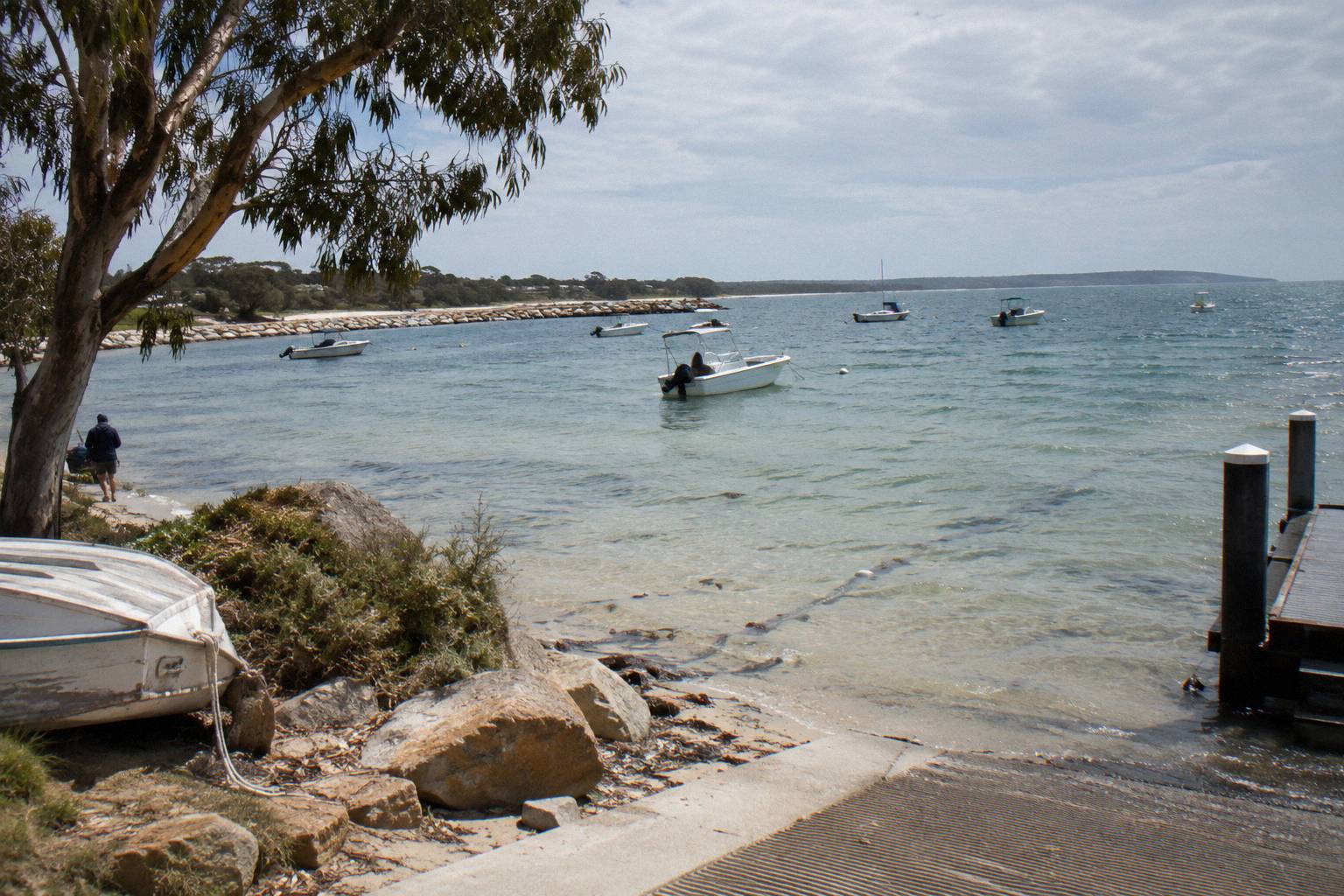
Western Australian law sets the distances. A vessel must stay at least 300 m from a whale within a 60 degree arc to the front or rear of the animal, and at least 100 m to the side. A person must stay at least 100 m, and a drone at least 60 m. Staying closer is an offence carrying a fine of AUD 5,000. These come from the Biodiversity Conservation Regulations 2018, Part 5 Division 2 and Schedule 5.
The regulations also cover what happens when a whale closes the distance itself. Under regulation 114, if a whale approaches a vessel inside the limit, the person in charge must put the vessel in neutral or switch off, or move away at no more than 6 knots until the legal distance is restored. A swimmer approached by a whale must move away. Regulation 112 exempts activity authorised under a licence or by the DBCA CEO, which is how the licensed in-water humpback program at Ningaloo exists, and it is also why no such program exists in Geographe Bay. The Department of Biodiversity, Conservation and Attractions states it plainly: under State legislation it is illegal for individuals to swim within 100 m of a whale, and licensed in-water humpback interactions happen only in Ningaloo Marine Park State waters and the Muiron Islands Marine Management Area. No swim with whales is offered on any tour covered by this site.
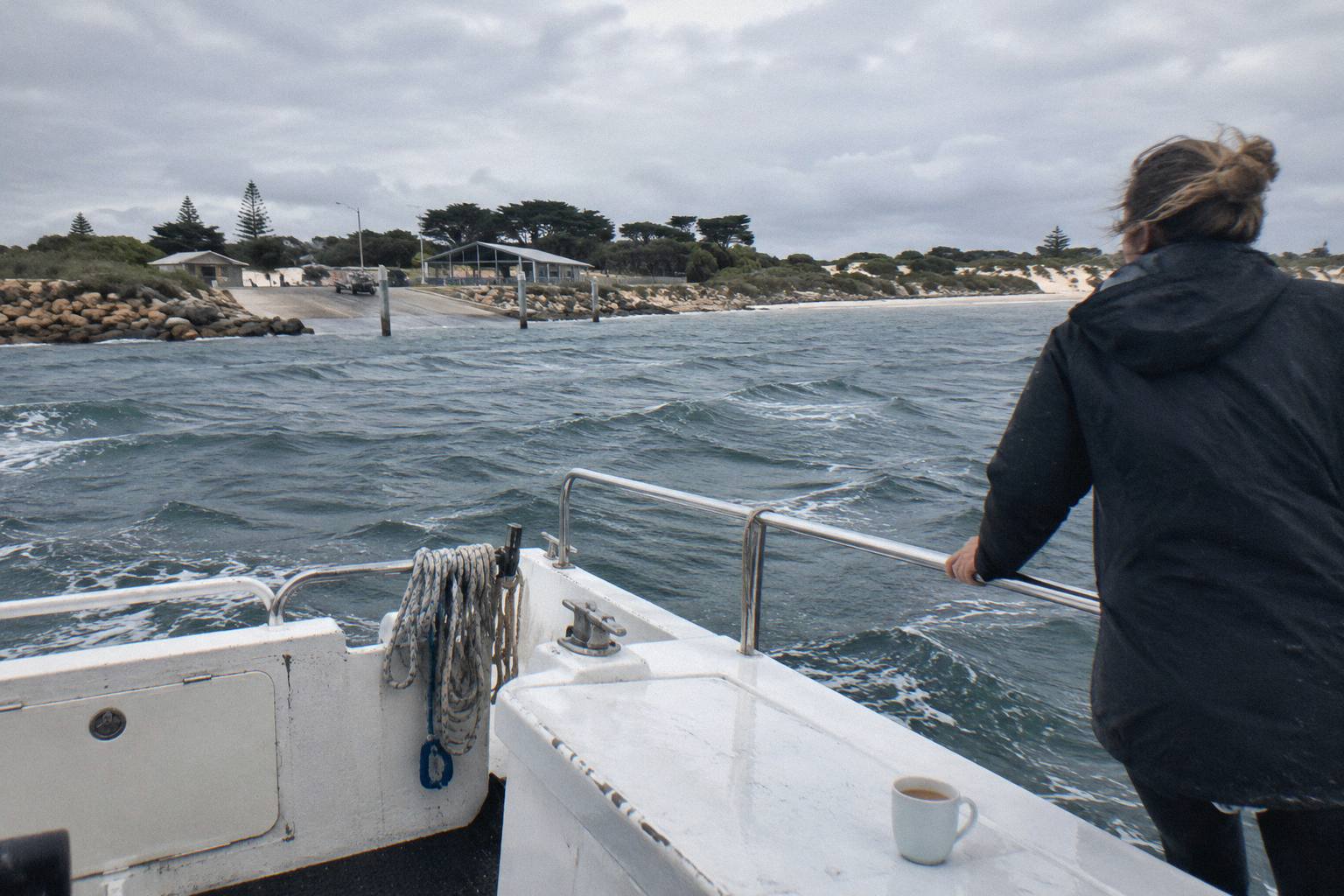
The official text of the Biodiversity Conservation Regulations 2018 is published by the WA legislation office, and DBCA's own whale watching advice adds the practical etiquette: approach from the side only, and abandon an interaction at any sign of distress. Drones must keep 60 m, a rule that matters on a busy beach departure point like Quindalup.
| Who or what approaches | Minimum distance from a whale | Source |
|---|---|---|
| Person | 100 m | Schedule 5, Biodiversity Conservation Regulations 2018 |
| Vessel, to the side | 100 m | Schedule 5 |
| Vessel, front or rear 60 degree arc | 300 m | Schedule 5 |
| Drone | 60 m | Schedule 5 |
| Aircraft, non-helicopter | 300 m | Schedule 5 |
| Helicopter | 500 m | Schedule 5 |
One nuance belongs here rather than scattered through the article. Naturaliste Charters says only that its vessels keep "a specific distance" and prints no figure, so the numbers above are the law's, attributed to the regulations, not the operator's promise. A curious consequence of regulation 114 is that some of the closest encounters happen when the whale decides: engines go to neutral, and the legal duty becomes patience. Readers wondering about this in practice will find the legal approach distances explained in the site's blog section.
What A Dunsborough Cruise Actually Offers On The Water
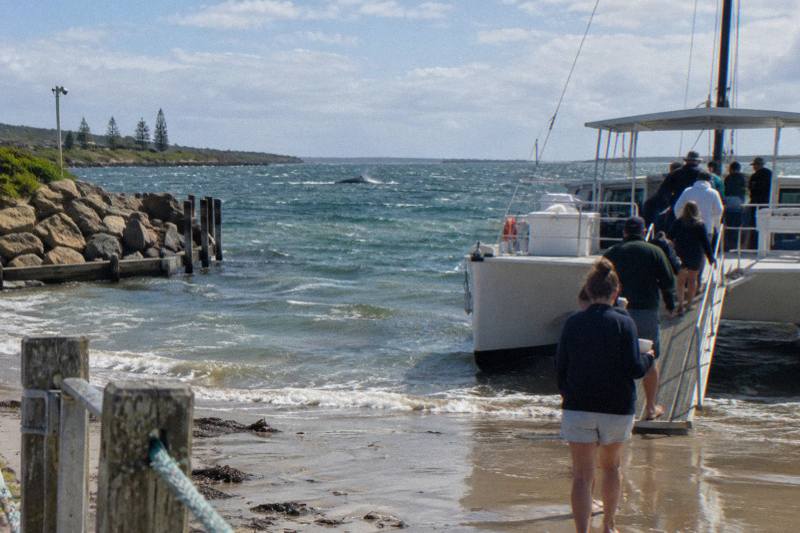
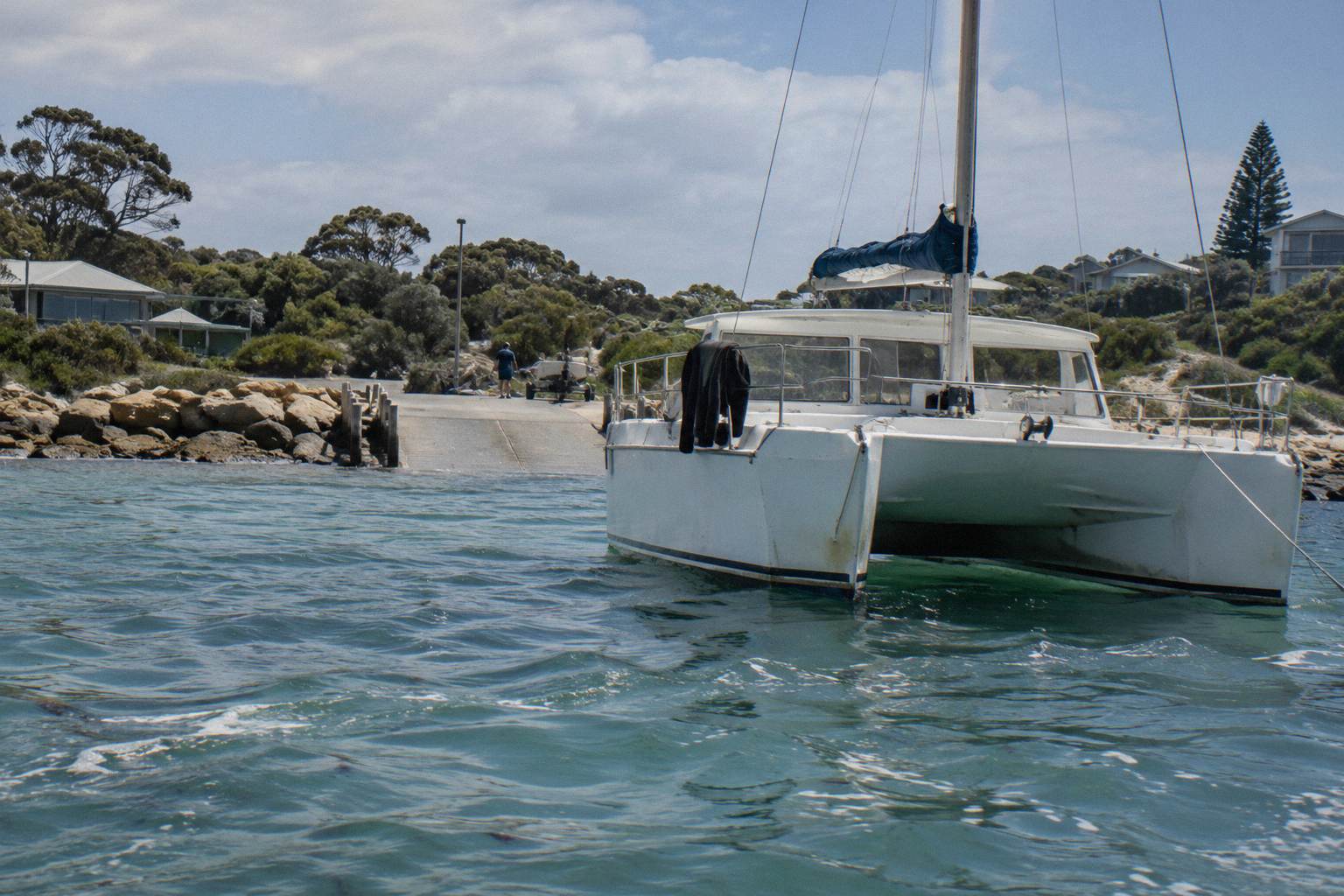
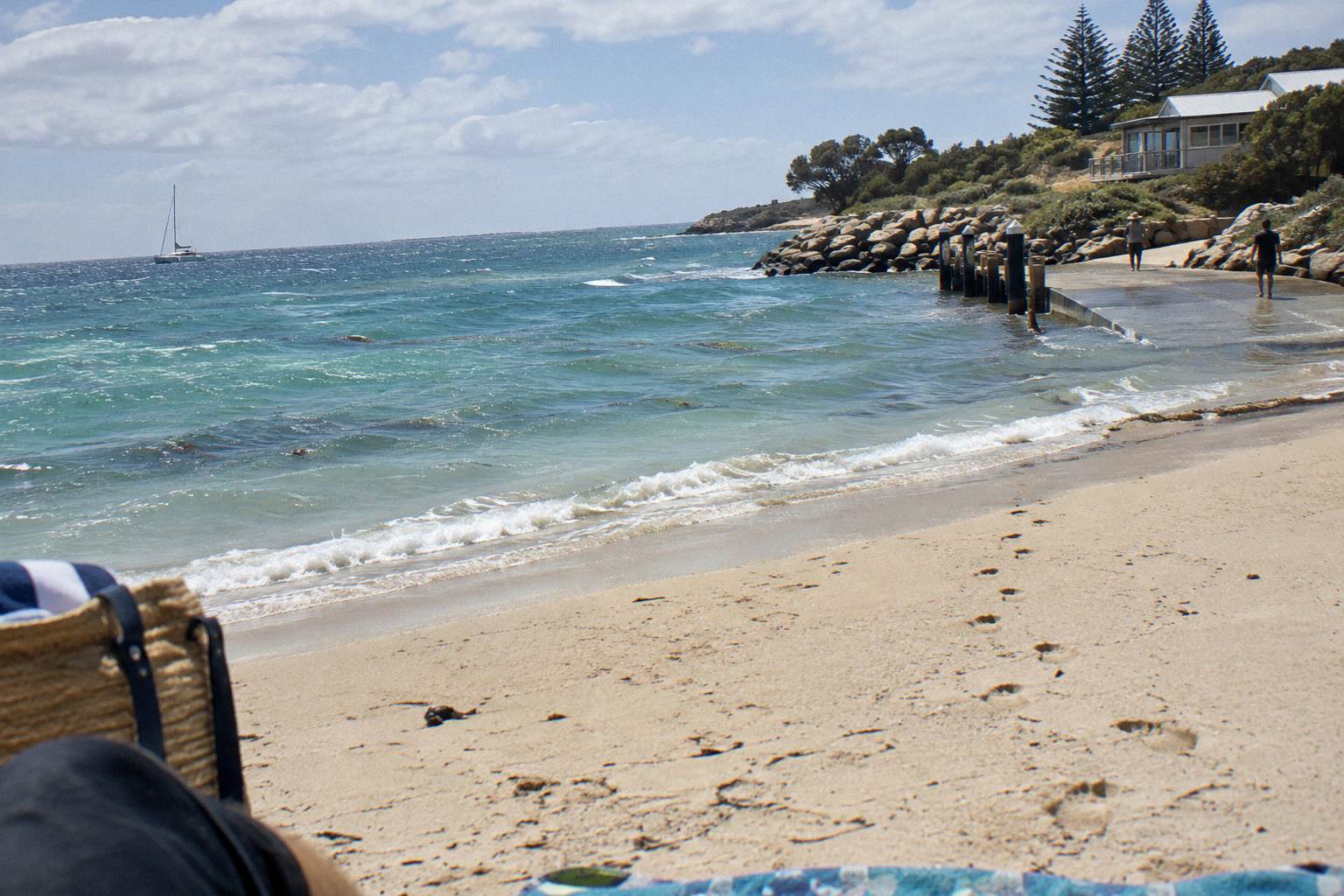
The Naturaliste Charters Dunsborough trip is listed at 2.5 hours on the booking page, with the operator saying about 2 hours and to allow up to 3 depending on sightings. It departs daily at 10am and 2pm from the Professional Fisherman's Boat Ramp at Quindalup, boards from the beach via a handrailed ramp, includes tea, coffee and biscuits, and shows AUD 71 per person with free cancellation up to 24 hours.
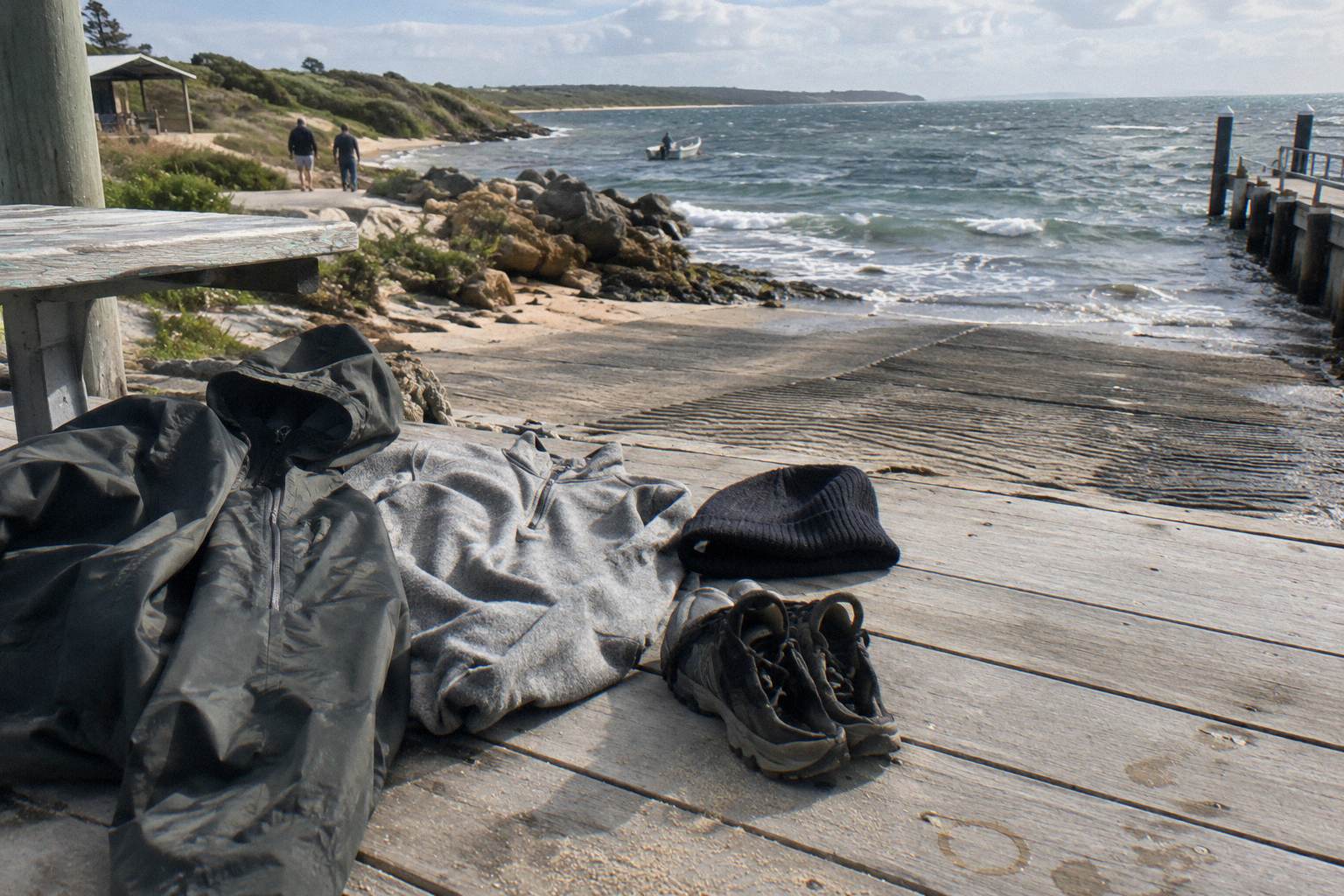
The mechanics matter more than most pre-booking pages admit. Guests walk a handrailed ramp onto the smaller Indi Maree, then transfer to the Alison Maree, a 23 m catamaran, which means beach boarding rather than a marina pontoon. The operator notes that guests with limited mobility may need further assistance, and the booking page says the tour is not suitable for mobility impairments. Arrival is asked 15 to 30 minutes before departure, and the ramp sits roughly 5 km east of Dunsborough town, opposite 306 Geographe Bay Road, Quindalup. On board: complimentary tea, coffee, milo, filtered water, green tea and biscuits, soft drinks and snacks for sale, two toilets with hand washing, and life jackets for all, with no minimum age stated beyond "open to all ages".
The species list the operator prints for this trip is humpback, southern right, blue from October onwards, and minke as a chance in October and November, with dolphins often at the bow wave. That list is the operator's own claim and this site reports it as exactly that. The All Sea Charters alternative from Dunsborough, by contrast, is a different proposition: a 2 to 2.5 hour cruise on the 17 m catamaran Whale Song with a climate-controlled cabin, two outside decks, an accessible toilet and anti-nausea wristbands, rated 4.8 across 438 reviews, with its price shown on the live listing rather than printed here. Tea and coffee are onboard, hotel pickup and drop-off are listed on the booking page, and which departure option carries the hotel pickup is not stated, so that is a question for the operator.
Choosing between these two trips is less about southern rights, since both name them, and more about format: beach boarding onto a 23 m catamaran versus a cabin vessel with wristbands, and a 4.7 rating across 137 reviews versus a 4.8 across 438. The full decision framework sits in how to choose a whale cruise from Dunsborough, and the question of value specifically is weighed in whether a whale cruise is worth it. Dunsborough Whale Watching keeps both listings current so the comparison stays honest.
If The Southern Rights Stay Elusive: Other Ways To Spend The Morning
If the southern right whales stay elusive, the Geographe Bay Eco And Snorkel Trip offers a 2-hour eco boat trip with optional snorkel, while the Coastal Wildlife Eco Tour pairs a 3.5-hour land-based walk and drive with included pickup. Both allow free cancellation up to 24 hours.
Neither of those is a whale cruise, and the distinction is worth stating once. The eco and snorkel trip, with a minimum age of 6, puts the emphasis on the bay's broader marine life with an optional in-water element, and its cold water and soft drinks are listed on the booking page. The Coastal Wildlife Eco Tour is entirely land based, a walk and drive along the coast with water and morning tea provided and pickup included. A traveller who has booked the whale cruise already and wants a same-day plan B, or a companion who would rather not board a boat at all, has options that stay inside the same ecosystem.
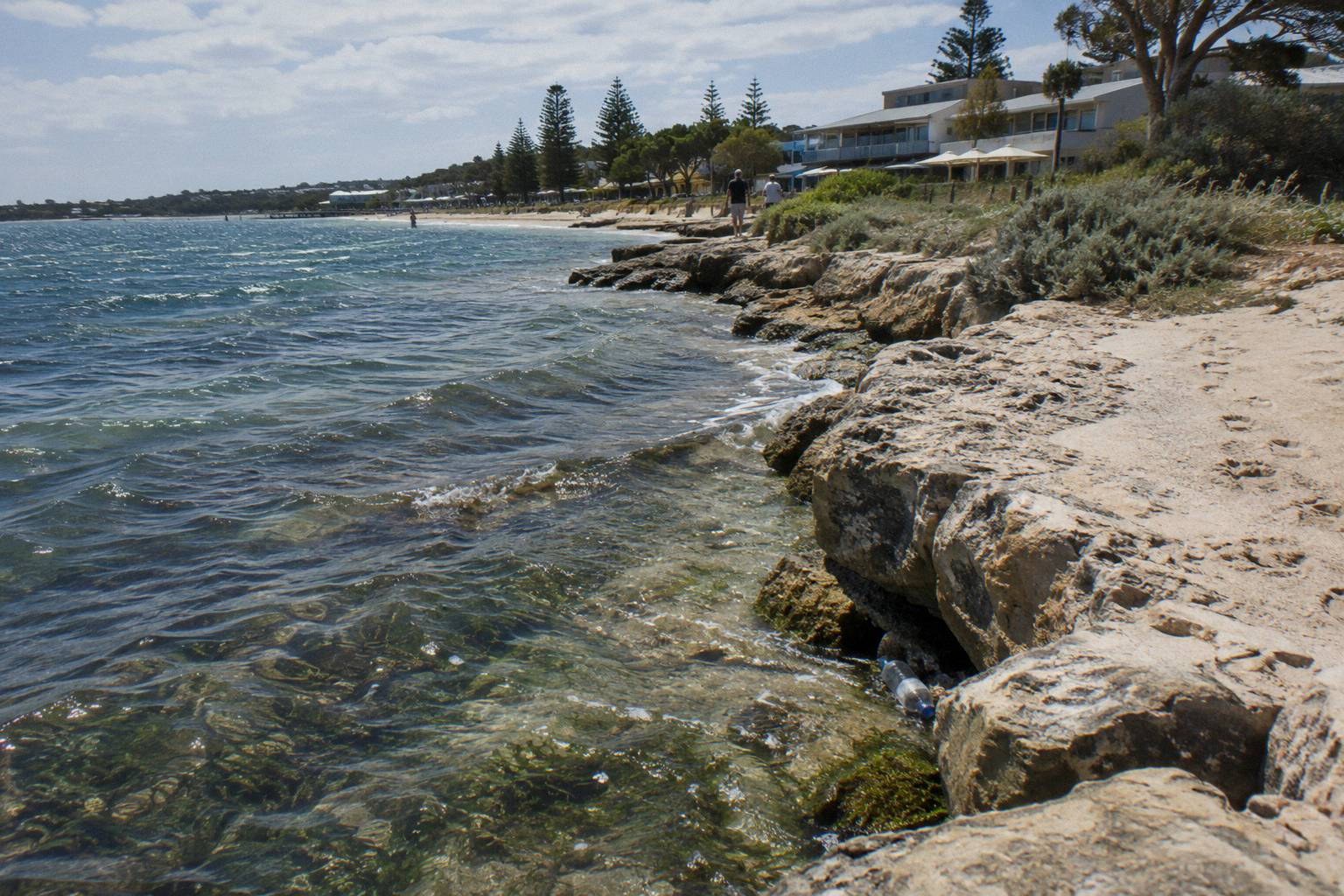
There is also the option of not boarding anything. Southern rights breed and nurse in sheltered south coast waters including Geographe Bay, per the IMMA factsheet, and shore-based watching from the capes is a real alternative with its own guide in whales from the shore at Cape Naturaliste. The IMMA factsheet for Geographe Bay is the primary source behind the habitat claim, and it is the same document that records the pygmy blue whale transit corridor, worth reading for anyone planning an October or November trip.
Questions To Ask An Operator Before Booking
Because the stated facts leave gaps, the right booking conversation fills them. Ask which species have been named on recent trips, ask what happens if no whales are seen, ask about the vessel and boarding, and ask about the cancellation terms that apply to your specific booking. Every question below targets something the published sources either do not state or state only partially.
This is where a thin-facts page earns its length: not by restating caveats, but by turning each gap into a concrete question. The table maps every known gap in the research to the question that closes it. An operator who answers these directly on the phone or by message is giving better information than any article can.
| Gap in the stated facts | Question to ask the operator |
|---|---|
| No operator separates a southern right season from the general season | Which species have you been naming on trips this month? |
| Naturaliste prints no figure for its vessel distance | How do you work the legal approach distances in practice? |
| All Sea Charters' cancellation policy was not found | What are the cancellation and refund terms for my dates? |
| Which All Sea departure option carries hotel pickup is not stated | Does the pickup option apply to the Dunsborough departure? |
| Sighting terms vary and All Sea's "come back for free" terms are not printed | What exactly does your sighting policy cover? |
| Neither operator states sea conditions or a rough-water threshold | What happens if conditions force a cancellation on my day? |
Two of these deserve a note. The sighting policy question matters because operators word their promises differently and the fine print is not always on the trip page; the site's guide to sighting guarantees and what they cover works through the differences. The cancellation question matters because the terms this site can print, free cancellation up to 24 hours on the booking pages, sit alongside direct-booking terms that are stricter for guest-initiated changes, and those are two different things that travellers routinely confuse.
The practical wrapper around all of it is timing. Do you need to book ahead, or can you decide in town? The site's advice on booking a whale cruise in advance answers it, and the short version is that spring weekends in a small port fill earlier than a Tuesday in late November.
Putting The Plan Together
Book a Dunsborough cruise inside the stated season, roughly August to the end of November, and southern right whales are part of the named mix alongside humpbacks, with blue whales added from October. Book Augusta for May to mid-August if the calendar allows. Print the legal distances, pack layers for spring conditions, and hold the operator to answers on species, sightings and cancellation before paying.
The weather side is documented and simple: Cape Naturaliste's averages run from a mean maximum of 16.6 °C in August to 21.6 °C in November, with mean rainfall falling from 113 mm in August to 25.3 mm in November, per the Bureau of Meteorology station data, and sea temperatures sitting around 17 to 19 °C across the season per satellite-data aggregators. Layers, sun protection and a camera are the operator-stated kit, and the full clothing logic lives in what to wear on a whale cruise in Western Australia. Families weighing the practicalities have a dedicated guide to a whale cruise with kids from Dunsborough, and anyone prone to seasickness should read the site's page on seasickness on a Geographe Bay cruise before choosing between a 23 m catamaran and a cabin vessel with wristbands.
That is the whole honest picture. Southern right whales are named, the habitat science supports the naming, the season is documented, the law is explicit, and everything beyond that is a question for the operator rather than a paragraph on a website.
Common Questions About Southern Right Whales On The Dunsborough Coast
Are Southern Right Whales Seen On Dunsborough Whale Cruises?
Yes. Naturaliste Charters names southern right whales among the species on its Dunsborough trips, and All Sea Charters describes humpback and southern right whales in Geographe Bay. The IMMA factsheet records that southern rights breed and nurse in sheltered south coast waters including Geographe Bay.
When Is The Southern Right Whale Season At Dunsborough?
No operator publishes a separate season for the species. Dunsborough cruises run about August to the end of November, and operators describe humpback and southern right whales in the bay from mid-August or September to November. Ask the operator which species have been named on recent trips.
Is Augusta Better Than Dunsborough For Southern Right Whales?
Augusta's cruises run May to mid-August and both operators list southern rights and humpbacks there, making it the only port of the two running through winter. Dunsborough runs roughly August to the end of November with southern rights in a broader mix. The ports are about 90 km apart.
How Close Can The Boats Get To A Southern Right Whale?
Western Australian law sets a minimum of 100 m for a vessel to the side of a whale and 300 m within a 60 degree arc front or rear, with 100 m for a person and 60 m for a drone. The operator says only that its vessels keep a specific distance; the figures come from the regulations, and the penalty for staying closer is a fine of AUD 5,000.
Can You Swim With Southern Right Whales At Dunsborough?
No. Under State legislation it is illegal for individuals to swim within 100 m of a whale, and licensed in-water humpback interactions happen only in Ningaloo Marine Park State waters and the Muiron Islands Marine Management Area. No swim with whales is offered in Geographe Bay.
What Does A Dunsborough Whale Cruise Cost?
The Dunsborough Whale Watching Tour With Naturaliste Charters shows AUD 71 per person on the booking page, listed at 2.5 hours with free cancellation up to 24 hours. The All Sea Charters cruise's price is shown on its live listing. Prices can change, so check the listing before booking.