Blue Whales In Geographe Bay And The Naturaliste Plateau
Pygmy blue whales use Geographe Bay and the Naturaliste Plateau as a narrow transit corridor, mostly from October to December. Here is what the research actually shows, and what that means for a cruise you book from Dunsborough.
Short answer
Pygmy blue whales pass through Geographe Bay in spring, mostly from October to December, with the Dunsborough cruise season running about mid-August to the end of November. The eastern Indian Ocean population is estimated at 662 to 1,559 whales, so a blue whale sighting is a chance, not a promise, while humpbacks are the reliable draw.
Most people who book a whale cruise from Dunsborough are hoping for a humpback, and that hope is usually rewarded. A smaller number arrive with a stranger ambition: a blue whale, the rarest headline on the Geographe Bay sightings board. The honest version is that blue whales do use this stretch of water, the research behind that claim is solid, and the odds of any single cruise finding one are modest enough that they should shape how you book, not whether you book. This guide sets out what the verified sources say, when the window opens, and how to plan a trip that is worth the fare even if the biggest animal on the planet stays a rumour on the horizon.
Why Geographe Bay Is A Blue Whale Corridor
Pygmy blue whales use Geographe Bay and the adjoining Naturaliste Plateau as a narrow transit corridor, according to the International Marine Mammal Habitat factsheet, which also records mothers with calves using the same corridor. The species is listed as Endangered, and the eastern Indian Ocean population is estimated at just 662 to 1,559 whales. That combination makes Dunsborough one of the few places where a blue whale from a boat is even a possibility.
The corridor idea matters more than it first sounds. Blue whales are not scattered evenly across the ocean; they follow productive edges where food concentrates, and the seafloor off Cape Naturaliste steps down onto the plateau in a way that funnels prey, and the whales chasing it, along a defined line. The factsheet describes it plainly: large numbers of pygmy blue whales, with calves, use Geographe Bay and the Naturaliste Plateau as a narrow transit corridor. A cruise leaving the Quindalup ramp is not searching blank ocean; it is floating somewhere near a known route.
The population estimate deserves its own sentence, because it frames everything else on this page. The factsheet cites McCauley and Jenner 2010 for an eastern Indian Ocean population of 662 to 1,559 whales. Against that number, every blue whale seen off Dunsborough is a meaningful fraction of the species' regional presence, which is also why the law protects them so strictly, a point this guide returns to below.
It is worth being precise about names, because the internet is not. The research names the Naturaliste Plateau and the Geographe Bay transit corridor. Some older tourism copy calls the offshore feature a canyon; the marine habitat sources do not, and this guide follows the sources rather than the folklore. The practical takeaway is unchanged: the deep water west and north of the cape is where the corridor sits, and a Dunsborough cruise puts you at its eastern doorstep.
What The Research Actually Records
A 2014 SouWEST and IFAW research report recorded blue whale song and sightings in Geographe Bay during November surveys, and the International Marine Mammal Habitat factsheet independently describes pygmy blue whales with calves using the bay and plateau as a transit corridor. Neither gives a sighting rate, a count per season, or a probability, so any percentage you read elsewhere about blue whales off Dunsborough is not backed by this research.
Start with the survey work. The SouWEST and IFAW final report includes November survey dates across three separate years, and on those surveys researchers recorded both blue whale song and blue whale sightings in Geographe Bay. November is late in the Dunsborough cruise season, which runs about mid-August to the end of November for the main operator, so the timing is awkward but real: some of the strongest documented blue whale evidence in the bay falls in the last weeks of the season.
| Source | What it records | What it does not say |
|---|---|---|
| International Marine Mammal Habitat factsheet | Pygmy blue whales with calves use Geographe Bay and the Naturaliste Plateau as a narrow transit corridor; Endangered listing; population estimate 662 to 1,559 (McCauley and Jenner 2010) | No sighting rate, no count per season, no best month |
| SouWEST and IFAW 2014 report | Blue whale song and sightings recorded in Geographe Bay during November surveys | No odds, no guarantee, no route map |
| Naturaliste Charters | Blue whales named among the bay's species "from October onwards" | No figure, no frequency claim printed |
| All Sea Charters | Blue whales described as "occasionally" seen | No figure, no frequency beyond that word |
The operator statements slot in below the research, not above it. Naturaliste Charters, whose Dunsborough cruise this guide covers in detail later, names blue whales among the species seen from October onwards. All Sea Charters uses exactly one word, "occasionally". Neither operator prints a number, and the honest reading of both is the same: a blue whale is a genuine possibility from October, and never the reason a cruise exists.
If you are weighing a Dunsborough trip against the rest of the region, our guide to where Dunsborough fits among Western Australia whale spots puts the blue whale question in its wider context. The short version: no other easily reachable port in the south west offers a comparable documented blue whale corridor on a scheduled tourist cruise.
For readers who want to see the primary material themselves, the factsheet and the research report are both public: the Geographe Bay IMMA factsheet carries the corridor wording and the population estimate, and the SouWEST and IFAW final report carries the November survey records. Ten minutes with those two documents is worth more than an hour of sightings-board folklore.
When Blue Whales Pass: The October To December Window
Blue whales pass through Geographe Bay in spring, mostly from October to December, which is the safe summary of the sources. Naturaliste Charters names them from October onwards; All Sea Charters says occasionally; the November survey records sit inside that window. The Dunsborough cruise season runs about mid-August to the end of November, so the overlap is October and November only: book late in the season if a blue whale is the dream.
The calendar logic is worth spelling out. Humpbacks and southern right whales anchor the bay from mid-August or September through November, with mothers and calves resting in the bay on the southward return, and the Department of Biodiversity, Conservation and Attractions notes that humpbacks begin their southern migration through these waters. Blue whales arrive on top of that show, not instead of it. A late-October or November cruise gets the tail of the humpback season, resting southern rights in sheltered waters, passing minke whales, which Naturaliste lists as October and November chance encounters, and the opening of the blue whale window.
One caution belongs here once and nowhere else. Some sources describe a February to June blue whale transit along Western Australia's south coast, heading west toward the Perth Canyon. That is a different corridor on a different coast, and it does not apply to Geographe Bay. Applying it to Dunsborough would have you booking winter cruises that do not exist, since the local season is late winter to early summer at most, roughly August to the end of November for the main operator and mid August to early December, with a main window of September to early November, for the second.
| Month | Dunsborough cruise season | Blue whale standing |
|---|---|---|
| August | Running, from mid-August | Not part of the stated blue whale window |
| September | Running, main window per one operator | Not part of the stated window |
| October | Running | Blue whales named "from October onwards" |
| November | Running to about the end of the month | Blue whale song and sightings recorded in November surveys |
| December | Main operator finished; one operator says to early December | Blue whale corridor likely active but cruises largely finished |
If timing the wider season matters to your planning, the month-by-month breakdown in our Geographe Bay whale season guide covers what each month reliably delivers, including the November question of whether humpback calves are still around, which our piece on humpback calves seen from Dunsborough in November answers directly.
The Honest Odds Before You Book
No verified source gives a probability of seeing a blue whale from a Dunsborough cruise, and this site will not invent one. What the facts support is a shape: a small Endangered population of 662 to 1,559 whales, transiting a defined corridor, during roughly the last two months of the cruise season, on cruises primarily built around humpback and southern right whales. Treat a blue whale as a bonus that sometimes lands, never as the product you are buying.
That framing is not pessimism; it is how you protect the value of the fare. A late-season cruise that finds humpbacks, possibly a resting mother and calf, dolphins at the bow wave, and minke whales as a chance, has already delivered what the operators actually sell. If a blue whale surfaces inside that, the day becomes a story you tell for years. Booking with the second expectation and the first as your satisfaction floor is the only rational posture given what the sources do and do not say.
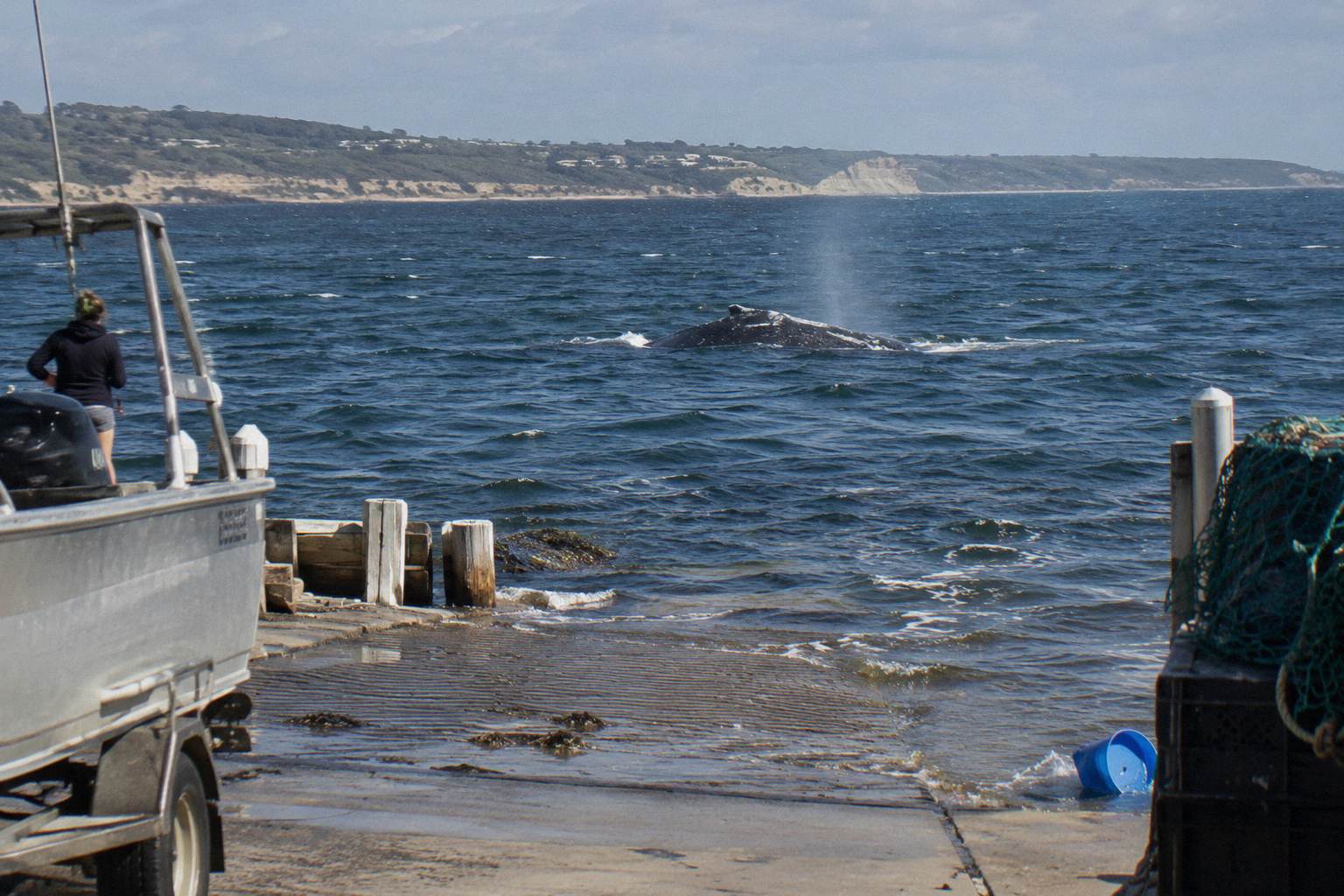
There is also a physical reality the research implies but tour pages rarely state. A transit corridor is a route, not a lounge. Humpback mothers and calves rest in Geographe Bay for hours or days; a blue whale passing the plateau is, by the corridor's own description, moving through. A cruise can only be where a blue whale is going to be if the whale is going to be there that morning, which is why even the operators' language stays at "occasionally" and "from October onwards" rather than anything firmer.
Readers who want the general sighting picture, not just the blue whale slice, can start with our piece on the odds of seeing a whale on a cruise and, for the policy side, our guide to the sighting guarantee and what it covers, which explains what happens when a cruise sees nothing at all.
Which Cruise Gives You The Best Chance
Two operators run Dunsborough whale cruises in the blue whale window. Dunsborough Whale Watching Tour With Naturaliste Charters is rated 4.7 across 137 reviews, lists blue whales from October onwards, and shows AUD 71 per person on the booking page, a price that can change. All Sea Charters is rated 4.8 across 438 reviews, describes blue whales as occasional, and shows its price on the live listing.
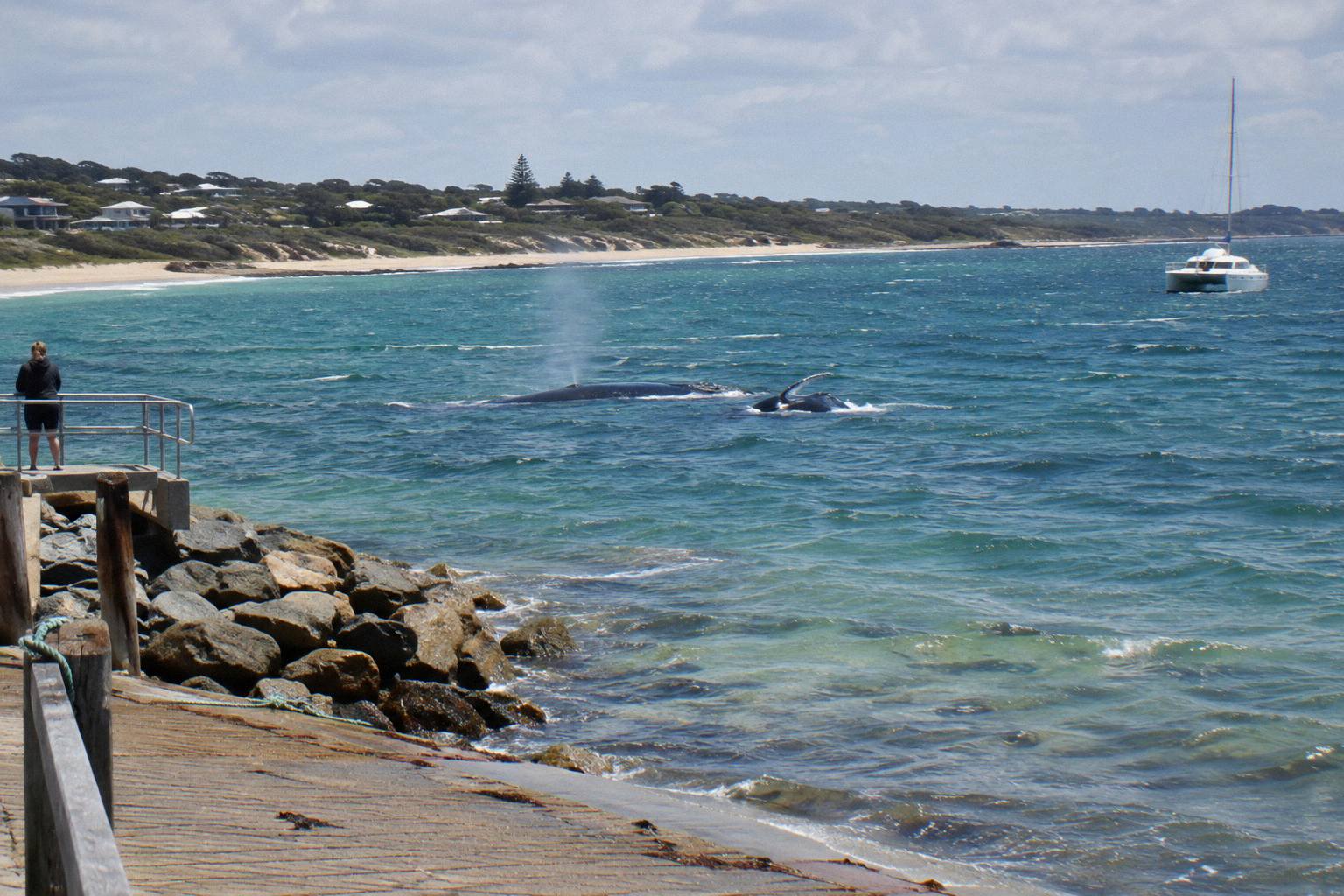
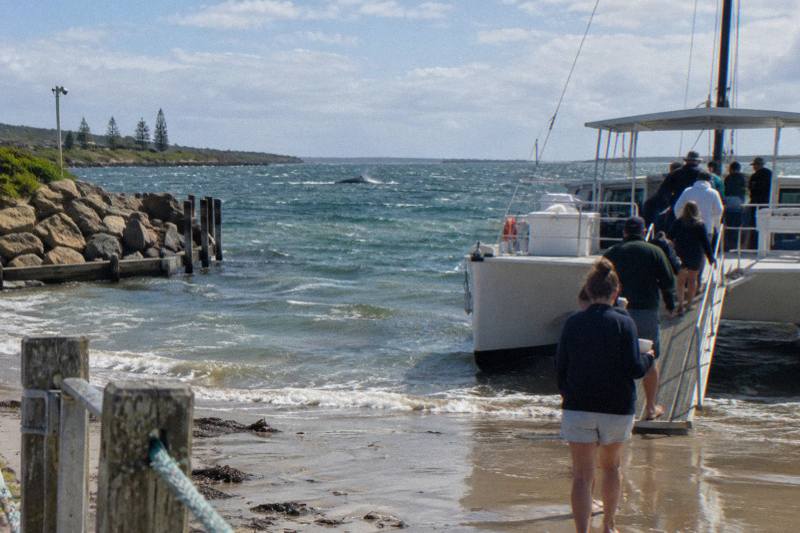
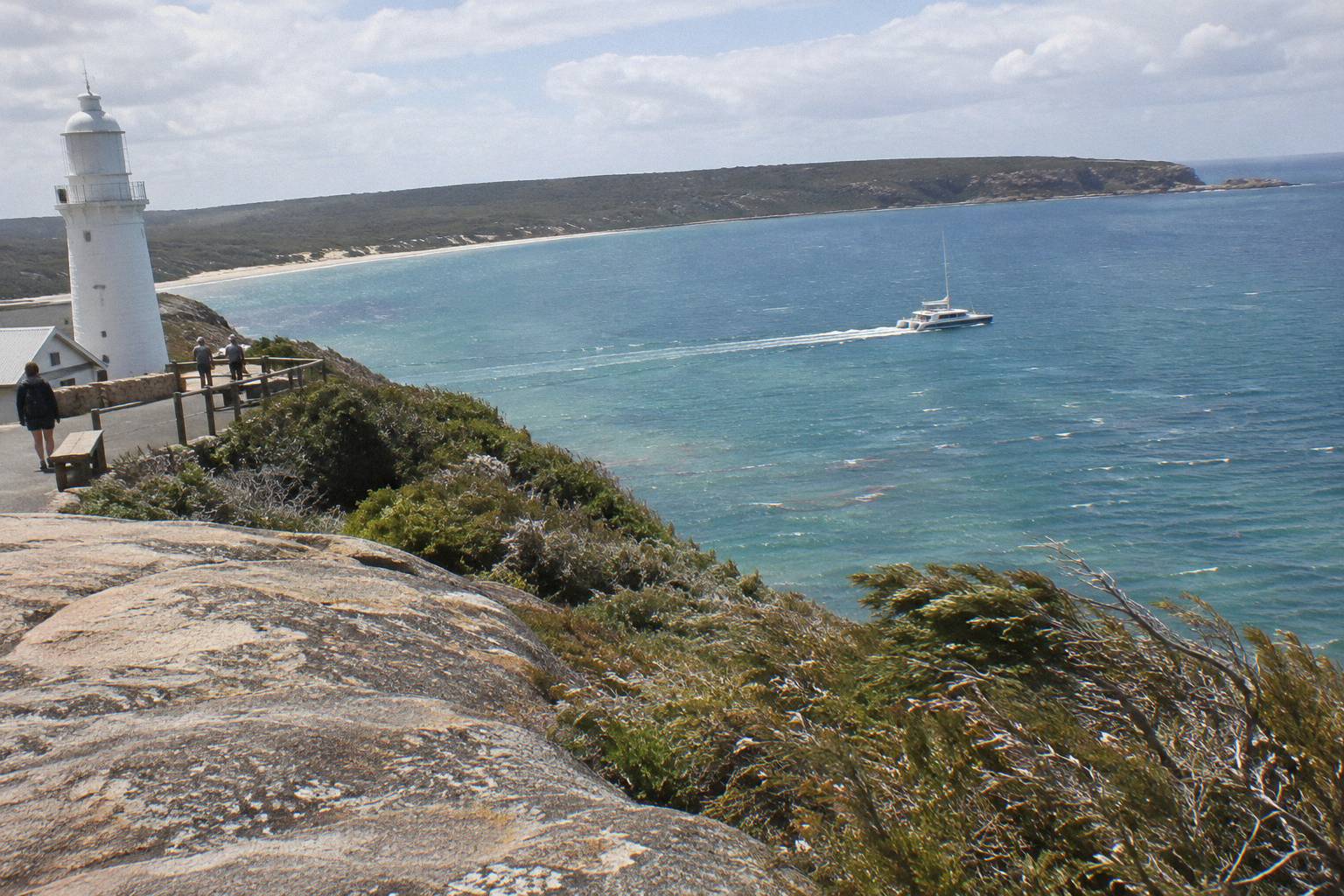
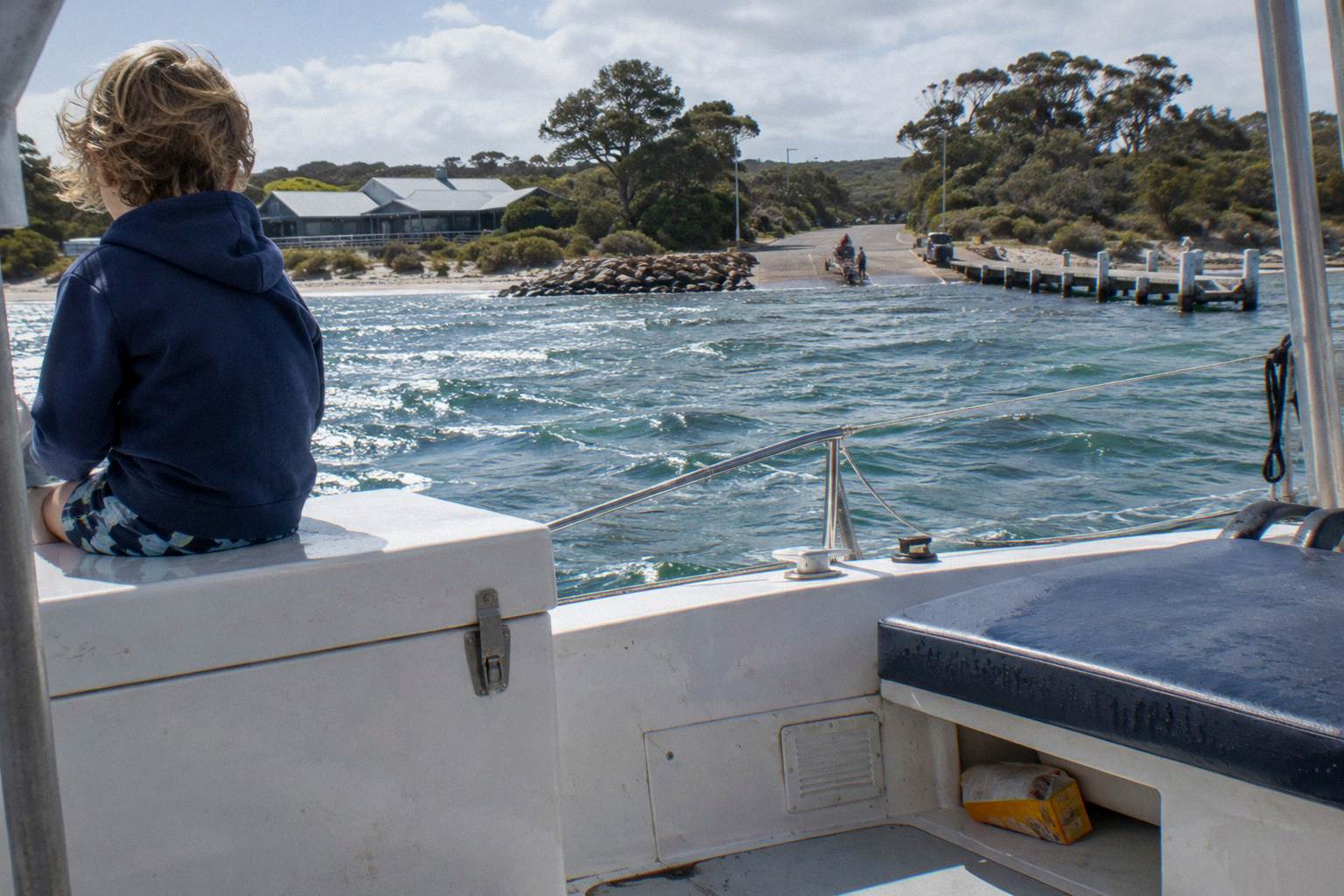
The Naturaliste trip is the one this site features, and it is the natural first pick for a blue whale hopeful: the operator explicitly names blue whales in its species list, its season runs to about the end of November inside the documented window, and the listing shows free cancellation up to 24 hours, which matters when you are gambling on a rare species and want the flexibility to rebook a flat sea day. The cruise is listed at 2.5 hours, with the operator saying to allow up to 3 hours depending on wildlife sightings, departing the Professional Fisherman's Boat Ramp at Quindalup, roughly 5 km east of Dunsborough town. Boarding is from the beach via a handrailed ramp onto a transfer vessel, then the Alison Maree, a 23 m catamaran.
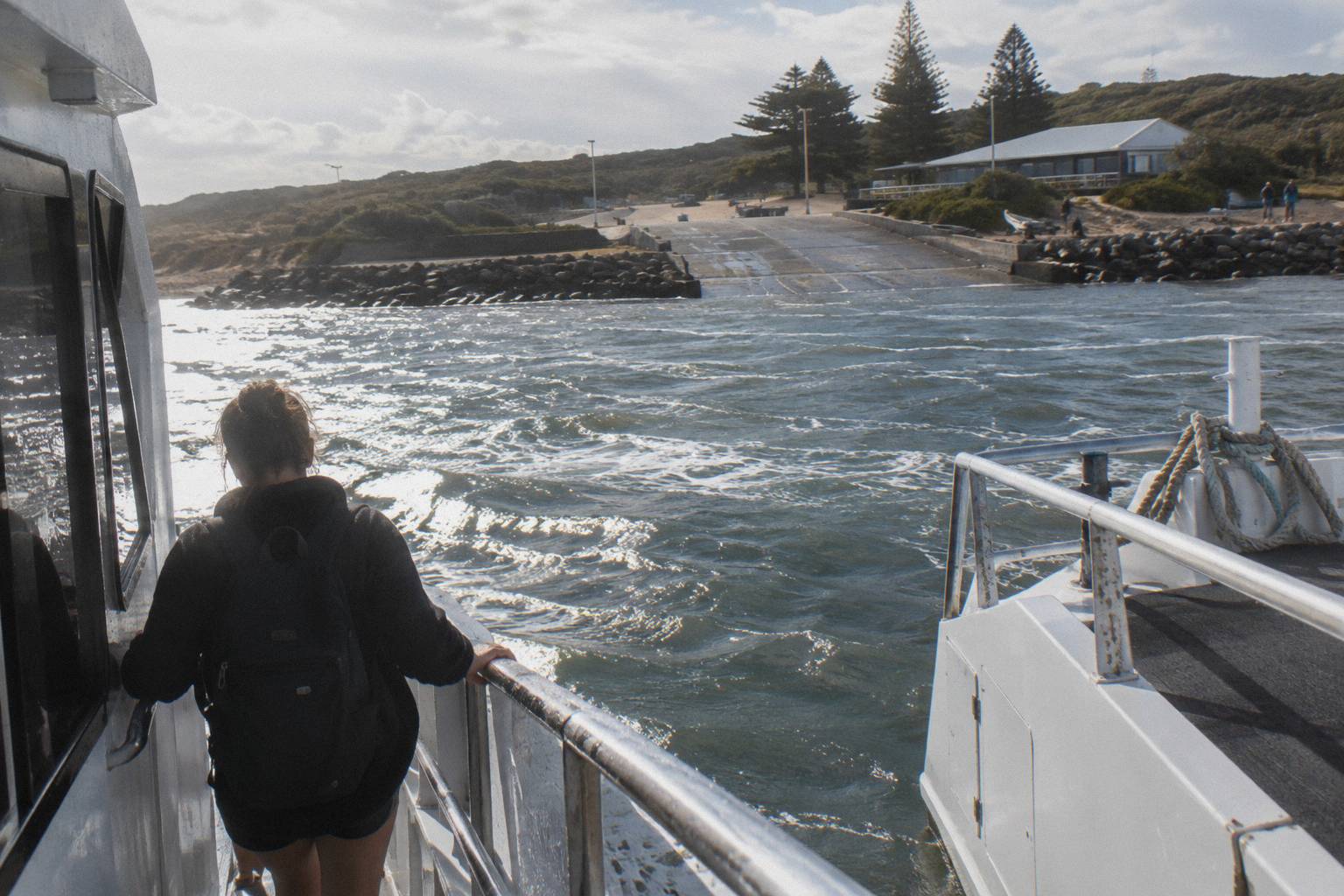
The All Sea Charters alternative runs daily over a stated mid August to early December season, which stretches slightly past Naturaliste's end point, on the 17 m catamaran Whale Song, with a climate-controlled cabin, two outside decks, tea and coffee onboard, anti-nausea wristbands and a listing that includes hotel pickup and drop-off, though which departure option carries the hotel pickup is not stated, so ask the operator. Its Dunsborough page publishes no exact ramp or clock times, another detail to confirm when booking. Deciding between the two ports and styles is covered at length in choosing a whale cruise from Dunsborough and the head-to-head on Busselton or Dunsborough for a whale cruise.
A third option belongs on the table only for readers whose dates fall outside the Dunsborough window. Augusta Whale Watching Tour With Naturaliste Charters runs from Augusta Boat Harbour, listed at 2 hours, rated 3.9 across 14 reviews, with AUD 71 per person shown on the booking page and free cancellation up to 24 hours. Augusta's season is May to mid-August with southern right and humpback whales, and the sources name no blue whale claim for Flinders Bay, so this is a season-extender, not a blue whale play.
| Cruise | Rating and reviews | Price shown | Listed length | Blue whale standing |
|---|---|---|---|---|
| Dunsborough Whale Watching Tour With Naturaliste Charters | 4.7 across 137 reviews | AUD 71 per person, can change | 2.5 hours | Species named "from October onwards" |
| All Sea Charters From Busselton, Augusta And Dunsborough | 4.8 across 438 reviews | On the live listing | 2 to 2.5 hours | "Occasionally" |
| Augusta Whale Watching Tour With Naturaliste Charters | 3.9 across 14 reviews | AUD 71 per person, can change | 2 hours | Not claimed for Augusta |
Blue Whales And The Law: How Close Boats May Go
Under Western Australia's Biodiversity Conservation Regulations 2018, a vessel must stay at least 300 m from a whale within a 60 degree arc to its front or rear, and at least 100 m to the side; people must stay 100 m away, and drones 60 m. Getting closer is an offence carrying a AUD 5,000 fine, and the rules apply to everyone on the water.
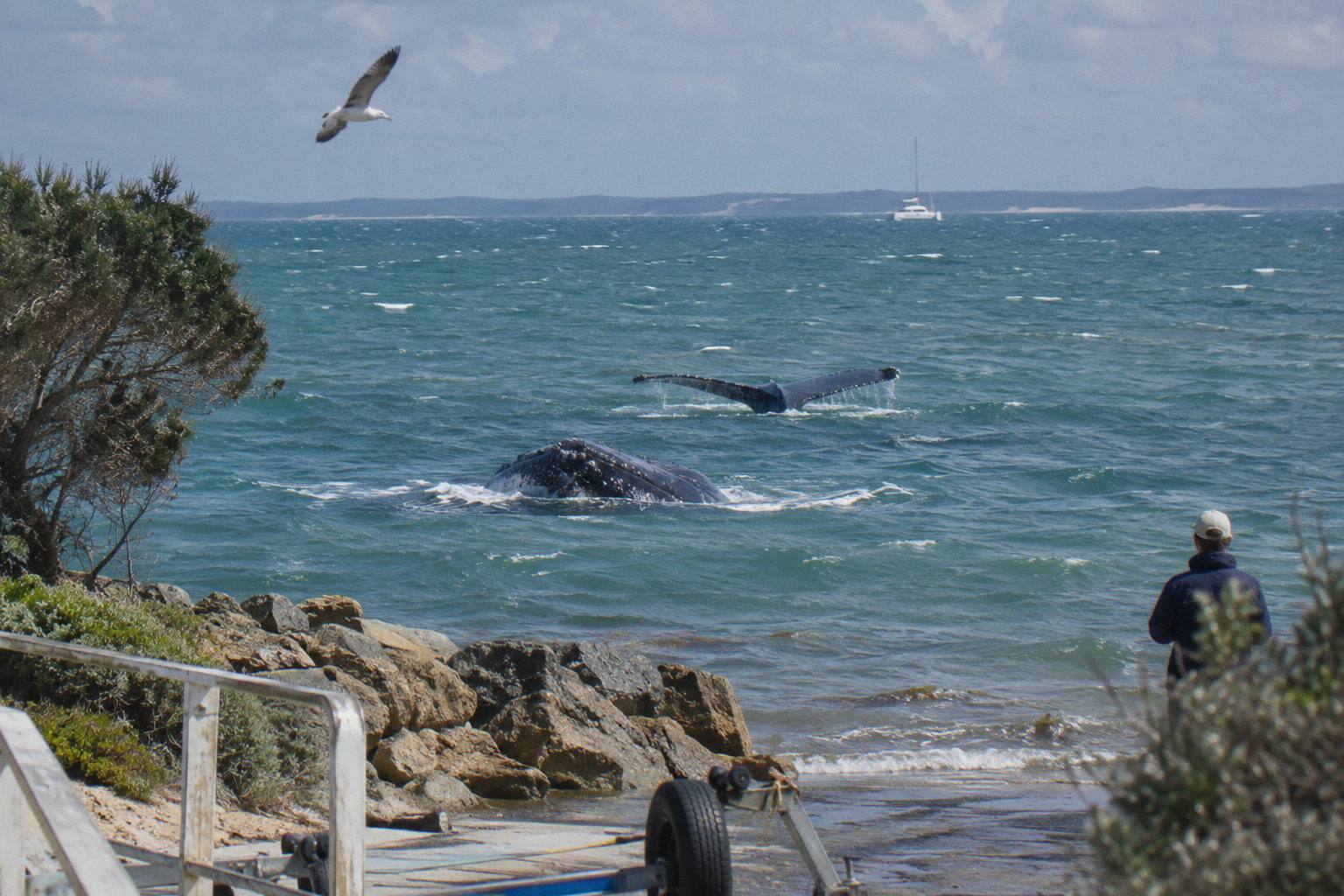
The full official text sits in Part 5 Division 2, regulations 110 to 114 and Schedule 5 Division 1, published at the legislation.wa.gov.au PDF. The arc rule is the detail worth understanding as a passenger. A boat may legally sit closer to a whale that is beside it than to one travelling toward or away from it, because the 300 m buffer applies along the animal's line of travel, the direction a surfacing whale will appear, while the side distance is 100 m. Crew positioning the vessel are working that geometry constantly.
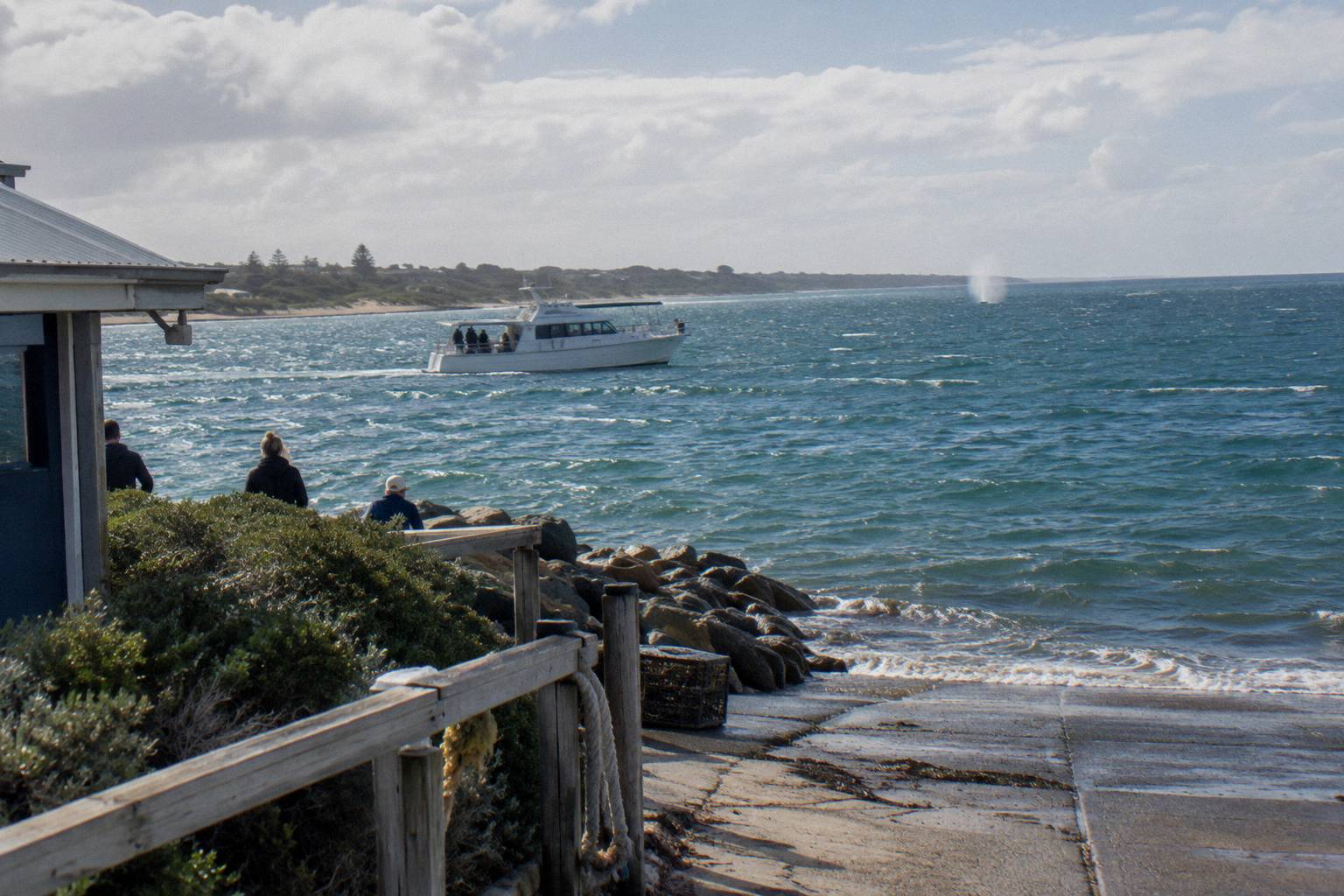
Regulation 114 covers the flip case, the whale that closes the gap itself. If a whale approaches a vessel inside the legal distance, the person in charge must put the vessel in neutral or switch off, or move away at no more than 6 knots until the distance is restored. A swimmer approached by a whale must move away. This is why whales sometimes drift close to stopped boats: the law requires the boat to yield, and curious animals, often calves, sometimes take advantage.
Two further points complete the picture. Regulation 112 exempts activity authorised under a licence or by the DBCA CEO, which is how the licensed in-water humpback program at Ningaloo exists, and the Department states plainly that it is otherwise illegal for individuals to swim within 100 m of a whale, with licensed in-water humpback interactions limited to Ningaloo Marine Park State waters and the Muiron Islands Marine Management Area. No swim with whales is offered in Geographe Bay or on any tour covered on Dunsborough Whale Watching, and none should be implied by anyone selling you a ticket. The Department also advises approaching from the side only and abandoning any interaction at the first sign of distress.
What Else You Will See From A Late-Season Cruise
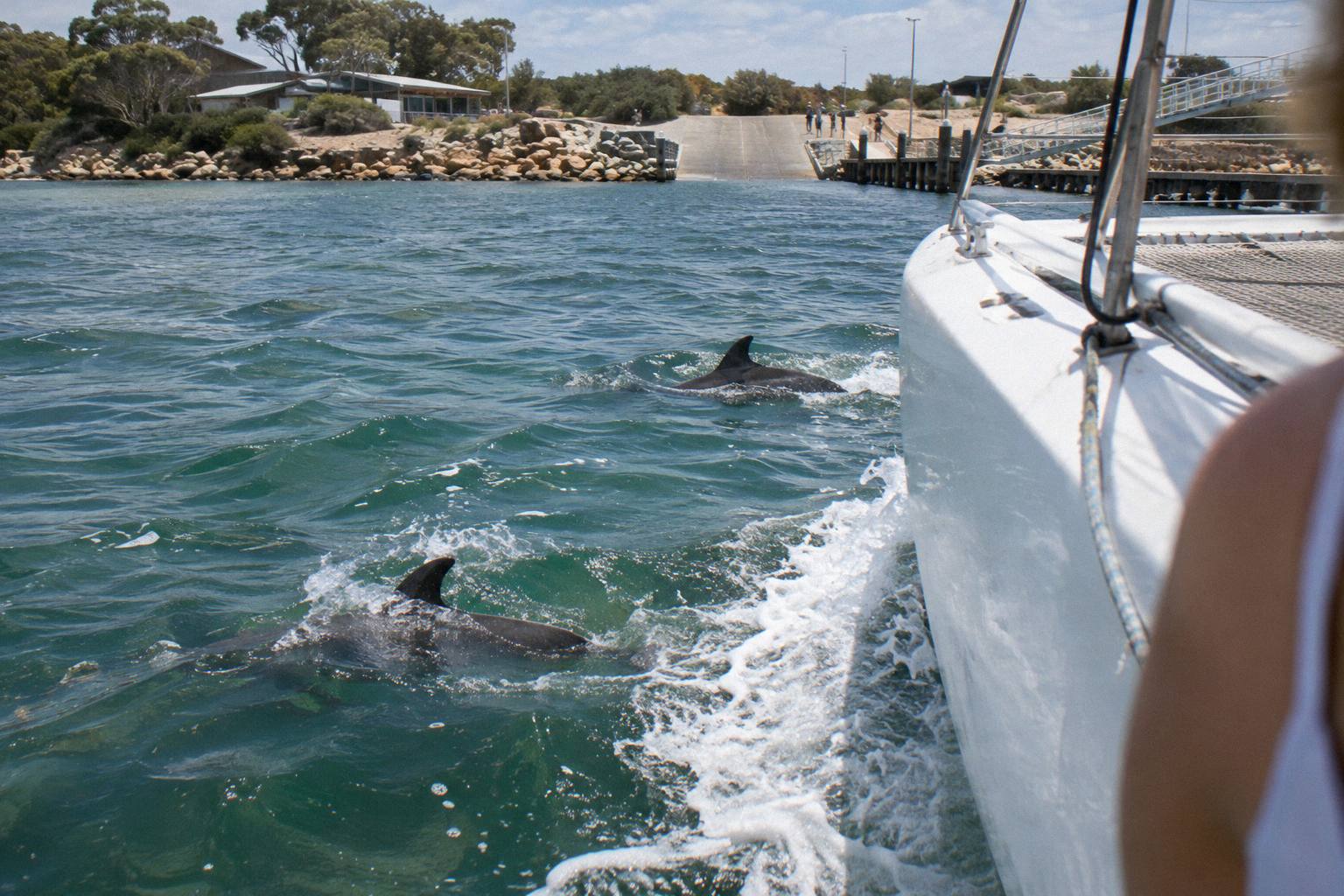
A Dunsborough cruise in October or November is, on the operators' own species lists, a humpback and southern right whale trip first, with minke whales as an October and November chance, dolphins often at the bow wave, and blue whales the rare overlay from October. Humpback mothers and calves rest in the bay on the southward return, and southern rights breed and nurse in sheltered south coast waters including Geographe Bay.
For anyone learning to tell the species apart, which is half the fun of a late-season trip, our guide on how to tell humpback, southern right and blue whales apart covers the identifying markers from a boat. The whale-specific background runs deeper in humpback whales in Geographe Bay and southern right whales on the Dunsborough coast, and the rare-sighting question gets its own treatment in our piece on whether seeing a blue whale from Dunsborough is rare.
The comfort layer matters too, because October and November on the water is still spring. Bureau of Meteorology averages for the Cape Naturaliste area put October at a mean maximum of 19.0 °C and November at 21.6 °C, with mean rainfall falling from 48.8 mm in October to 25.3 mm in November, the driest months of the whale season. Sea temperatures sit around 17 to 19 °C by satellite averages. Layers, sun protection and a camera remain the standing advice, and our what to wear on a whale cruise guide handles the detail.
Traveller Scenarios: Matching The Trip To Your Party
Families should lean on the operators' own age wording: Naturaliste says open to all ages and All Sea Charters says whole family and all ages. Photographers chasing a blue whale should book repeatable October or November dates using the 24-hour free cancellation on the booking pages. Mobility-limited travellers need to know the Dunsborough Naturaliste trip boards from the beach via a ramp, and the booking page says it is not suitable for mobility impairments.
Break it down by who is on the boat. A family with primary-aged children is buying humpbacks and calves, not blues; the whale cruise with kids guide covers prams, seasickness in children and the beach boarding reality. A photographer with a long lens and flexible dates is the one traveller for whom the blue whale window should dictate everything: book the last two weeks of October or any November sailing, keep the free cancellation in reserve, and rebook onto calm days, because a flat sea is worth more than any forecast of whales. Our piece on the best time of day for a whale cruise helps pick between the daily 10am and 2pm style departures.
| Traveller | Best fit | Why |
|---|---|---|
| Family with children | Any in-season Dunsborough cruise | Humpbacks and calves are the reliable show; operators state all-ages access |
| Photographer chasing a blue whale | Late October or November, flexible dates | The documented blue whale window; free cancellation up to 24 hours enables calm-day rebooking |
| Traveller prone to seasickness | Larger catamaran, prepared with medication | Both Dunsborough operators run catamarans; All Sea lists anti-nausea wristbands onboard; our seasickness guide has the detail |
| Visitor without a car | All Sea Charters listing | Hotel pickup and drop-off is listed, though which departure option carries it is not stated, so confirm with the operator |
| November first-time visitor | Dunsborough over Augusta | Augusta's season ends mid-August; Dunsborough runs to about the end of November |
Pregnant travellers have their own considerations, covered in whale cruise during pregnancy, and visitors combining the trip with the region's other draws can stack the Busselton Jetty and a whale cruise on the same day or build a Margaret River day trip around a whale cruise, since Margaret River town is about 40 to 50 minutes' drive from Dunsborough.
Questions To Ask The Operator Before Booking
Five questions do most of the work: whether blue whales have been sighted in recent weeks, what the no-sighting policy offers, what the exact departure point and time are, what the direct-booking cancellation terms are, and whether any mobility or age consideration applies to your party. Some of these details are not stated on the public pages, which is why asking beats assuming, and each answer is per operator, never a general rule.
Treat this as a script. The sighting question is fair game: operators track what their boats see, and a phone call in late October will tell you more about the current blue whale passage than any static web page can. The no-sighting policy question matters because the wording differs between operators; All Sea Charters publishes a come-back-free offer on its Dunsborough page while its full terms are not printed, and the Naturaliste direct-booking terms for guest cancellations scale from 20 percent of the fare more than 14 days out to 100 percent inside 7 days, which are the operator's own terms and never a general rule, since resellers carry their own.
| Question | Why it matters | Where the gap is |
|---|---|---|
| Have blue whales been seen on recent trips? | The corridor is active in pulses only the operator can see live | No source publishes live sightings |
| What does the no-sighting offer cover? | Policies differ and terms may not be printed on the page | All Sea's full terms are not published |
| Exact ramp and departure time? | All Sea publishes only "Geographe Bay Road" for Dunsborough | Clock times and ramp not stated for that operator |
| Which departure option includes hotel pickup? | Pickup is listed but not tied to a departure point | Not stated on the listing |
| Direct-booking cancellation terms? | Naturaliste's direct terms differ from the booking page's 24-hour free cancellation | Two regimes exist; confirm which applies to your ticket |
The practical closing advice is simple. Book in the window, book with free cancellation, confirm the ramp, and go expecting humpbacks. Our guide on whether you need to book a whale cruise in advance and the run-through of what happens on a whale cruise from Dunsborough finish the preparation.
Common Questions About Blue Whales Off Dunsborough
Are Blue Whales Seen From Dunsborough?
Yes, as a chance rather than a fixture. Naturaliste Charters names blue whales among the bay's species from October onwards, All Sea Charters describes them as occasional, and a 2014 SouWEST and IFAW research report recorded blue whale song and sightings in Geographe Bay during November surveys. No source publishes a sighting rate or an odds figure.
When Is Blue Whale Season In Geographe Bay?
Blue whales pass through Geographe Bay in spring, mostly from October to December, which is the safe summary of the research and operator statements. The Dunsborough cruise season runs about mid-August to the end of November for the main operator, so October and November are the only months where a scheduled cruise and the blue whale window overlap.
How Rare Is It To See A Blue Whale From Dunsborough?
Rare enough that no honest source gives a percentage. The eastern Indian Ocean pygmy blue whale population is estimated at 662 to 1,559 whales (McCauley and Jenner 2010, via the International Marine Mammal Habitat factsheet), and the animals transit a corridor rather than resting in the bay, so every confirmed sighting is a notable event rather than a routine one.
Can You Swim With Blue Whales In Western Australia?
No. Western Australian law makes it illegal for individuals to swim within 100 m of any whale, and the only licensed in-water humpback interactions run in Ningaloo Marine Park State waters and the Muiron Islands Marine Management Area. No swim-with-whales product exists in Geographe Bay or on any Dunsborough tour.
Is A Blue Whale The Biggest Animal On Earth?
This site prints only what its verified sources state, and none of them offers a size, weight or description of blue whales beyond the transit corridor wording, the Endangered listing, the population estimate and the recorded song. The rare-sighting context is covered in our blog post on whether seeing a blue whale from Dunsborough is rare.
Which Dunsborough Cruise Should I Book For A Blue Whale?
Book an October or November departure with free cancellation. Dunsborough Whale Watching Tour With Naturaliste Charters, rated 4.7 across 137 reviews with AUD 71 per person shown on the booking page, names blue whales from October onwards; All Sea Charters, rated 4.8 across 438 reviews with its price on the live listing, describes them as occasional. Expect humpbacks as the main event and treat a blue whale as the bonus.