Dunsborough Or Augusta: Which Whale Cruise Fits Your Trip?
Dunsborough and Augusta sit about 90 km apart on Western Australia's south west coast, and each runs whale cruises in a different part of the year. Here is how the two ports compare on the facts that decide a booking: season, species, departure logistics, duration and price.
Short answer
Cruise from Dunsborough between August and November, or from Augusta between May and mid-August. Both Naturaliste Charters trips are listed at AUD 71 per person on the booking pages and run about 2 to 2.5 hours. Dunsborough covers more species including blue whales from October; Augusta focuses on southern right and humpback whales close to shore.
Two ports, one coastline, and a booking decision that comes down to a single question most travellers ask too late: when are you actually going? Dunsborough and Augusta are neighbours on the map, about 90 km and roughly an hour and a quarter apart by road, but their whale seasons barely overlap. Pick the wrong port for your month and there may be nothing on the water at all. Pick the right one and you are choosing between two genuinely different trips: a Dunsborough cruise that runs in spring, with a chance at blue whales from October, or an Augusta cruise that runs through winter for southern right whales and humpbacks. This guide compares the two on stated facts only, so you can match the cruise to your dates, your base and your travelling party.
What Is The Difference Between Dunsborough And Augusta Whale Cruises?
Dunsborough and Augusta differ mainly in season and setting: Dunsborough cruises run August to November in Geographe Bay, while Augusta cruises run May to mid-August. Dunsborough offers a wider species list, Augusta centers on southern right whales and humpbacks, and both Naturaliste Charters trips cost AUD 71 per person and last about 2 to 2.5 hours.
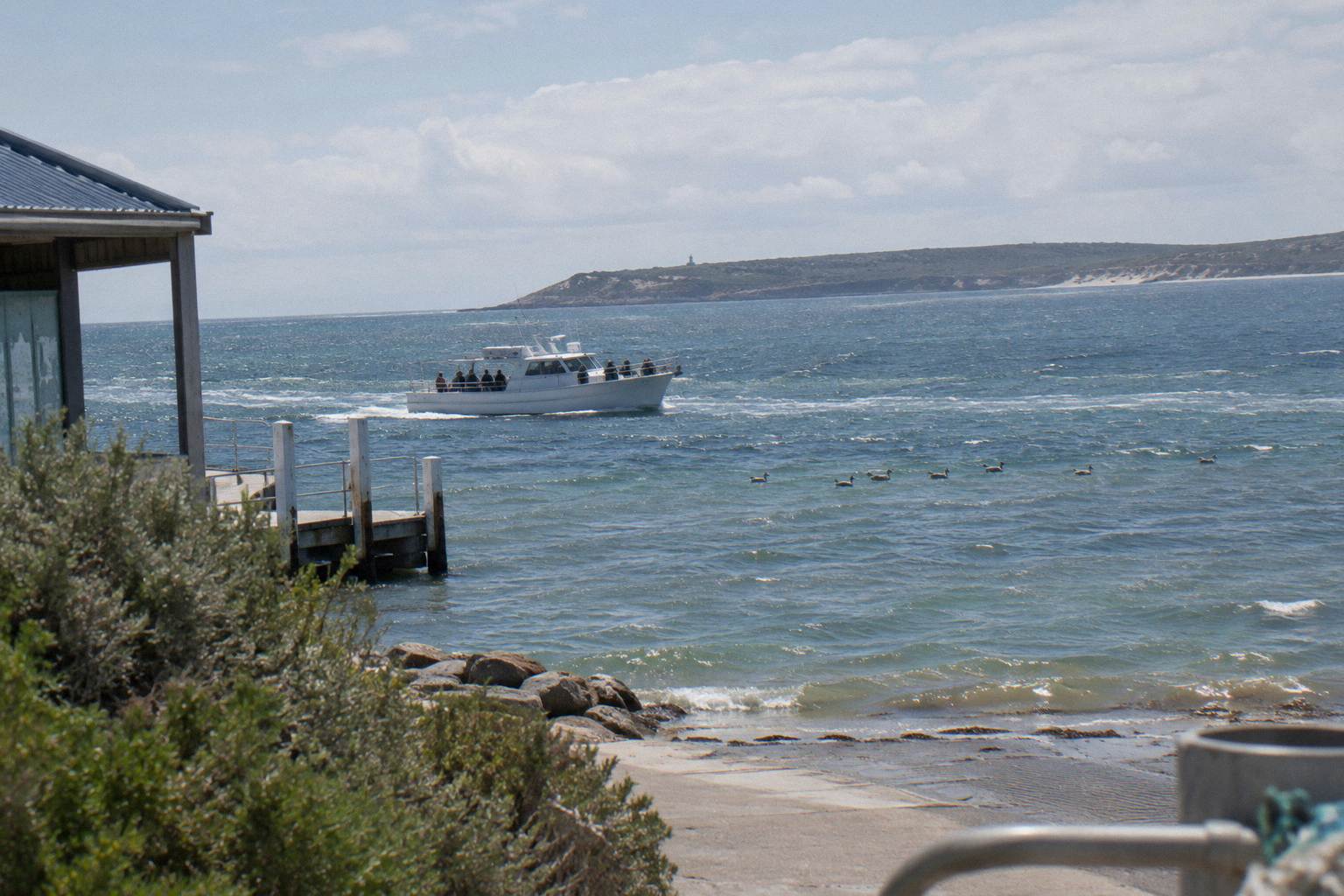
Everything else flows from that. The Dunsborough cruise runs from August to the end of November, departing the Professional Fisherman's Boat Ramp in Quindalup, while the Augusta trip runs from May to mid-August, departing Augusta Boat Harbour. Neither trip is a lesser version of the other. They are different products sold from different harbours at different times of the year.
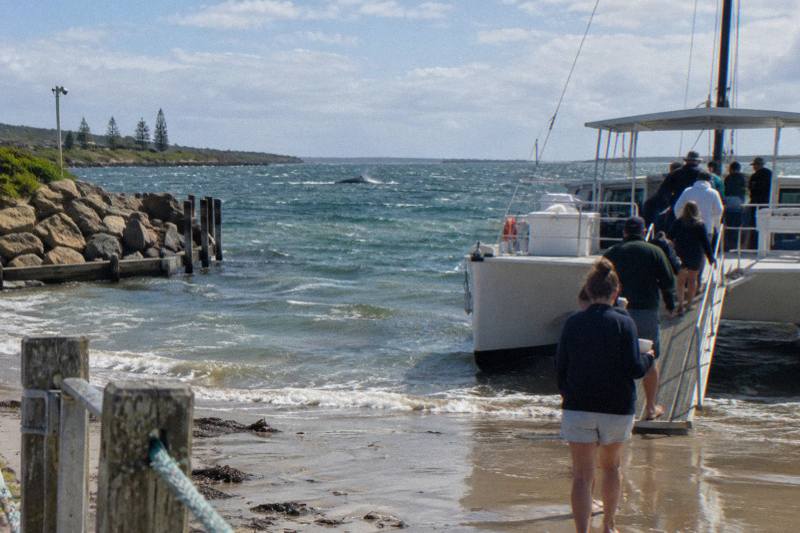
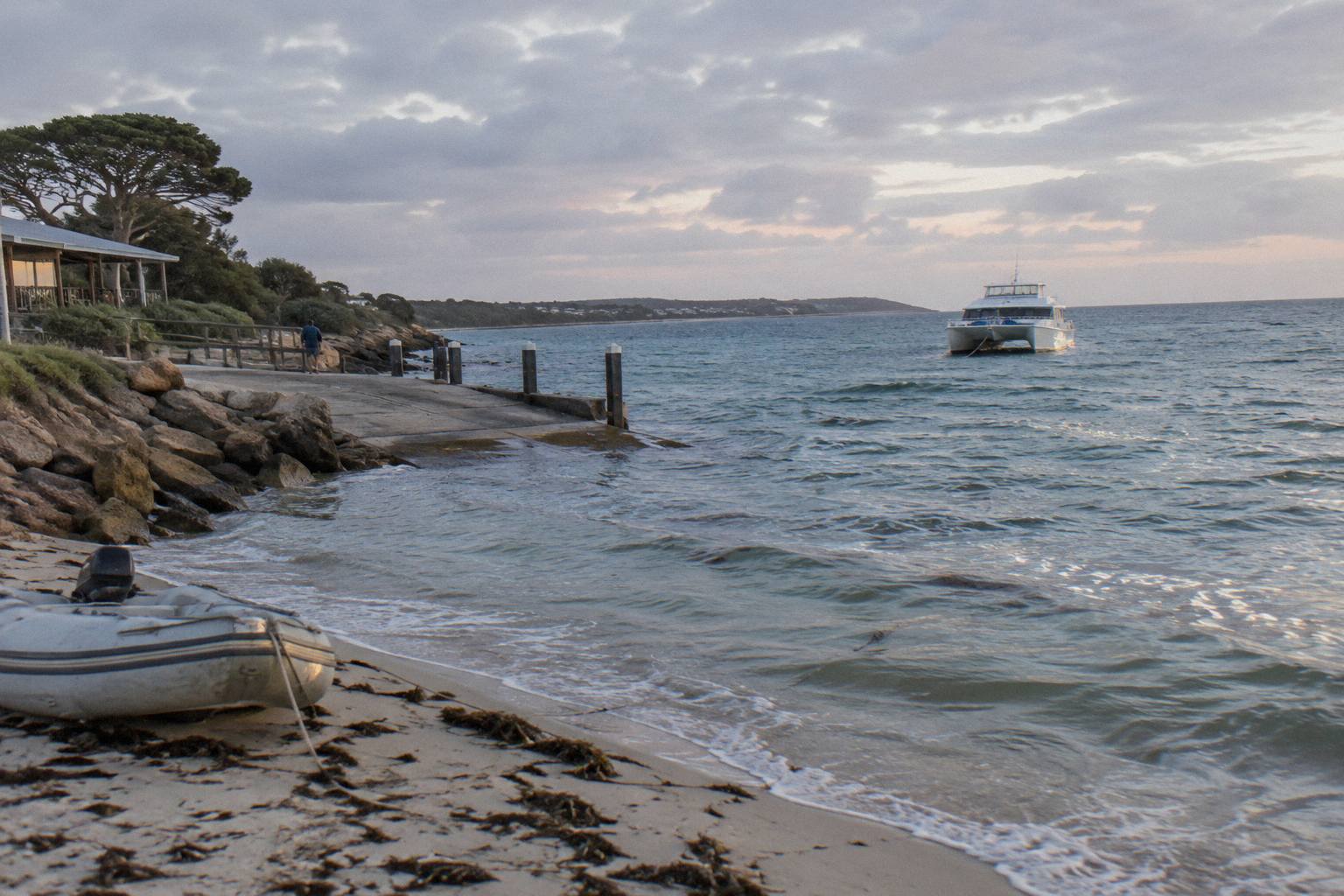
The vessels and boarding differ too. The Dunsborough trip uses the Alison Maree, a 23 m catamaran, reached by beach boarding: guests walk a handrailed ramp onto a smaller transfer vessel at the Quindalup ramp before joining the main boat. The Augusta trip departs directly from Augusta Boat Harbour on Leeuwin Road, a conventional marina, and its booking page states the tour is wheelchair accessible. That single accessibility line is a genuine differentiator for some travellers, and it only appears on the Augusta side.
Here is the head-to-head on the facts both operators state:
| Dunsborough cruise | Augusta cruise | |
|---|---|---|
| Season | August to November (operator FAQ: mid-August to end of November) | May to mid-August |
| Daily departures | 10am and 2pm | 10am and 2pm from Augusta Boat Harbour |
| Listed duration | 2.5 hours listed, operator says allow up to 3 | About 2 to 2.5 hours |
| Departure point | Professional Fisherman's Boat Ramp, Quindalup, via beach boarding | Augusta Boat Harbour, Leeuwin Road |
| Species named by operator | Humpback, southern right, blue (from October), minke (Oct-Nov, chance) | Southern right and humpback |
| Booking-page rating | 4.7 across 137 reviews | 3.9 across 14 reviews |
| Booking-page price | AUD 71 per person, can change | AUD 71 per person, can change |
| Free cancellation | Up to 24 hours on the booking page | Up to 24 hours on the booking page |
| Accessibility stated | Beach boarding; not suitable for mobility impairments per booking page | Booking page states wheelchair accessible |
One operator, Naturaliste Charters, runs both ports, which makes the comparison unusually clean: same company, same listed price, same cancellation window, two different products. A second operator, All Sea Charters, also offers cruises from both Dunsborough and Augusta, and we cover its differences below. For more on how the two bays work season by season, see our Geographe Bay whale season month by month guide and the companion piece on the Augusta whale season from June to August.
Which Whales Will You See From Each Port?
Dunsborough operators name four whale species: humpbacks, southern right whales, blue whales from October onwards, and minke whales as a chance encounter in October and November. Augusta operators name two: southern right whales and humpbacks, with southern rights breeding and nursing in the sheltered south coast waters. The species list, not the scenery, is the strongest reason to choose Dunsborough in spring.
The humpback story is the backbone of both ports. Humpbacks pass the Western Australian coast twice a year, northbound in winter and southbound in spring, and the Department of Biodiversity, Conservation and Attractions notes that humpbacks begin their southern migration as the Dunsborough season opens. Mothers and calves rest in Geographe Bay on the southward return, which is why late-season Dunsborough trips often produce long, close-range viewing of pairs moving slowly. Our guide to humpback whales in Geographe Bay covers that pattern in detail.
Southern right whales are the winter signature at Augusta. They breed and nurse in sheltered south coast waters, and Augusta's season runs May to mid-August. From Dunsborough they appear too, generally from mid-August or September as the season turns, and our piece on southern right whales on the Dunsborough coast explains what separates them from humpbacks at a glance.
Blue whales are where the ports genuinely part ways. The International Marine Mammal Habitat factsheet for the Geographe Bay and Eucla Shelf coastal waters states that large numbers of pygmy blue whales, with calves, use Geographe Bay and the Naturaliste Plateau as a narrow transit corridor, and lists the eastern Indian Ocean population estimate at 662 to 1,559 animals, classifying the species as Endangered. Blue whales pass through Geographe Bay in spring, mostly from October to December, and research surveys have recorded blue whale song and sightings in the bay into November. No operator at Augusta claims blues. If a blue whale is on your list, Dunsborough in late October or November is the only one of the two ports that offers a stated chance.
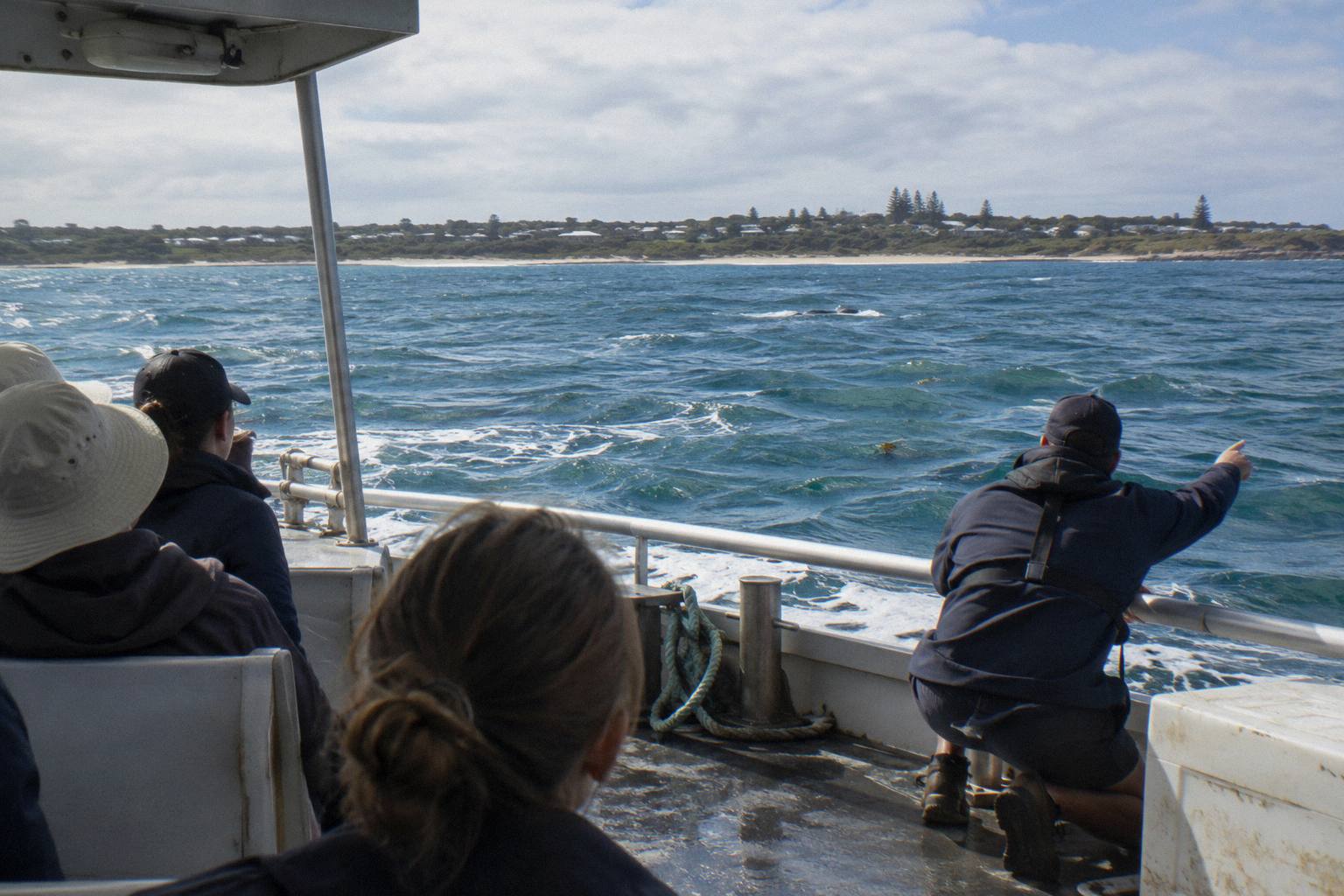
Minke whales are a footnote at Dunsborough only: the operator names October and November as the window and calls them chance encounters, which is honest language worth keeping. Dolphins, meanwhile, ride the bow wave on many Dunsborough departures, and the difference between how the two ports treat dolphins and other marine life is covered in our dolphin and whale cruises from Dunsborough comparison. Neither port offers in-water whale experiences: Western Australian law bars people from swimming within 100 m of a whale, and the only licensed humpback swim program runs at Ningaloo, far to the north.
When Should You Cruise From Dunsborough And When From Augusta?
Cruise from Augusta in May, June, July or the first half of August, and from Dunsborough from mid-August through November. The seasons barely overlap, so your travel month makes the decision for you: winter dates point to Augusta, spring dates point to Dunsborough, and only a mid-August trip sits in the narrow window where both could run.
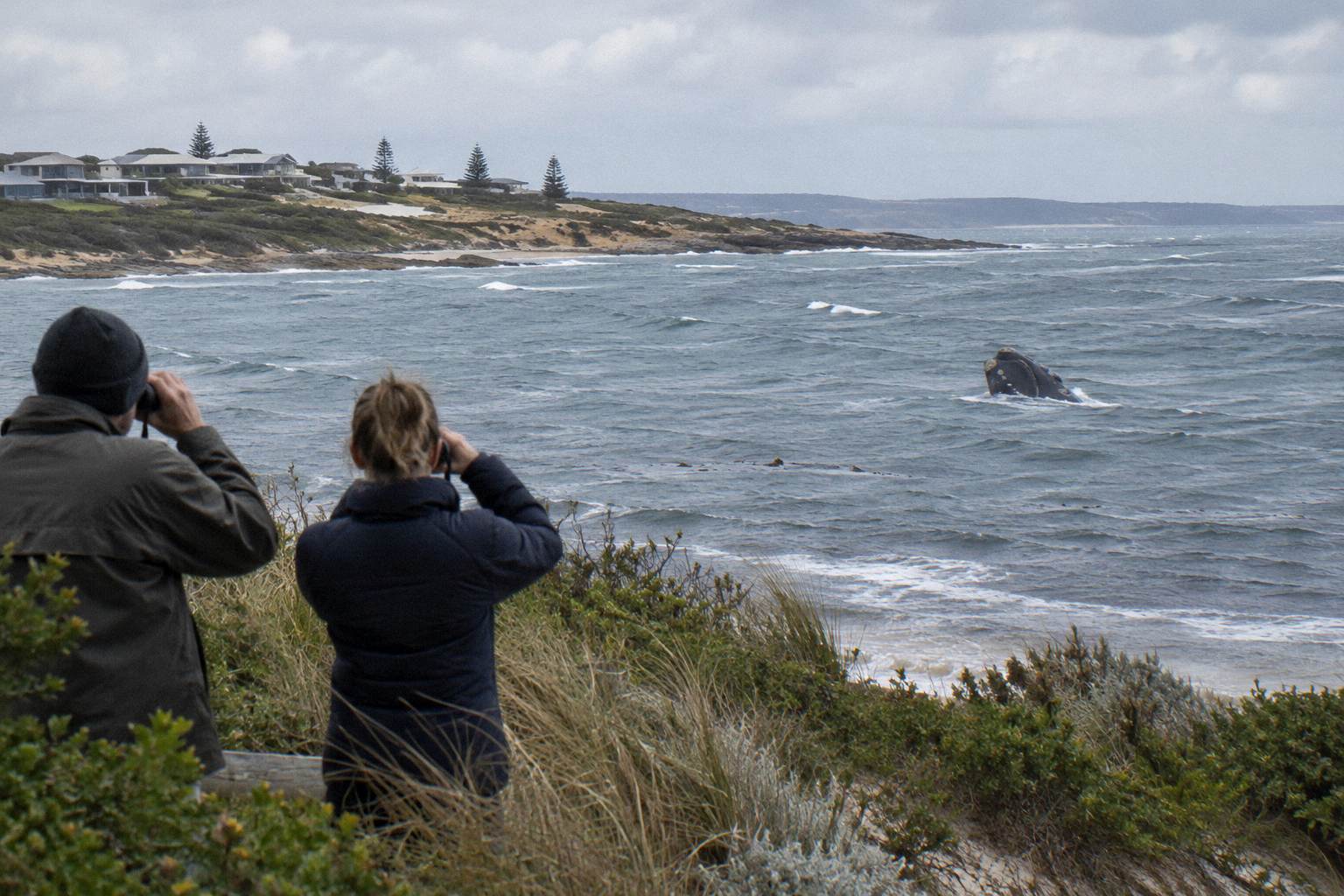
That is the honest summary, and it is worth being blunt about it because plenty of visitors plan around accommodation or school holidays first and discover the season afterwards. Augusta's operator pages put the season from May to mid-August, and they differ slightly on the exact end date, so treat mid-August as the working boundary rather than a precise cutoff. Dunsborough's operator states August to November on its tour page and mid-August to the end of November on its FAQ; the second operator in the bay, All Sea Charters, says mid-August to early December for its own trip, with September to early November named as the main window. Safe wording for either port: late winter to early summer for Dunsborough, winter for Augusta.
The mid-August crossover deserves a sentence of its own. If you are travelling in that fortnight, you can genuinely choose, and the tiebreaker becomes species: Augusta for southern right calf viewing as that season closes, or Dunsborough for the start of the spring humpback run with the outside chance of an early blue. Our Dunsborough or Busselton comparison covers a different pairing for the same bay, and our month-by-month guide breaks the whole calendar down.
By month, the decision looks like this:
| Your travel month | Port that fits | What is on the water |
|---|---|---|
| May | Augusta | Southern rights and humpbacks arrive; season opening |
| June to July | Augusta | Peak southern right nursing season, humpbacks passing |
| Early to mid-August | Augusta, or Dunsborough as it opens | Last southern right weeks; Dunsborough season begins mid-month |
| September | Dunsborough | Humpbacks and southern rights in the bay |
| October | Dunsborough | Blue whales from October onwards, minke chance, humpbacks |
| November | Dunsborough | Late season, ends about the end of November; blue chance persists |
What Do The Two Cruises Cost?
Both Naturaliste Charters cruises show AUD 71 per person on the booking page, a figure that can change, and both carry free cancellation up to 24 hours before departure. The All Sea Charters trip from either port shows its fare on its live listing.
Those review pools are not comparable in size, and the small Augusta pool especially should be read as a handful of guests rather than a verdict. Numbers this different in scale are a reason to look at what each trip includes rather than to average them, and our guide to what a whale cruise costs from Dunsborough goes deeper on pricing than this comparison needs to.
Direct fares are a separate thing from booking-page prices, and they belong in their own table with their own label: these apply only for bookings made direct with the operator, and they are never compared against the booking-page figure. Child age bands differ between operators, 3 to 14 for Naturaliste Charters against up to 17 for All Sea Charters, so the bands are listed exactly as stated.
| Operator and trip | Adult | Child | Family | Notes on direct fares |
|---|---|---|---|---|
| Naturaliste Charters, Dunsborough | AUD 105 | AUD 65 (3 to 14) | AUD 300 (2 adults, 2 children) | Seniors AUD 95, infants free |
| Naturaliste Charters, Augusta | AUD 105 | AUD 65 (3 to 14) | AUD 300 (2 adults, 2 children) | Seniors AUD 95, infants free |
| All Sea Charters, Dunsborough | AUD 100 | AUD 65 (up to 17) | Not printed | Infants 0 to 2 free |
| All Sea Charters, Augusta | AUD 95 | AUD 55 (3 to 17) | AUD 275 (2 adults, 2 children) | Stated on the operator's Augusta page |
The AUD 65 figures are child fares and never an adult or from price. What you get on board also differs a little. Both Naturaliste trips include tea, coffee, milo, filtered water, green tea and biscuits. The All Sea Charters booking page lists tea and coffee onboard and anti-nausea wristbands available, though not every onboard extra is spelled out on the page. Its Dunsborough trip runs on the Whale Song, a 17 m aluminium catamaran with a climate-controlled cabin, two outside decks and an accessible toilet, and is listed at 2 to 2.5 hours against the roughly 2.5 to 3 hours the operator states for its own Dunsborough page.
One practical difference between the two Naturaliste trips is duration as booked: Dunsborough is listed at 2.5 hours with the operator saying to allow up to 3 depending on sightings, Augusta at 2 hours. Our piece on how long a whale cruise from Dunsborough runs unpacks why the same trip can vary by an hour. Whichever you choose, both operators' sighting arrangements exist, and the sighting guarantee and what it covers guide explains the comeback-free wording All Sea Charters uses on its Dunsborough page.
How Do You Get To Each Departure Point?
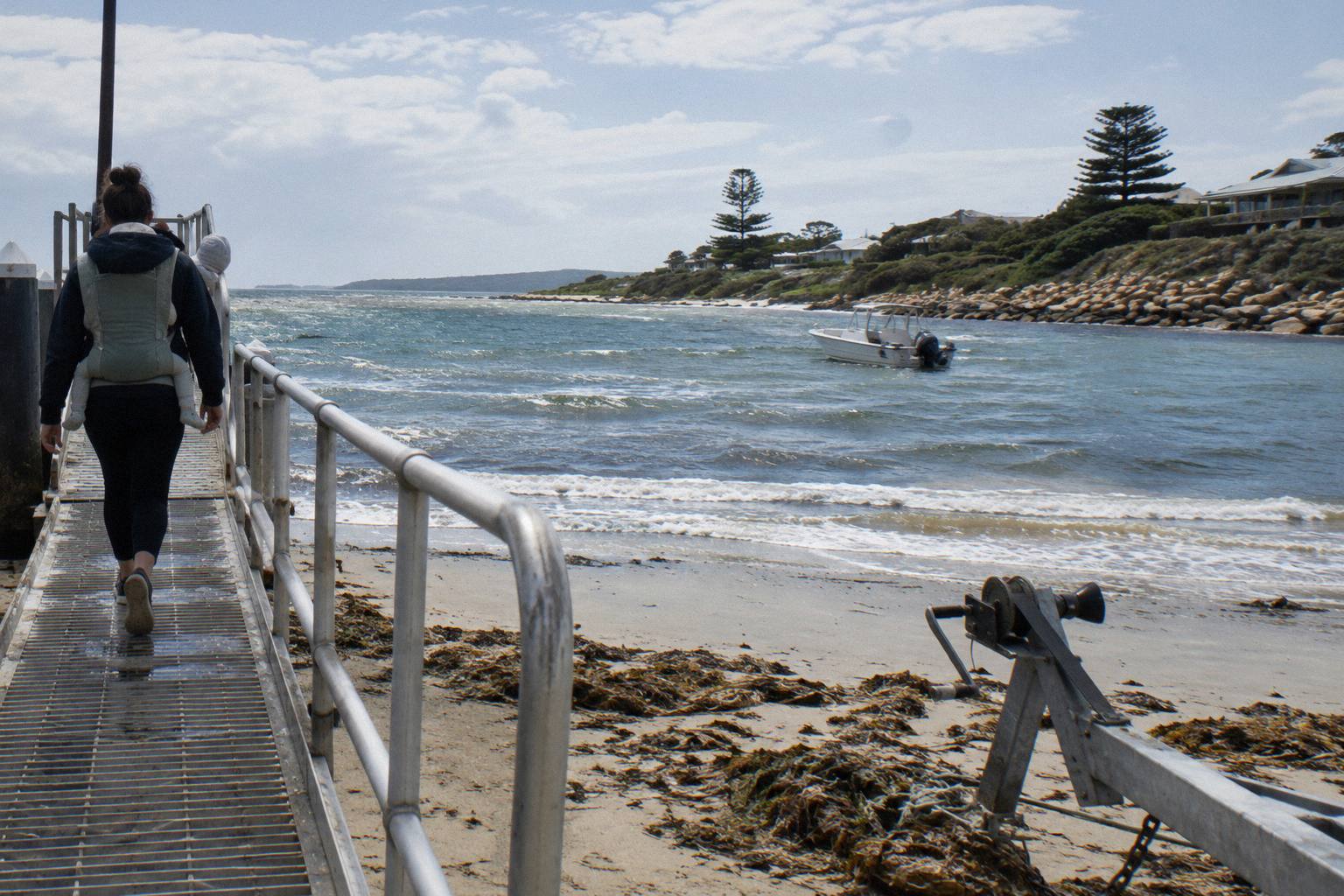
The Quindalup departure catches people out. It is not the town jetty and it is not a marina in the usual sense; it is a working boat ramp, and boarding there is via the beach: a handrailed ramp onto a transfer vessel, then out to the Alison Maree. Guests are told to arrive 15 to 30 minutes before departure, and the daily sailings are at 10am and 2pm. The Augusta trip departs from Augusta Boat Harbour on Leeuwin Road, and its listing states wheelchair accessibility, which matters if someone in your group finds a beach ramp difficult. For orientation, our Busselton or Dunsborough piece and the Perth to Dunsborough whale cruise day trip planner cover the northern approaches.
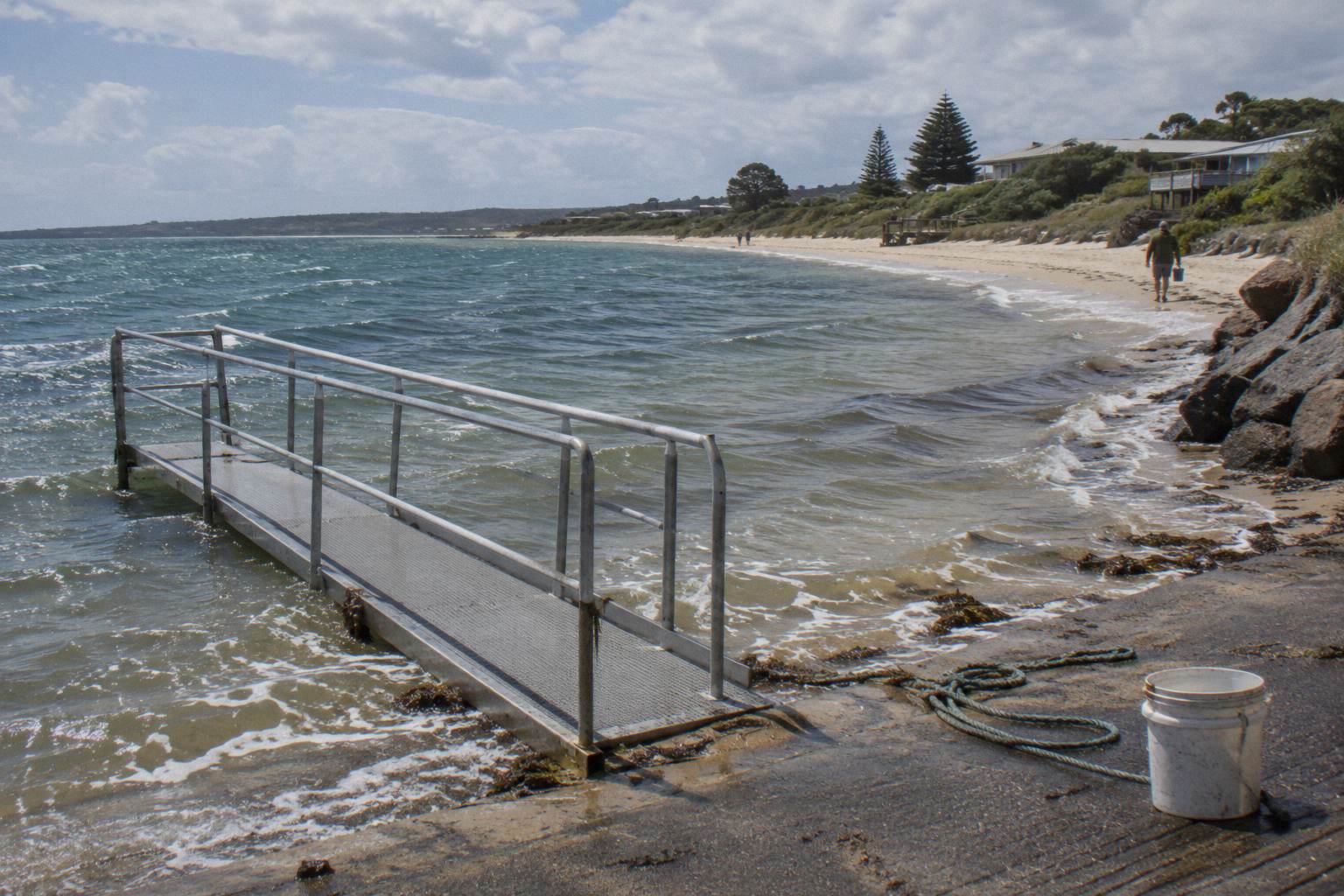
Drive times, town centre to town centre, from the regional tourism tables:
| Route | Distance | Drive time |
|---|---|---|
| Dunsborough to Augusta | About 90 km | About 1 hour 10 minutes to 1 hour 30 minutes |
| Perth to Dunsborough | About 250 km | About 3 to 3.5 hours |
| Perth to Augusta | About 320 km | About 3 hours 50 minutes to 4 hours 50 minutes |
| Busselton to Dunsborough | About 25 km | About 25 minutes |
| Dunsborough to Margaret River town | About 45 km | About 40 to 50 minutes |
Those figures shape the base-town decision as much as the whales do. Staying in Dunsborough or Busselton puts Quindalup within half an hour and makes the 10am sailing comfortable after breakfast; Augusta is a genuine drive south, best treated as its own overnight stop rather than a dash from the northern towns. The Augusta cruise's own departures are at 10am and 2pm from the harbour, so an Augusta-base traveller loses nothing in scheduling. Weather is a real factor in both places across winter and spring, and the operator cancels for sea conditions with a transfer or refund of the tour fare under its direct-booking terms; our seasickness on a Geographe Bay whale cruise guide covers the practical side of a rough day.
The Augusta trip with Naturaliste Charters is the smaller-listed of the two, at 2 hours against Dunsborough's 2.5, with a marine biologist on board and expert commentary per its booking page, which also notes morning or afternoon tea is included. It carries the same free cancellation up to 24 hours on that page.
Which Cruise Suits Families, Mobility And First Timers?
For young families, Dunsborough has no minimum age, the operator says the trip is open to all ages, and infants go free on direct fares; All Sea Charters states all ages for its Dunsborough trip too. For anyone with limited mobility, Augusta is the stated fit: its booking page says wheelchair accessible, while Dunsborough's beach boarding makes it unsuitable for mobility impairments per its page.
The mobility line is the sharpest dividing fact in this whole comparison, and it is worth stating plainly because it is easy to miss. Beach boarding means walking a ramp to a transfer boat, then a step across to the catamaran, and the operator's own guidance says guests with limited mobility may need further assistance. The Dunsborough booking page goes further and says the tour is not suitable for mobility impairments. Augusta Boat Harbour boarding is level and marina-standard, and the booking page states wheelchair accessibility outright. If that describes your group, the port decision is already made regardless of month, and it may be worth shifting your dates to the Augusta season.
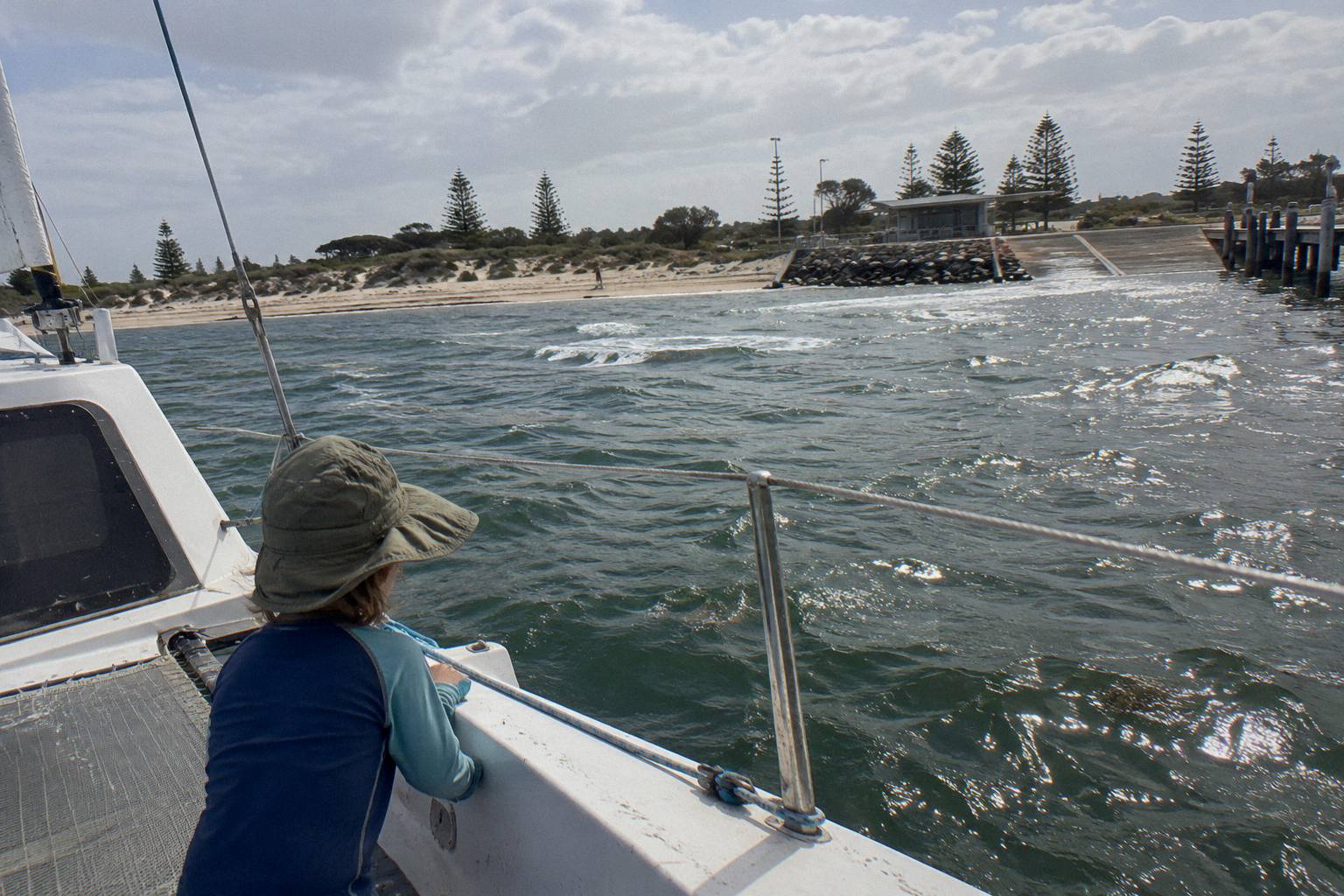
For children, both ports work, with age bands and pricing differences to check against your family's ages: Naturaliste's child fare covers 3 to 14, All Sea Charters' covers up to 17 from Dunsborough and 3 to 17 from Augusta. Our whale cruise with kids from Dunsborough guide carries the full run-down, and if you are expecting, the whale cruise during pregnancy piece addresses the steadier-water question directly. First timers should simply know what the day involves; our walkthrough of what happens on a whale cruise from Dunsborough covers the ramp, the transfer, the tea and the sighting pattern in order.
On board, the Dunsborough catamaran has two toilets with hand washing and life jackets for everyone, and both operators serve hot drinks. The law sets how close any boat may go: under the Biodiversity Conservation Regulations 2018, a vessel must stay 300 m from a whale within a 60 degree arc to its front or rear and 100 m to the side, and a person must stay 100 m away, with fines of AUD 5,000 for breaches. If a whale approaches the boat inside those distances, the skipper must put the engines in neutral or move off at no more than 6 knots, which is why whales sometimes drift close of their own accord. For the full distances see our how close can whale cruise boats legally get guide, and the regulation text itself is published on the Western Australian legislation site.
What If You Want Something Other Than A Whale Cruise?
If your dates fall outside both seasons, or you want a different shape of day, two listed options sit beside the cruises: the Geographe Bay Eco And Snorkel Trip, a 2-hour eco boat trip with optional snorkelling, minimum age 6, and the Coastal Wildlife Eco Tour, a 3.5-hour land-based walk and drive with pickup included. Neither is a whale cruise, and neither promises whales.
Both come from operators adjacent to the whale fleet rather than from it, and both carry free cancellation up to 24 hours on their listing pages. The eco and snorkel trip is the closer cousin: it is still a boat on Geographe Bay, with cold water and soft drinks provided, but its focus is the bay's wider marine life with a snorkel option for those who want to get in the water with something smaller than a whale. Six reviews is a small pool, so read the rating as a handful of guests rather than a crowd's verdict. The coastal wildlife eco tour stays on land entirely, a walk-and-drive format over 3.5 hours with water and morning tea included, which suits travellers who would rather not take a boat at all.
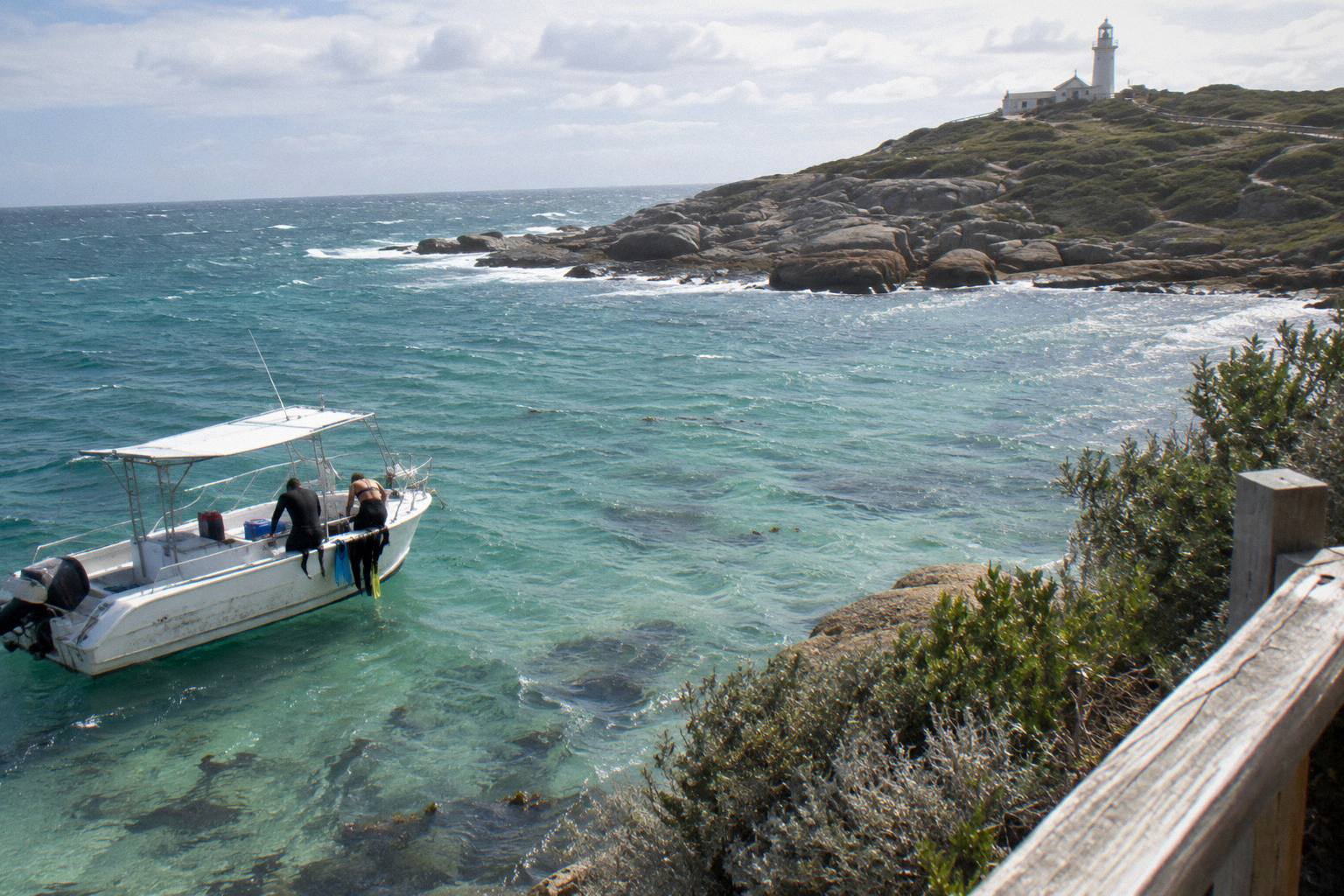
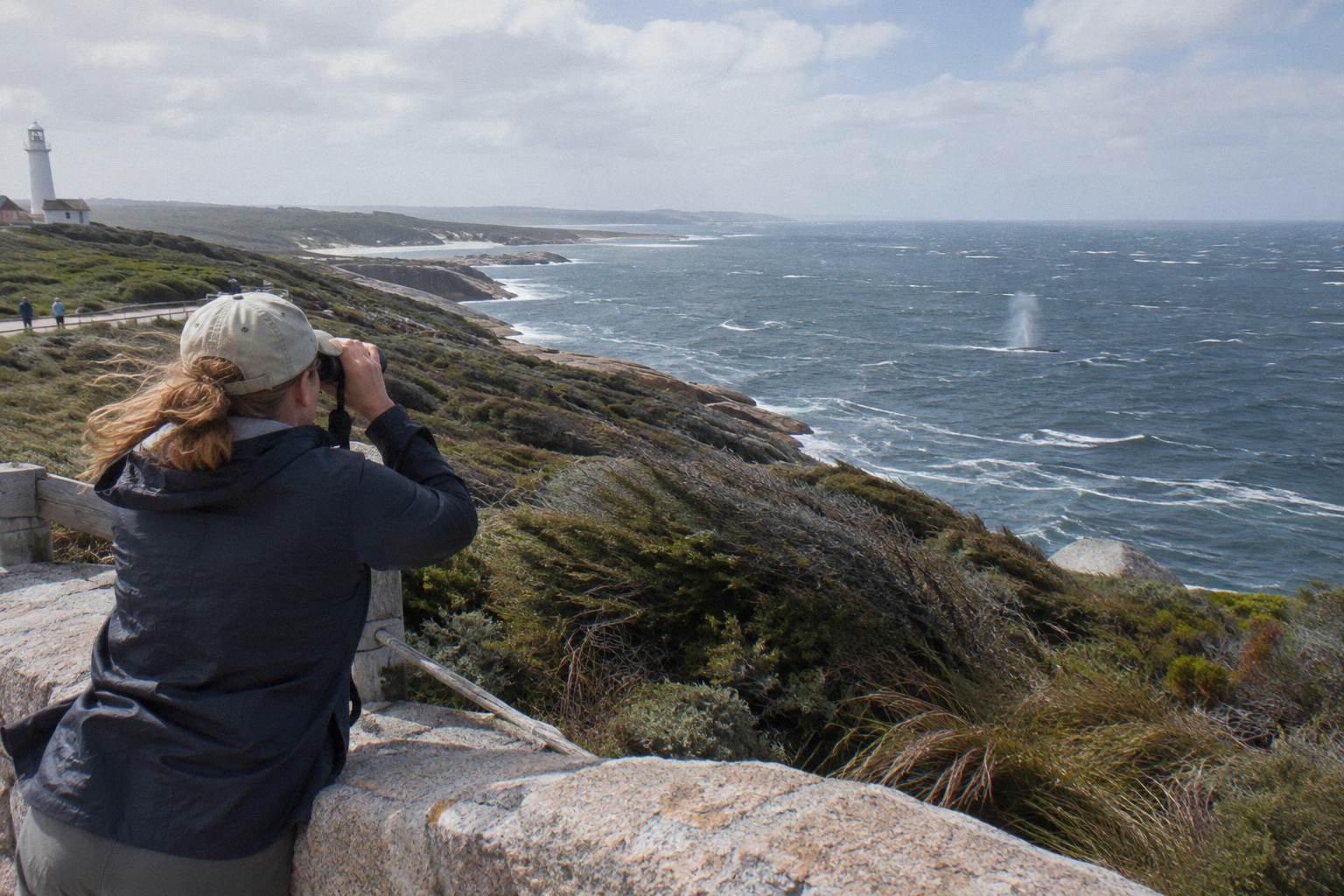
There is also a land-based whale option that costs nothing: watching from the shore at Cape Naturaliste, where the elevated cliffs give a long view of the bay during the Dunsborough season. Our whales from the shore at Cape Naturaliste guide covers where to stand and what you can realistically see, and the lighthouse itself is about 13 km and roughly 30 minutes from Dunsborough town including stops. For the broader context of how this stretch of coast compares with the state's other whale regions, our where Dunsborough fits among Western Australia whale spots overview places both ports on the same map as Ningaloo and Albany, the latter compared directly with Dunsborough in Albany or Dunsborough for whales.
The site's own featured cruise, the Dunsborough Whale Watching Tour With Naturaliste Charters, sits at the centre of this comparison because it covers the widest season window and the longest species list of any trip in the roster, and Dunsborough Whale Watching exists to help readers decide exactly this kind of question with stated facts rather than slogans. Check availability on the live listing if your dates fall inside its season.
Common Questions About Dunsborough Or Augusta Whale Cruises
Which Is Better For Whale Watching, Dunsborough Or Augusta?
Neither is better; they run at different times. Augusta cruises operate from May to mid-August, focused on southern right whales and humpbacks. Dunsborough cruises run from August to November, with humpbacks, southern rights, blue whales from October and a chance of minke whales. Your travel month makes the choice.
Can You See Whales In Augusta In September?
The Augusta season runs from May to mid-August on the operator's pages, so September falls outside it. In September the action moves to Dunsborough, about 90 km and roughly an hour and a quarter north by road, where the season runs from mid-August to the end of November.
Is Dunsborough Or Augusta Better In July?
July is Augusta's season, with southern right whales nursing calves and humpbacks passing. Dunsborough's cruise season does not open until mid-August, so July travellers should book from Augusta Boat Harbour.
How Far Apart Are Dunsborough And Augusta?
About 90 km by road, a drive of about 1 hour 10 minutes to 1 hour 30 minutes town centre to town centre. It is far enough that most travellers base themselves at one port rather than driving between them on cruise day.
Do Both Cruises Cost The Same?
Both Naturaliste Charters cruises show AUD 71 per person on their booking pages, a figure that can change. Fares printed on the Naturaliste Charters website price both trips, booked direct with the operator, at AUD 105 adult, AUD 65 child (3 to 14) and AUD 300 for a family of four. Fares printed on the All Sea Charters website price its trips at AUD 100 adult at Dunsborough and AUD 95 adult at Augusta.
Which Cruise Is Easier For Wheelchair Users?
Augusta. Its booking page states the tour is wheelchair accessible and it departs from a conventional boat harbour. The Dunsborough trip uses beach boarding at Quindalup, walking a ramp onto a transfer vessel, and its booking page says the tour is not suitable for mobility impairments.