Is It Rare To See A Blue Whale From A Dunsborough Cruise?
What the operators, researchers and habitat maps actually say about blue whale sightings from Dunsborough, which months matter, and what to ask before you book a Geographe Bay cruise.
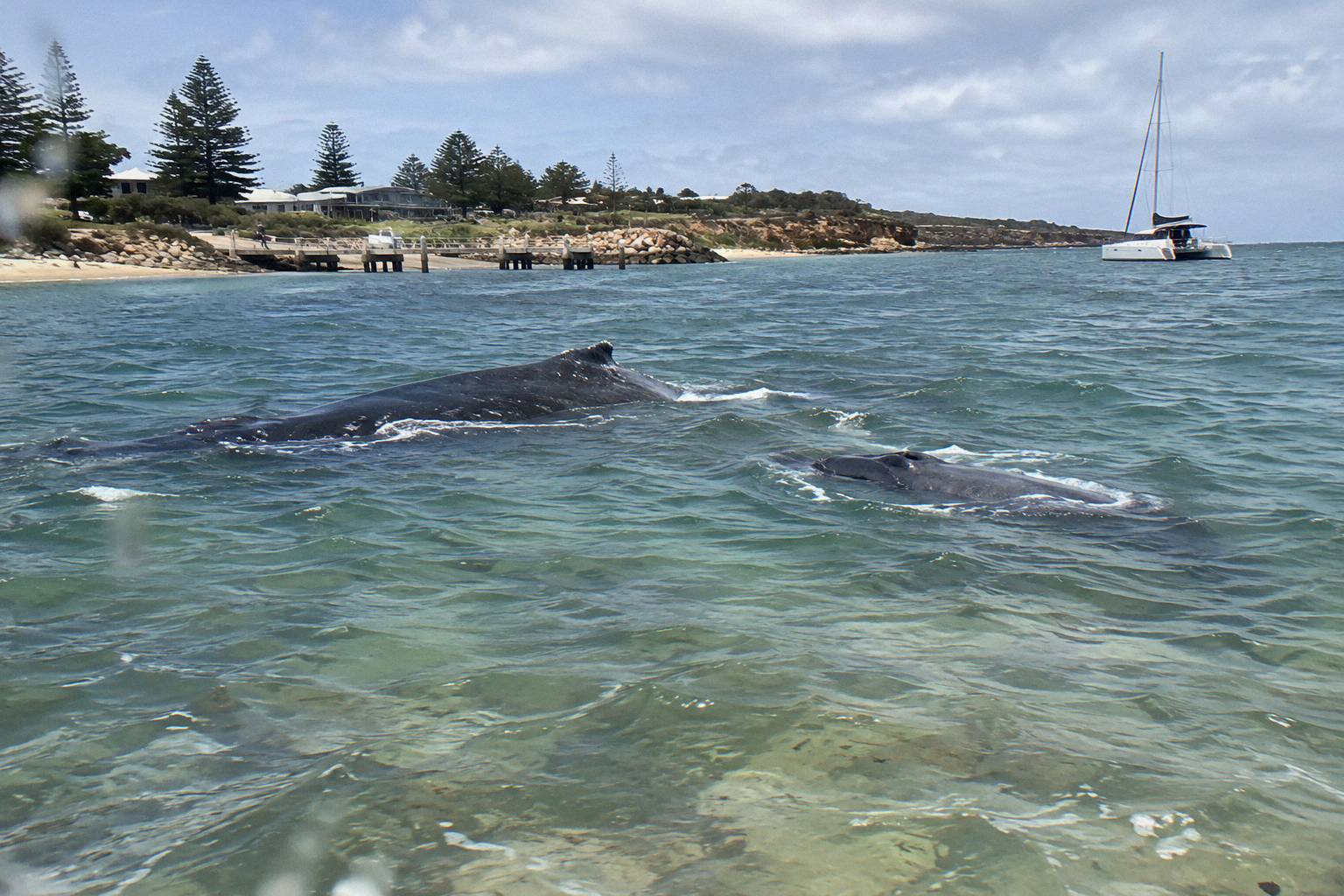
No honest answer calls it either rare or common, because no sighting rate for blue whales from Dunsborough cruises has been published by anyone. What the sources do say is concrete: Naturaliste Charters lists blue whales among its species "from October onwards", All Sea Charters describes them as "occasionally" seen, and a marine habitat factsheet confirms the bay sits on a narrow pygmy blue whale transit corridor. That is the whole verified picture, and it is more useful than a guessed percentage. The right way to plan is by month, by operator statement and by the questions you ask before booking, which is exactly what this page does.
The honest framing matters here. A reader hoping for a blue whale is deciding whether a cruise is worth booking at all, and the temptation on many travel pages is to dress hope up as probability. Nothing in this article invents an odds figure, because none exists in any source this site has verified. Instead you get the stated facts from both Dunsborough operators, the research record for Geographe Bay, and a decision framework for booking with blue whales as your hoped-for outcome rather than your expectation.
That framing has a practical payoff too. Geographe Bay cruises run about August to the end of November, and humpback and southern right whales are the species the bay is genuinely built around, with mothers and calves resting in the bay on the southward return. Blue whales are the bonus layer on top of a season that already delivers. Booking a cruise in the right month improves your blue whale chances without hurting your baseline whale watching at all, and that is the position a sensible planner wants to be in.
What Do The Dunsborough Operators Actually Say About Blue Whales?
Two operators run Dunsborough whale cruises and both name blue whales, in different words. Naturaliste Charters lists blue whales among its species "from October onwards", and All Sea Charters says blue whales are seen "occasionally" on its Dunsborough page. Neither operator prints a sighting rate, a season count or a percentage for blue whales, so those two short statements are the entire operator record. Treat them as claims from the operators themselves, which is what they are, and nothing more.
The Naturaliste statement is the more specific of the two because it attaches a month. "From October onwards" lines up with the cruise season itself, which the operator runs to the end of November, so the blue whale window inside a Dunsborough season is roughly the final two months of it. That also lines up with the research record, which is a good sign that the operator statement reflects real bay traffic rather than marketing warmth.
The All Sea Charters statement is softer. "Occasionally" is an honest word and it is worth taking at face value: the operator is telling you blue whales are part of the possible mix on a Dunsborough cruise without promising a pattern. It is also the operator whose Dunsborough season runs later, "mid August to early December" on its own page, which matters if you want the latest possible season dates.
| Operator (Dunsborough trip) | What it says about blue whales | Season stated on its own page | Cruise length stated |
|---|---|---|---|
| Naturaliste Charters | Among named species "from October onwards" | Mid-August to the end of November | About 2 hours, allow up to 3 |
| All Sea Charters | Seen "occasionally" | Mid August to early December, main window September to early November | Approximately 2.5 to 3 hours |
The booking pages carry their own figures. The Dunsborough Whale Watching Tour With Naturaliste Charters is rated 4.7 across 137 reviews, listed at 2.5 hours, with the booking page showing AUD 71 per person and free cancellation up to 24 hours, and the price can change. All Sea Charters Whale Watching From Busselton, Augusta And Dunsborough is rated 4.8 across 438 reviews, listed at 2 to 2.5 hours with free cancellation up to 24 hours, and the price is shown on the booking page rather than printed here.
Why Geographe Bay Is On The Blue Whale Map At All
Geographe Bay is not a casual blue whale venue; it sits on a mapped transit corridor. The International Marine Mammal Habitat factsheet for the Geographe Bay and Eucla Shelf coastal waters states that "large numbers of pygmy blue whales ... with calves use Geographe Bay and the Naturaliste Plateau as a narrow transit corridor", gives the eastern Indian Ocean population estimate as 662 to 1,559 animals, and lists the species as Endangered. That is habitat science, not operator marketing, and it explains why blue whales appear in this bay at all.
The key word in that factsheet is corridor. Pygmy blue whales are not gathering in Geographe Bay to breed or rest the way humpbacks and southern rights do; they are passing through, on a narrow route between feeding areas, with calves in tow. A corridor has a direction and a season rather than a resident population, which is why a sighting depends heavily on timing and why a single cruise is a snapshot of one day of a moving flow.
The research record backs the November end of that flow. A 2014 SouWEST and IFAW report recorded blue whale song and sightings in Geographe Bay during November surveys, including survey days in mid-November across several years. The safe general wording, attributed to these sources rather than stated as an odds claim, is that blue whales pass through Geographe Bay in spring, mostly from October to December. For more depth on the canyon and shelf geography behind this, the guide to blue whales off the Naturaliste canyon unpacks the habitat side.
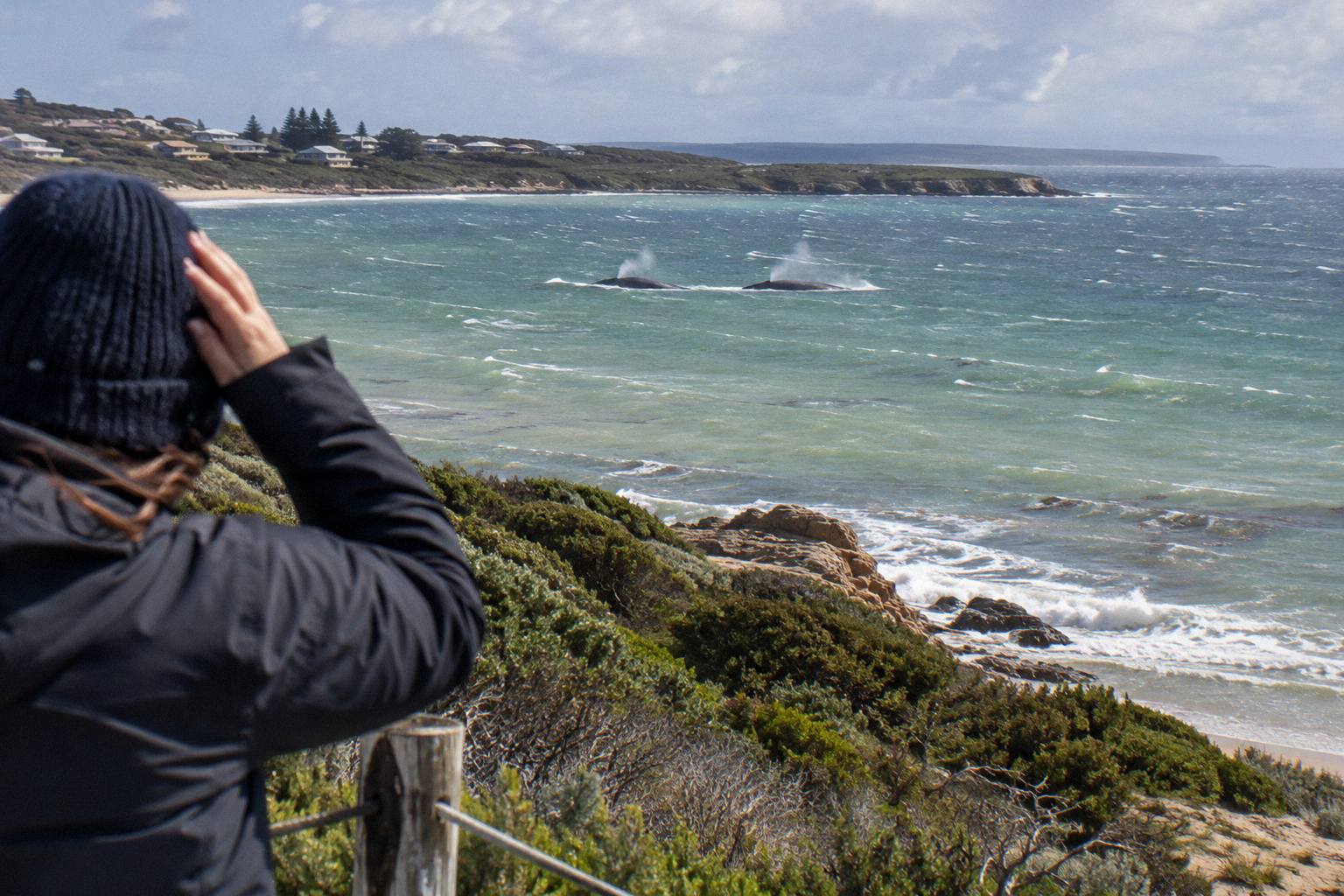
Corridor biology also explains the honest limits. A bay full of resting humpback mothers and calves gives a cruise many chances on many days; a corridor gives some chances on the days the flow passes within viewing range. No source publishes how many of those days produce a sighting from a Dunsborough cruise, and this site will not manufacture one.
When Is The Best Month To Target A Blue Whale Sighting?
October and November are the months the verified sources point to, and November carries research weight as well as operator mention. Naturaliste Charters names blue whales "from October onwards" within a season that runs to the end of November, and the 2014 SouWEST and IFAW report recorded blue whale song and sightings in the bay during November surveys. If a blue whale is your specific hope, book the back half of the Dunsborough season, and read the month framework rather than a "now" claim.
The full season context matters because blue whales sit at the end of it. Dunsborough cruises run about August to the end of November, with operators describing humpback and southern right whales in the bay from mid-August or September onward and mothers and calves resting on the southward return. September and October are the heart of the general season; October and November are the blue whale window. A late-season booking trades a little of the humpback peak for a shot at the corridor species, which for many readers is a good trade.
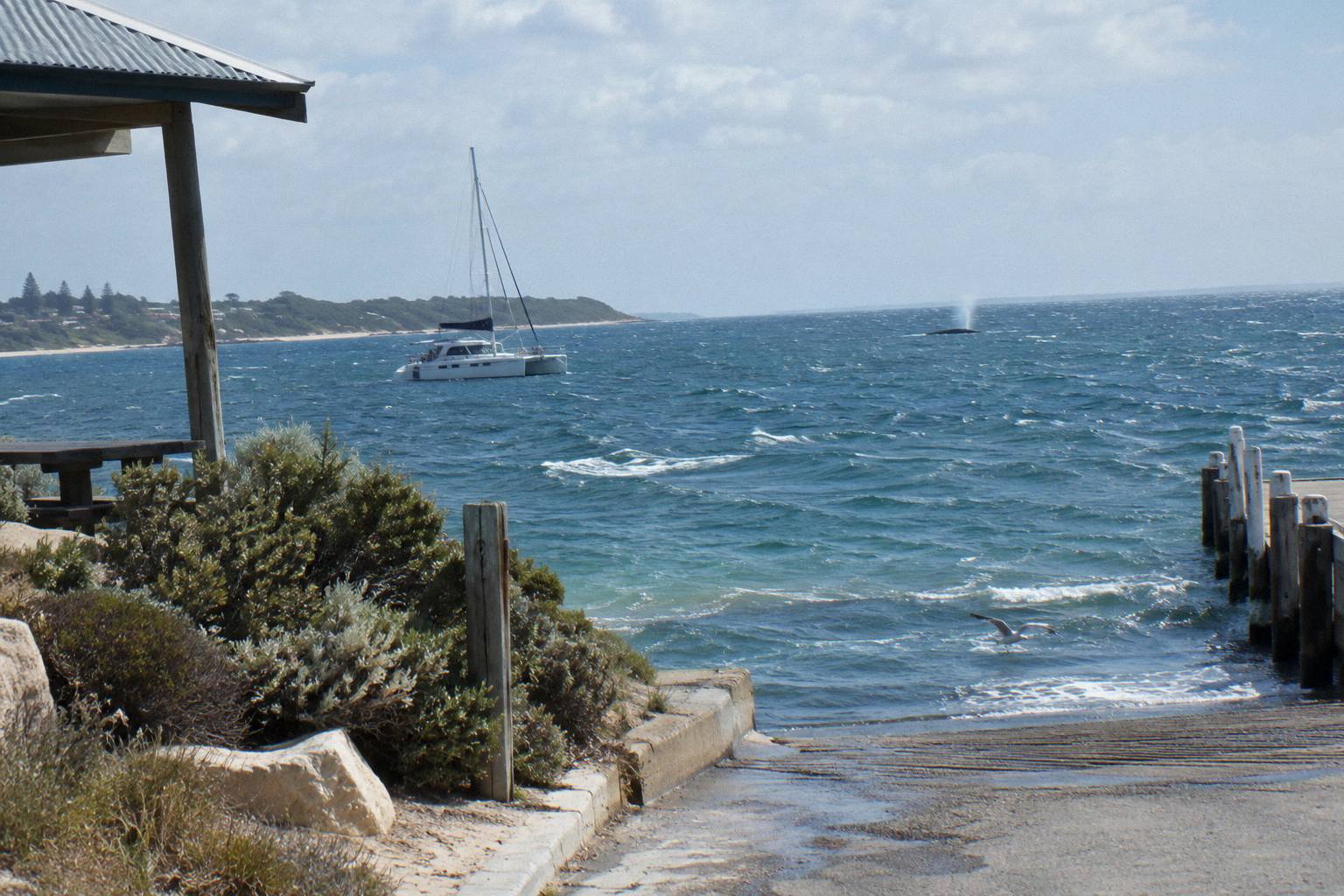
There is one wrinkle worth planning around. All Sea Charters states a Dunsborough season of "mid August to early December", which runs past the end of November that Naturaliste states, though its own page also describes the main window as September to early November. If you want cruise options in the first days of December, one operator's stated season allows for that; confirm the dates you want are actually running before you build a trip around it.
| Month | What the verified sources state for Geographe Bay |
|---|---|
| August to September | Humpback and southern right season builds from mid-August; blue whales not named for these months |
| October | Naturaliste Charters names blue whales "from October onwards"; minke whales named for October and November |
| November | Blue whale window continues; research report recorded November song and sightings; Naturaliste season ends about end of November |
| Early December | All Sea Charters states its Dunsborough season to early December; main window described as September to early November on the same page |
For a fuller month-by-month picture of every species, the Geographe Bay whale season month by month guide lays out the whole calendar, and it is the better page for choosing between September and November if you are weighing the whole season rather than blue whales alone.
How A Blue Whale Sighting Compares With Humpbacks And Southern Rights
Blue whales are the transit species in a bay whose headline acts are the resters. Humpbacks and southern right whales are described by both operators and the habitat factsheet as present in Geographe Bay from mid-August or September to November, with mothers and calves resting on the southward return, while pygmy blue whales use the bay as a narrow transit corridor mostly from October onward. Different behaviour, different season shape, different odds of any kind, though only the first part of that sentence is printable as fact.
The behavioural difference is the planning insight. Resting whales with calves stay in sheltered water for hours or days, which is why a cruise into Geographe Bay during the humpback and southern right peak has so many chances to find them. Transit whales move through, which compresses the opportunity into the days the corridor is active within viewing range. Neither pattern comes with a published sighting rate, but the pattern itself tells you that late-season blue whale hope should ride on top of a solid humpback booking, not instead of one.
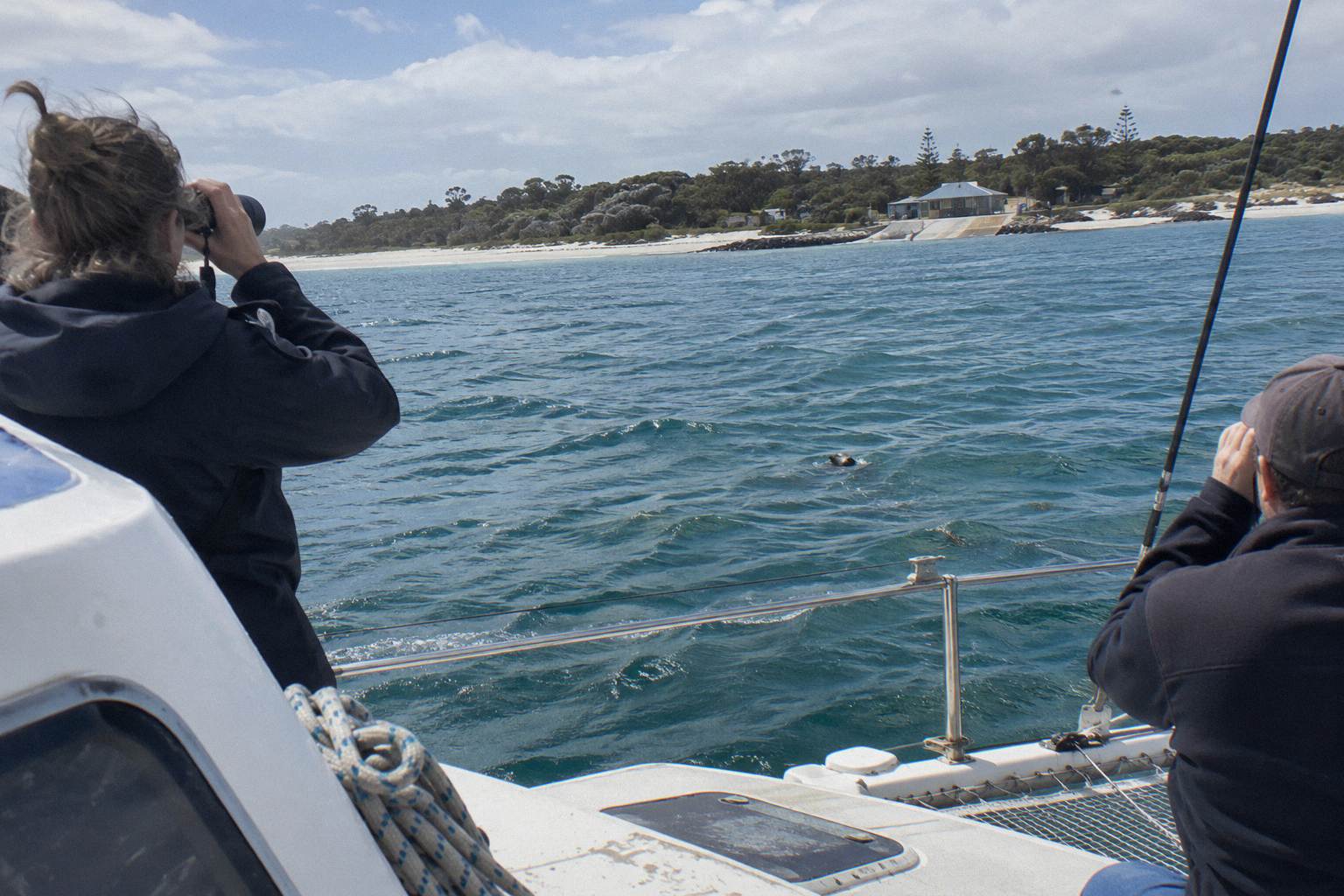
Identification is part of the fun and part of the problem. A distant tall blow in October could be a blue whale or a humpback, and the guide to telling humpback, southern right and blue whales apart covers the markers. On board, the crew's species calls are the ones that count, and the Naturaliste Charters Dunsborough trip names humpback, southern right, blue and minke whales among its species, with dolphins often at the bow wave.
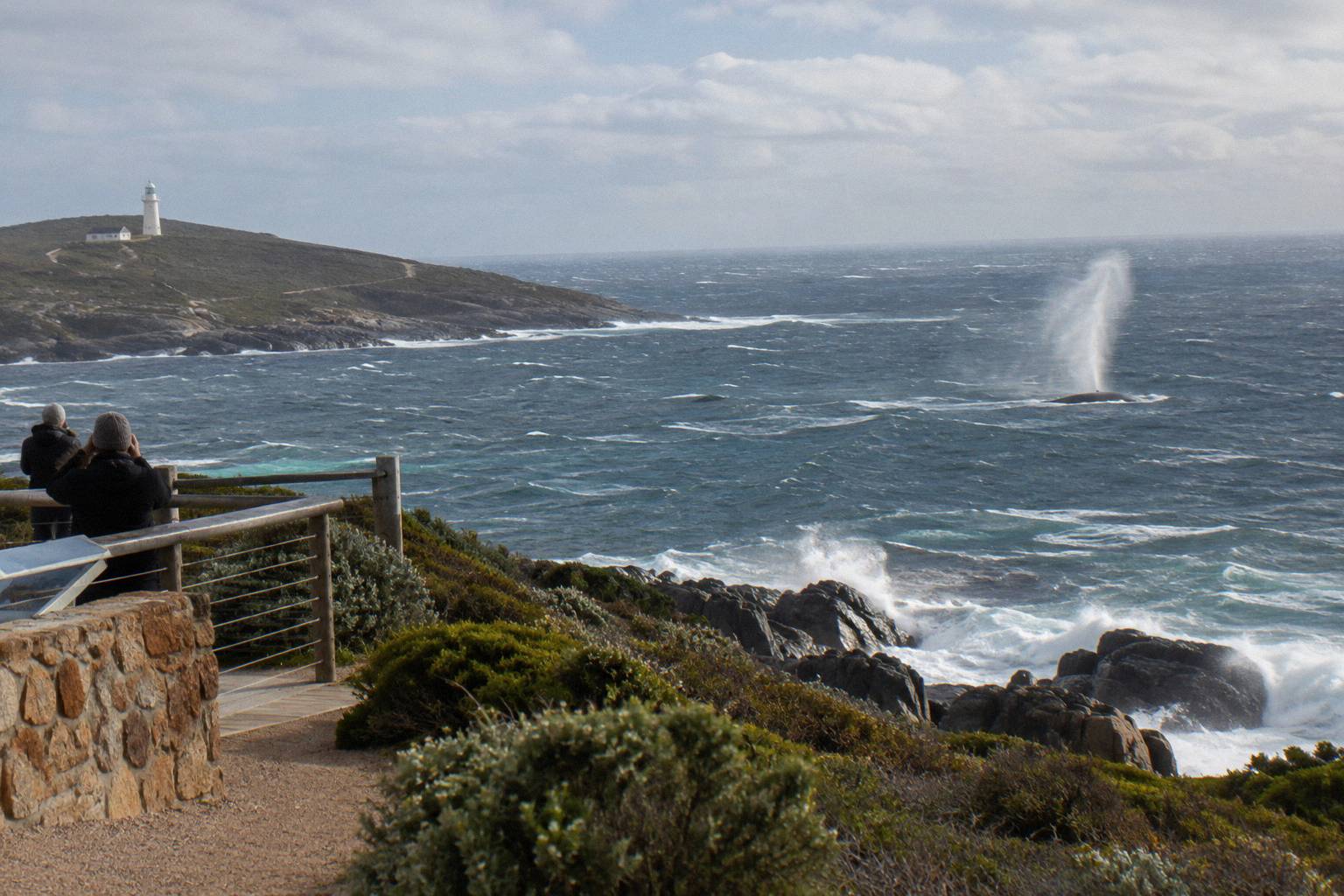
Species mix by month, stated plainly from the operator and habitat sources:
| Species | Stated presence in Geographe Bay |
|---|---|
| Humpback whale | Mid-August or September to November, mothers and calves resting on the southward return |
| Southern right whale | Same broad window; the habitat factsheet notes the species breeds and nurses in sheltered south coast waters including Geographe Bay |
| Pygmy blue whale | Transit corridor use; operator mention from October onwards and "occasionally"; research report recorded November presence |
| Minke whale | Named for October and November, described as "chance encounters" only |
That table is the honest ceiling of what any page can tell you. Four species, all real, all named by sources, none carrying a number.
Which Dunsborough Cruise Gives You The Better Shot?
No source compares the two Dunsborough operators on blue whale sightings, so no honest ranking exists. What differs is stated season length and stated framing: Naturaliste Charters runs to about the end of November and names blue whales "from October onwards", while All Sea Charters states a season to early December and calls blue whales "occasionally" seen. Choose on schedule, boat and terms, and ask each operator the blue whale question directly before booking.
The schedule difference is the practical one. If your travel dates land in the last days of November or the first days of December, the stated seasons point in different directions, and the only way to know what is actually running on your date is to check the live listing or contact the operator. Mid-season, in October, both are operating daily and both cover the same bay, so the decision comes down to departure style and inclusions.
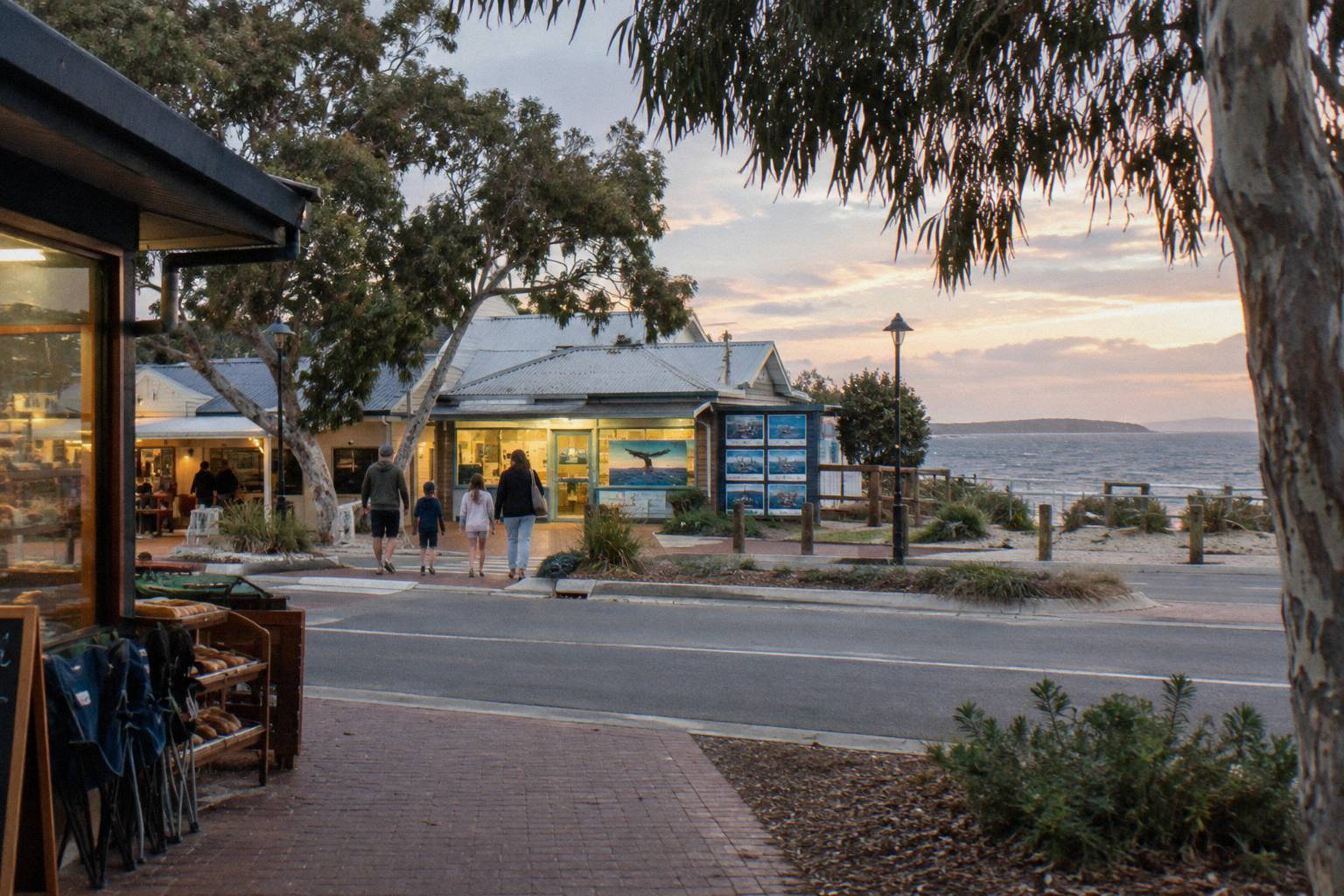
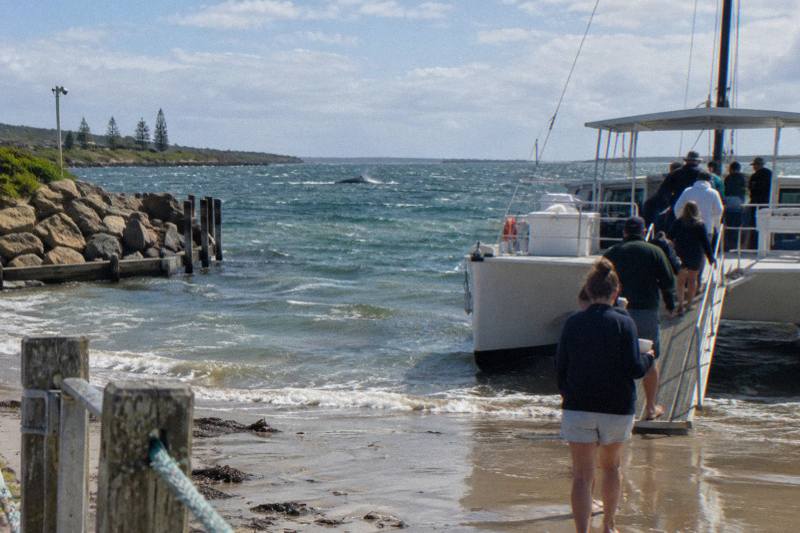
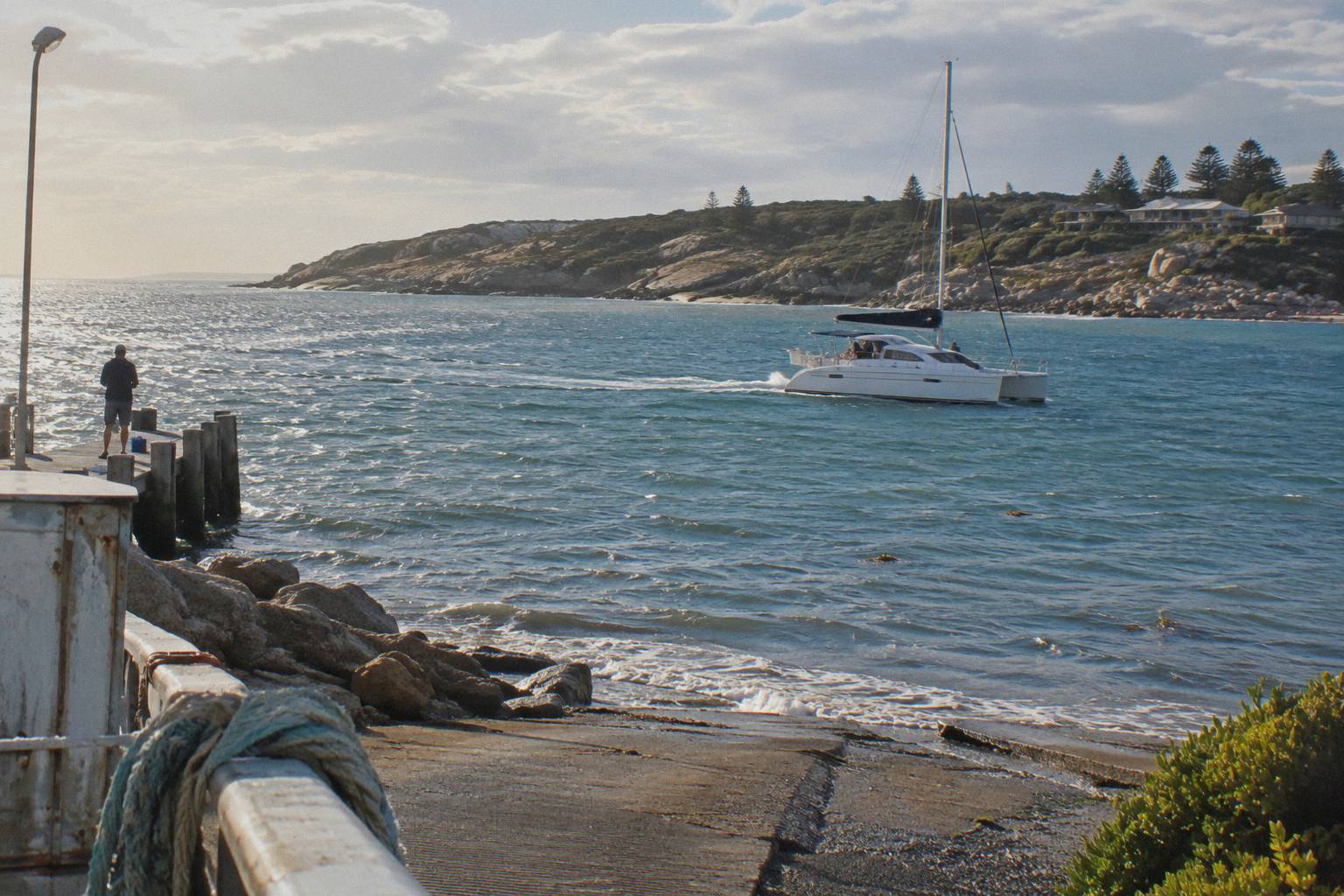
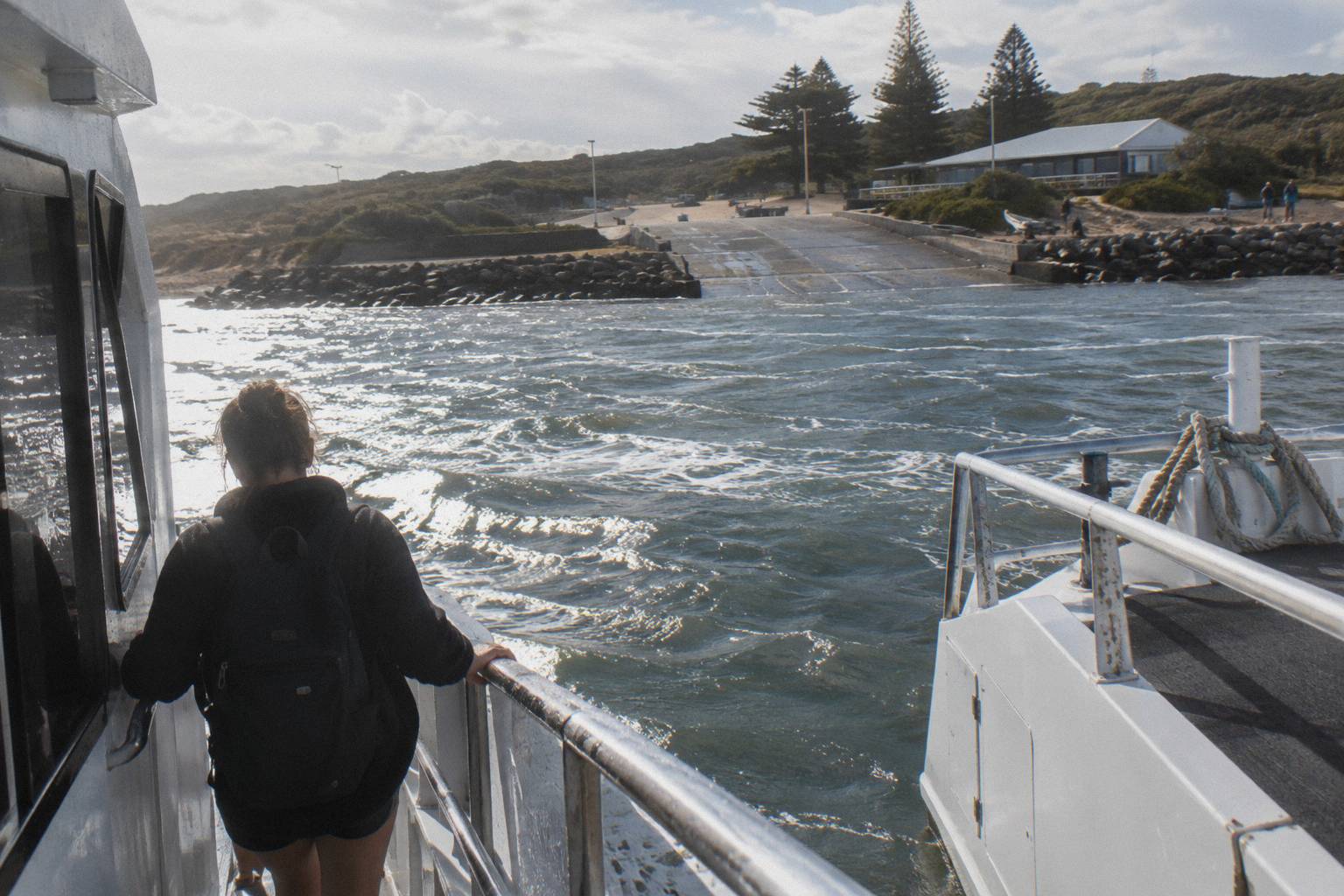
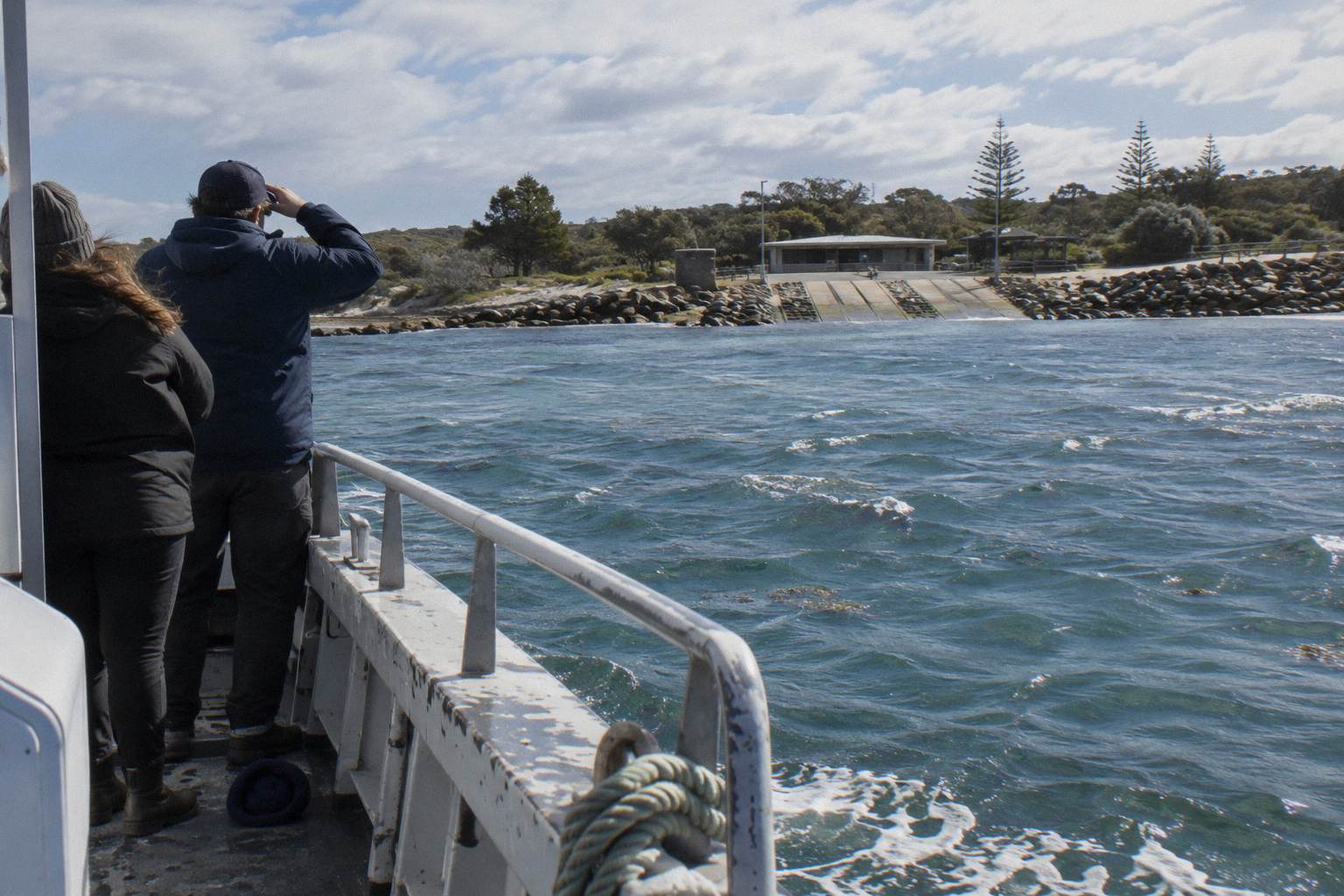
The boats differ in ways a blue whale hopeer should care about. The Naturaliste Charters Dunsborough trip boards from the beach: guests walk a handrailed ramp onto the Indi Maree, then transfer to the larger Alison Maree, a 23 m catamaran, and the booking page says the tour is not suitable for mobility impairments. All Sea Charters runs the Whale Song, a 17 m aluminium catamaran with a climate-controlled cabin, two outside decks and an accessible toilet, and offers anti-nausea wristbands on board. A long transit-corridor search favours deck space and time on water; a calm cabin favours comfort.
Departure practicalities matter as much as the boat. The Naturaliste trip departs the Professional Fisherman's Boat Ramp opposite 306 Geographe Bay Road in Quindalup, roughly 5 km east of Dunsborough town, with 10am and 2pm departures and arrival asked 15 to 30 minutes before departure. All Sea Charters states only "from Geographe Bay Road, Dunsborough", with the exact ramp and clock times not published on its page. Neither detail changes your blue whale chances, but either can change whether you actually make the boat.
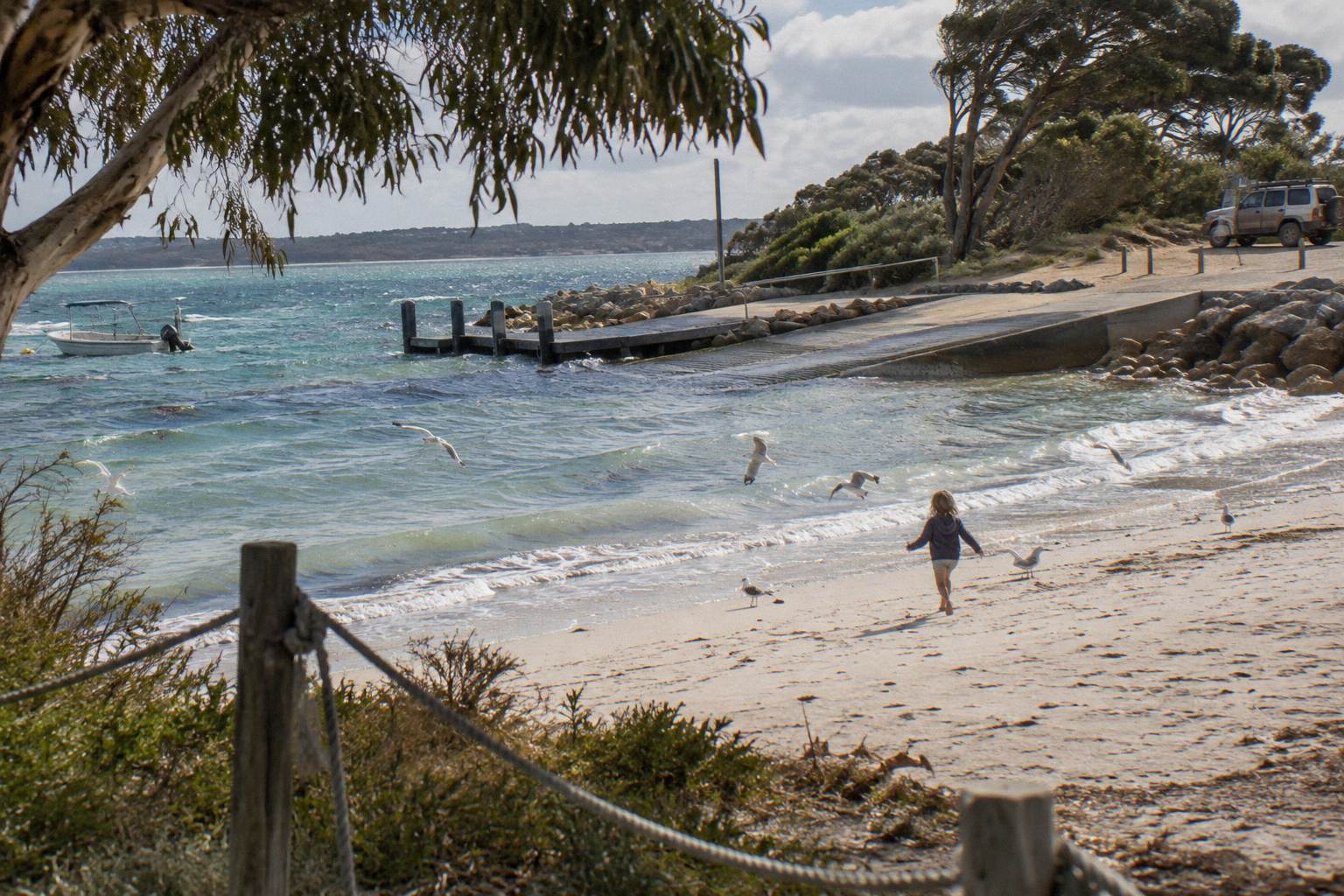
The featured trip on this site is the Dunsborough whale watching cruise with Naturaliste Charters, rated 4.7 across 137 reviews, listed at 2.5 hours, with the booking page showing AUD 71 per person and free cancellation up to 24 hours. For the same family of cruises with a different departure model, All Sea Charters offers Busselton, Augusta or Dunsborough departure options, hotel pickup listed on the booking page with the departure option that carries it not stated, rated 4.8 across 438 reviews and listed at 2 to 2.5 hours with free cancellation up to 24 hours.
If an Augusta angle appeals because you want southern rights and humpbacks in the May to mid-August window before Geographe Bay opens, the Augusta Whale Watching Tour With Naturaliste Charters departs Augusta Boat Harbour, is listed at 2 hours, rated 3.9 across 14 reviews, with the booking page showing AUD 71 per person and free cancellation up to 24 hours. That is a different bay and a different species emphasis, not a blue whale play.
What To Ask The Operator Before You Book
Ask direct questions and expect direct answers, because the published record stops short of everything a blue whale hopeer wants to know. No sighting rate exists in any verified source, so the operator's own answers about recent weeks, crew reporting and how a no-blue-whale day is handled are the only fresher information available. A short list of questions, asked before you pay, beats a season of forum scrolling.
Treat the list below as a script. The middle questions matter most, because they push past the static pages into what the crew is actually seeing, which is information the operator has and the internet does not. The last question protects the booking itself: both booking pages here show free cancellation up to 24 hours, but All Sea Charters' own cancellation policy was not found on its site, so confirm terms on the live listing.
| Question to ask | Why it matters |
|---|---|
| Have blue whales been seen on recent trips this season? | The only near-real-time blue whale information that exists; no published rate does this job |
| Which departure time has the better record for blues? | Crews know their own patterns even when no page states them |
| How long will you stay with a blue whale if one is found? | Transit whales move fast; trip length caps the encounter |
| What happens if no whales at all are seen? | Sighting policies differ; All Sea Charters' page offers a free return trip if no whales are seen, terms not printed |
| What are the cancellation terms on my booking? | Verify before paying; pages change and operator terms are per operator |
One more question is worth asking yourself rather than the operator: would the day still be a success with humpbacks, southern rights, dolphins at the bow and no blue whale? If the honest answer is yes, book late season with confidence. If it is no, no cruise in any bay can promise you the thing you want, and a corridor species is the wrong thing to hang a trip on.
Should You Book A Cruise Hoping For A Blue Whale?
Yes, if the hope rides on top of a booking you would want anyway, and October or November is when to place it. The verified record gives you a mapped transit corridor, an operator naming blues from October onwards, another calling them occasional, and November research sightings, with no odds figure anywhere. Book the back half of the season, ask the operator the recent-sightings question, and let the humpback and southern right season carry the floor of the day.
The reader this page is written for is deciding whether the cruise is worth booking with a blue whale in mind. The decision logic says yes for a late-season traveller and says "book anyway, without the blue expectation" for everyone else, because the bay's resting species are the reliable structure of the season and the blue whale is the corridor bonus. A plan built that way cannot lose: either the baseline whale day delivers, or a corridor animal turns a good day into an unforgettable one.
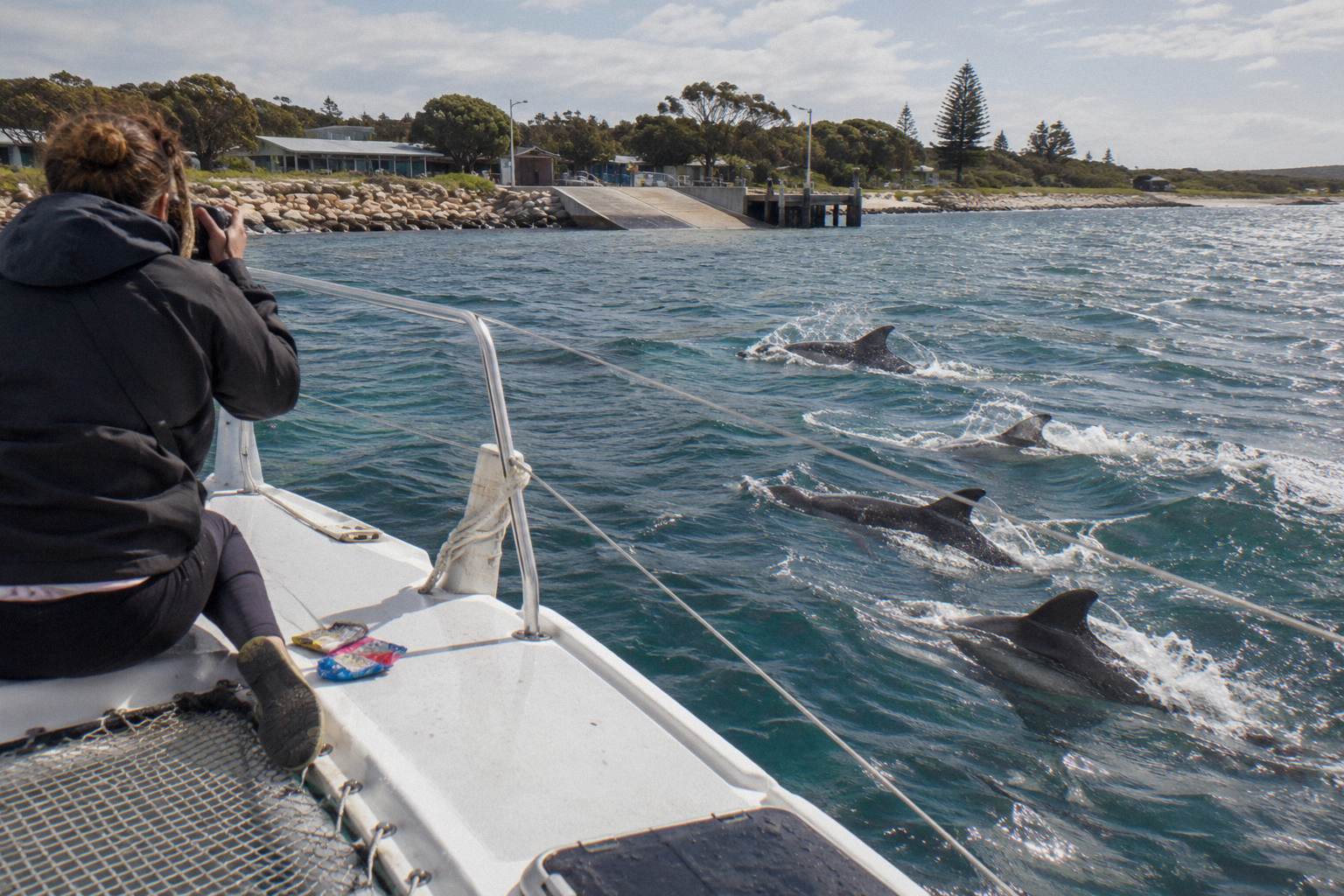
Worth knowing, since blue whale hope sometimes turns into swim questions: swimming with whales is not offered in Geographe Bay or on any tour covered here. Western Australian law makes it illegal for individuals to swim within 100 m of a whale, per the DBCA's page on swimming with humpback whales, and licensed in-water humpback interactions happen only in Ningaloo Marine Park State waters and the Muiron Islands Marine Management Area. This is a watching-only coast.
The law shapes the watching itself, in ways that protect the whales and your day. Under the Biodiversity Conservation Regulations 2018, a vessel must stay at least 300 m from a whale within a 60 degree arc to its front or rear and at least 100 m to the side, a person must stay at least 100 m, and a drone at least 60 m; staying closer is an offence carrying a fine of AUD 5,000. If a whale closes the distance itself, the person in charge must put the vessel in neutral or move away at no more than 6 knots. The habitat factsheet behind the corridor statement is worth a read too. Operators on this coast work inside those rules, which is part of why sightings happen at watching distance rather than alongside.
For everything this site publishes about planning a Geographe Bay trip, start with Dunsborough Whale Watching and work outward by season and species.
Common Questions About Blue Whales From Dunsborough
Is It Rare To See A Blue Whale From A Dunsborough Cruise?
No published sighting rate exists, so no honest source can call it rare or common. The verified record: Naturaliste Charters names blue whales "from October onwards", All Sea Charters says "occasionally", the habitat factsheet confirms the bay is a narrow pygmy blue whale transit corridor, and a 2014 research report recorded November sightings in the bay.
What Month Are Blue Whales Seen From Dunsborough?
October and November are the months the sources point to. Naturaliste Charters names blue whales from October onwards within a season running to about the end of November, and the SouWEST and IFAW research report recorded blue whale song and sightings in Geographe Bay during November surveys.
Are Blue Whales Endangered?
Yes. The International Marine Mammal Habitat factsheet lists the pygmy blue whale as Endangered and estimates the eastern Indian Ocean population at 662 to 1,559 animals.
Do Blue Whales Breed In Geographe Bay?
No. The habitat factsheet describes the bay and the Naturaliste Plateau as a narrow transit corridor used by pygmy blue whales with calves, not a breeding ground. Southern right whales are the species the factsheet describes as breeding and nursing in sheltered south coast waters including Geographe Bay.
Which Operator Should I Book For A Blue Whale?
No source compares the two Dunsborough operators on blue whale sightings. Naturaliste Charters runs to about the end of November and names blues from October onwards; All Sea Charters states a season to early December and calls them occasional. Ask each operator about recent sightings before booking.
Can I Swim With Blue Whales In Geographe Bay?
No, and it is not offered anywhere on this coast. Western Australian law makes it illegal for individuals to swim within 100 m of a whale, and licensed in-water humpback interactions exist only in Ningaloo Marine Park State waters and the Muiron Islands Marine Management Area.