Can You Swim With Humpback Whales In Western Australia?
No, not in Geographe Bay or on any Dunsborough tour: WA law keeps people at least 100 m from whales, and the only licensed in-water humpback program is at Ningaloo. Here is what the law says and what you can legally book instead.
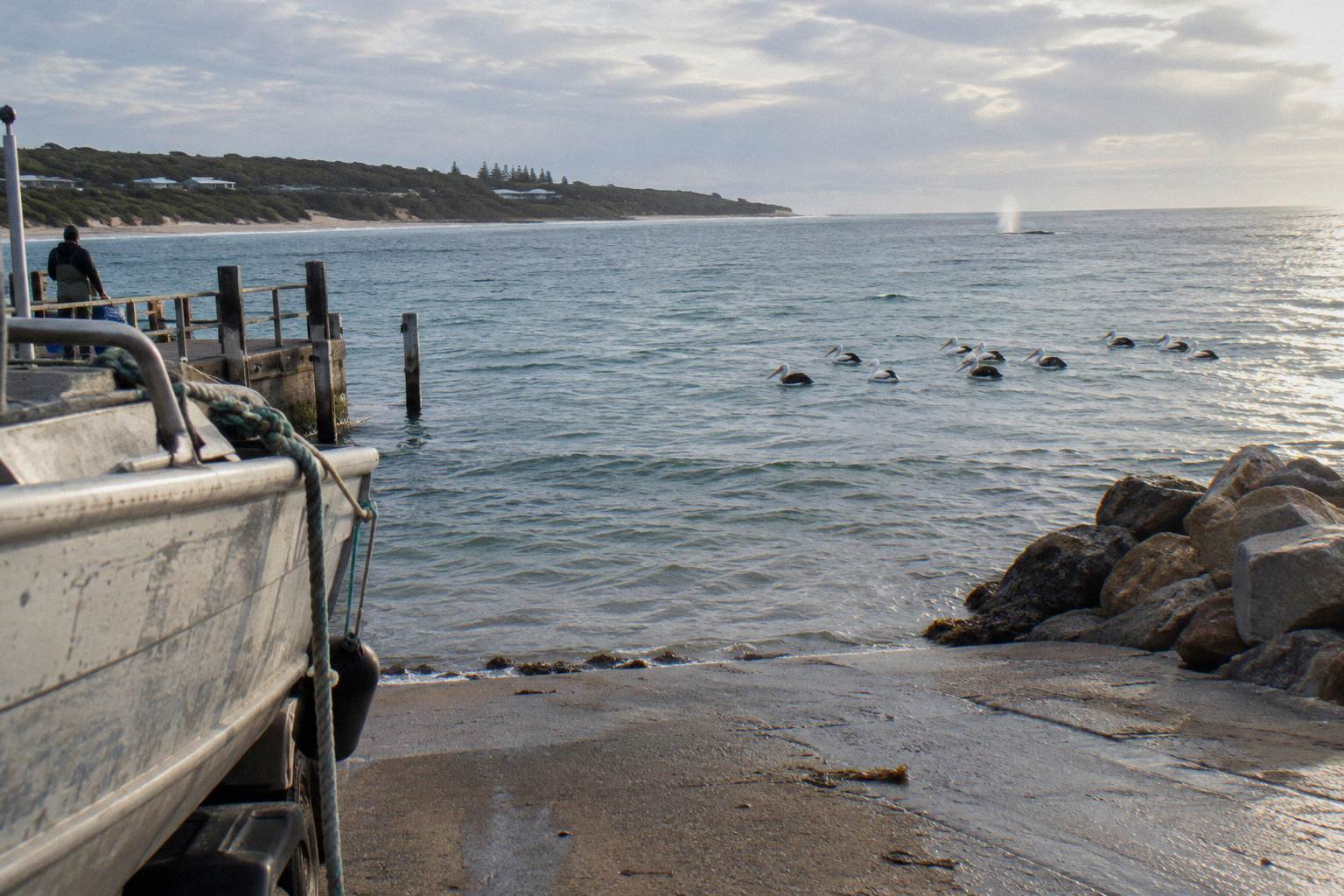
Not in Geographe Bay, and not on any tour covered on this site. Western Australian law makes it illegal for a person to swim within 100 metres of a whale, with a fine of AUD 5,000 for staying closer. The Department of Biodiversity, Conservation and Attractions states that licensed in-water humpback interactions happen only in Ningaloo Marine Park State waters and the Muiron Islands Marine Management Area. From Dunsborough, the lawful option is a watching cruise.
That is the direct answer, and it matters because a reader who arrives expecting to slip into the water beside a humpback needs to know the truth before money changes hands. Some travellers book a Geographe Bay cruise imagining an in-water encounter, then discover on the ramp that the trip is viewing only. Nobody on this coast sells a swim, and no operator here may lawfully offer one, because the licence that permits in-water humpback interaction does not extend to these waters.
The good news is that the question behind the question, can I be close to whales in Western Australia, has a real answer. A licensed cruise can put you on the same water as humpbacks, southern right whales and, in spring, pygmy blue whales, within the approach distances the law allows vessels. On that point, readers curious about how near a boat can legally get will find the full distances in how close whale cruise boats can legally get.
If a viewing cruise is what you are after, these are the whale-watching trips that depart the Dunsborough area:
Each of these is a boat-based watching cruise, and every one of them operates inside the distance rules described below. None of them, and no other tour covered on this site, includes entering the water with whales. The rest of this article sets out exactly what the law says, why the Ningaloo program is the exception, and what the lawful alternative looks like in practice.
What Western Australian Law Actually Says About Distance
The Biodiversity Conservation Regulations 2018 set the distances: a person must stay at least 100 metres from a whale, a vessel 300 metres in a 60 degree arc to the front or rear, and 100 metres to the side. Staying closer is an offence with a fine of AUD 5,000. The law also sets drone and dolphin distances and rules for when a whale closes the gap itself.
Those figures come from Part 5 Division 2 of the regulations, regulations 110 to 114, and Schedule 5 Division 1 for whales. The official text is published by the Western Australian legislation office, and the numbers are worth knowing precisely because they shape every whale tour in the state. They are not operator policy. They are law, and they apply to everyone on the water, from a charter vessel to a kayaker to a swimmer.
| Who or what | Required distance from a whale | Notes |
|---|---|---|
| A person in the water | 100 m | Swimming closer is an offence |
| A vessel, front or rear arc | 300 m | Within a 60 degree arc ahead of or behind the whale |
| A vessel, to the side | 100 m | Applies outside the front and rear arcs |
| A drone | 60 m | Applies to any unmanned aerial device |
| A dolphin, for comparison | 50 m person, 100 m vessel | Separate distances under the same schedule |
Two of the further regulations matter to the swim question. Regulation 113 sets the penalty: a fine of AUD 5,000 for a person, vessel master, aircraft operator or drone pilot who stays closer than the distance allows. Regulation 114 covers the rare case where the whale makes the approach: if a whale comes inside the distance on its own, the person in charge of the vessel must put it in neutral or switch off, or move away at no more than 6 knots until the distance is restored. A swimmer approached by a whale must move away. The animal's choice does not create a loophole.
There is also the question of being on the water at all in a way that gets you close. Our companion piece on whether whales come close to the boat in Geographe Bay covers what actually happens out there, and it is a fair thing to wonder about, since the bay is a resting point on the southern migration.
Curious whether a cruise is right for you at all?
Why Ningaloo Is The Only Place With A Licensed Swim
Regulation 112 exempts activity authorised under a licence or by the DBCA CEO from the distance rules, and that exemption is exactly how the licensed in-water humpback program at Ningaloo exists. The department states that licensed in-water humpback interactions happen only in Ningaloo Marine Park State waters and the Muiron Islands Marine Management Area. No such licence covers Geographe Bay, so no operator here can lawfully run one.
The department's own words are the clearest summary available: "Under State legislation, it is illegal for individuals to swim within 100m of a whale". The same page names the two protected areas where licensed in-water interaction is permitted, both far north of the south west capes. That is the only mention of Ningaloo this article needs: the program exists because a licence exists, and the licence does not travel.
This is why an honest answer to the swim question has to be a plain no for this coast, rather than a maybe. It is not that Dunsborough operators are conservative, or that the season is wrong, or that a swim product might appear next year. The legal mechanism that allows in-water humpback interaction anywhere in Western Australia simply has no application to Geographe Bay. Anyone selling a "whale swim" in these waters would be selling something the law forbids.
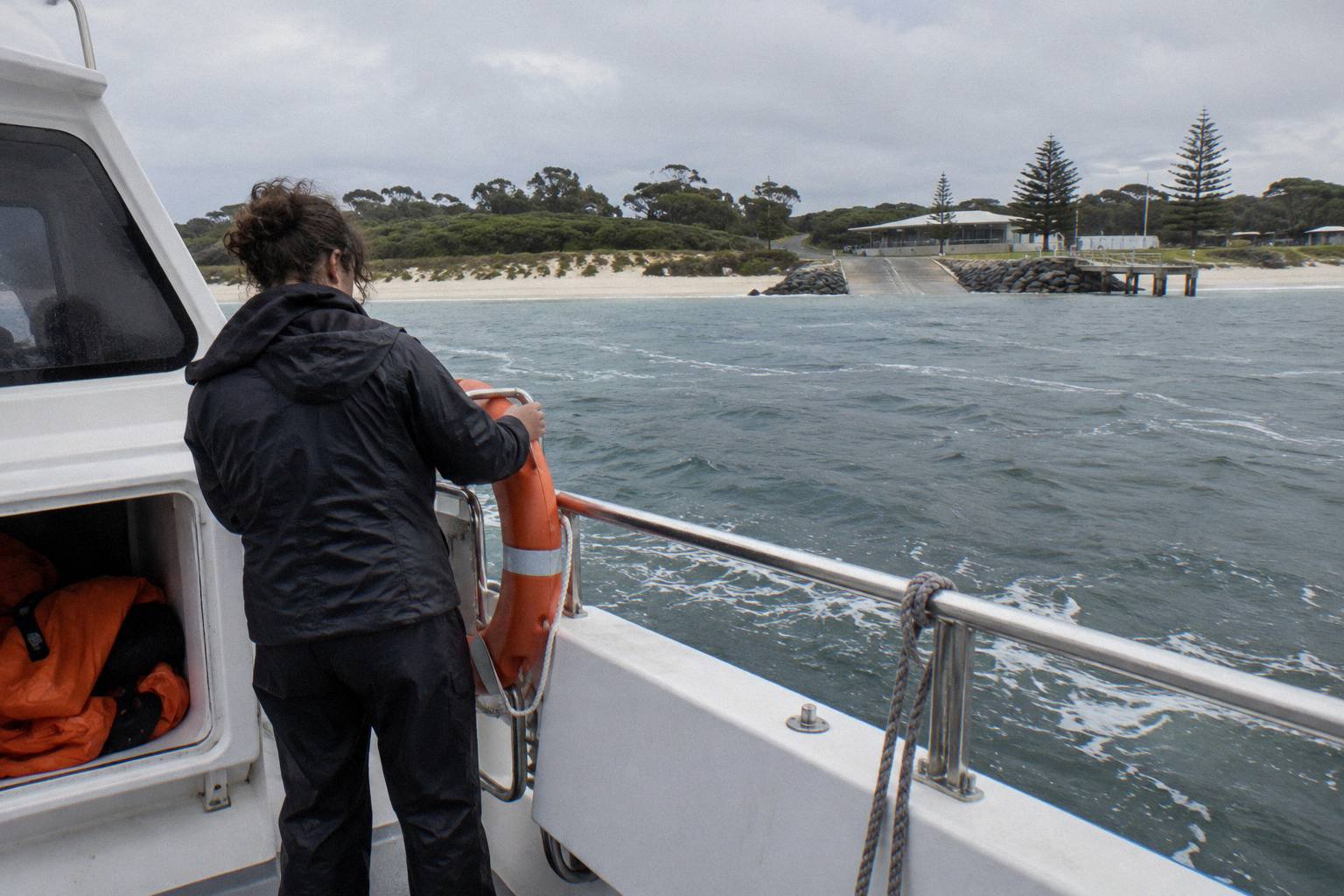
Other places in Western Australia and elsewhere have their own operators and their own rules, and this site does not cover them. What this site covers is the Geographe Bay whale season, roughly August to November out of Dunsborough, and the Augusta season, May to August, both of which are watching seasons from boats. Between those two windows, the south west coast offers whale viewing for most of the year without ever offering an in-water option.
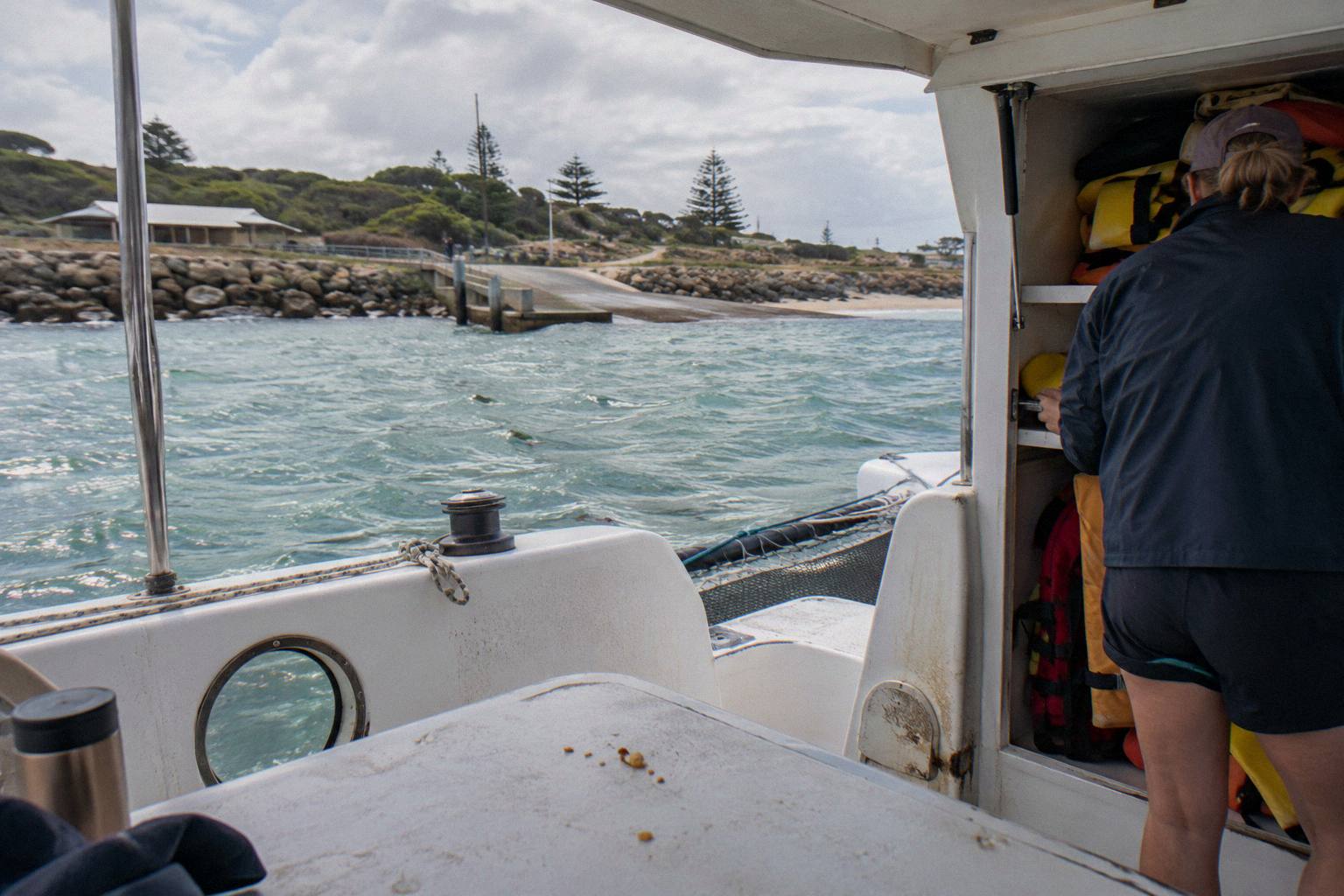
What A Lawful Encounter Looks Like In Geographe Bay
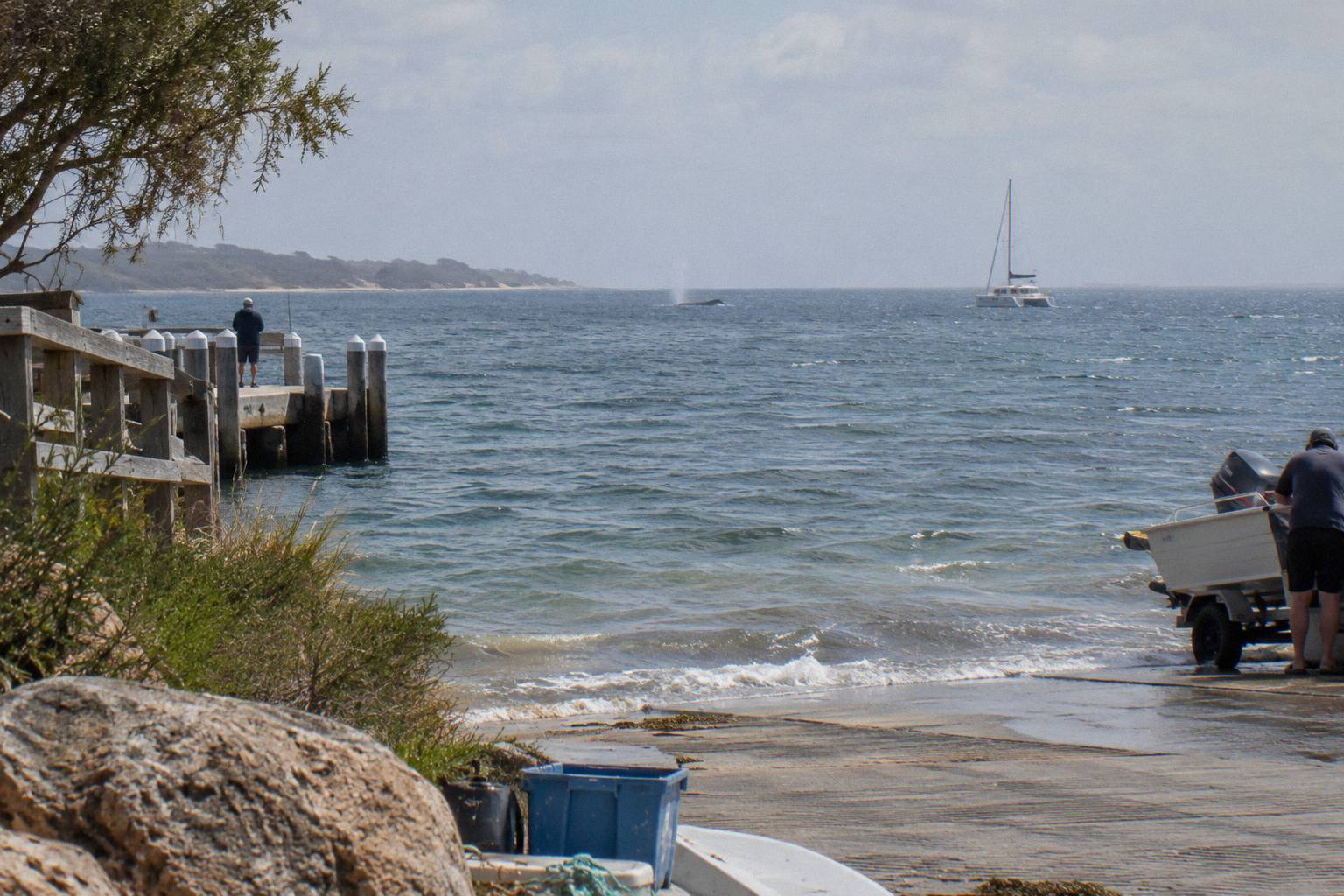
A lawful encounter means watching from a licensed vessel that holds the regulated distances: 100 metres to the side of a whale, 300 metres in its front or rear arc. The whales frequently come to the boat on their own terms, and when one does, the crew cuts the engines and lets the animal decide, which is when the best viewing happens. Being in the water alongside them is never part of it.
The distinction matters more than it might seem, because the law's front and rear arcs exist for the whale's benefit. A vessel sitting 100 metres to the side of a humpback is not in its travel path, and the whale is free to approach, ignore or pass. DBCA advice adds the other half of the bargain for anyone on or near the water: approach from the side only, and abandon an interaction at any sign of distress. That advice, from the department's whale watching guidance, applies to boats, swimmers and drone pilots alike.
The operators on this coast phrase their side of it carefully. Naturaliste Charters says only that its vessels keep "a specific distance" and prints no figure, so the numbers in this article come from the regulations, not from any operator's marketing. That is the honest way to report it. The law sets the distances, the licensed operators work inside them, and the guest experience is built around what the whales choose to do within that frame.
One of the cruises running under these rules is All Sea Charters Whale Watching From Busselton, Augusta And Dunsborough, rated 4.8 across 438 reviews, listed at 2 to 2.5 hours with the price shown on the booking page and free cancellation up to 24 hours. It is a family-run watching operation with tea and coffee onboard, and like every tour on this site it is a viewing cruise.
For readers weighing the practical odds of a good sighting rather than the legal frame, the honest numbers and what shapes them are unpacked in the odds of seeing a whale on a cruise, which keeps expectations grounded in what operators and surveys actually report.
The Watching Cruise From Dunsborough, In Detail
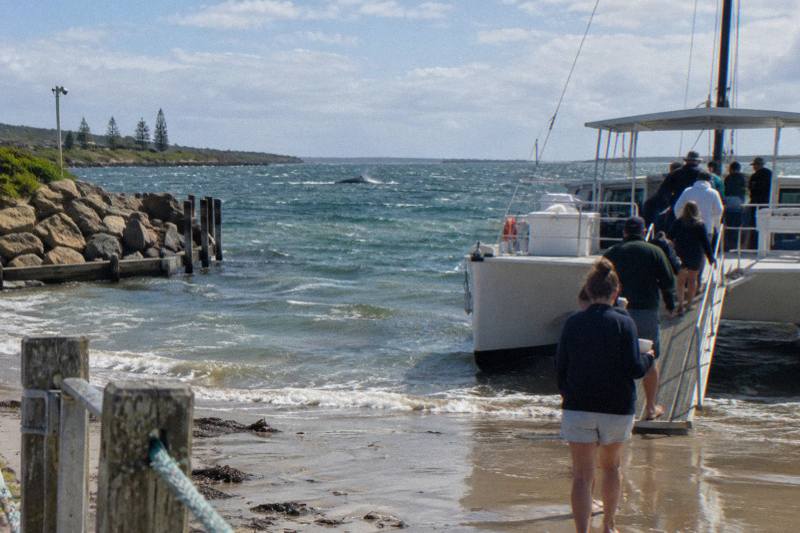
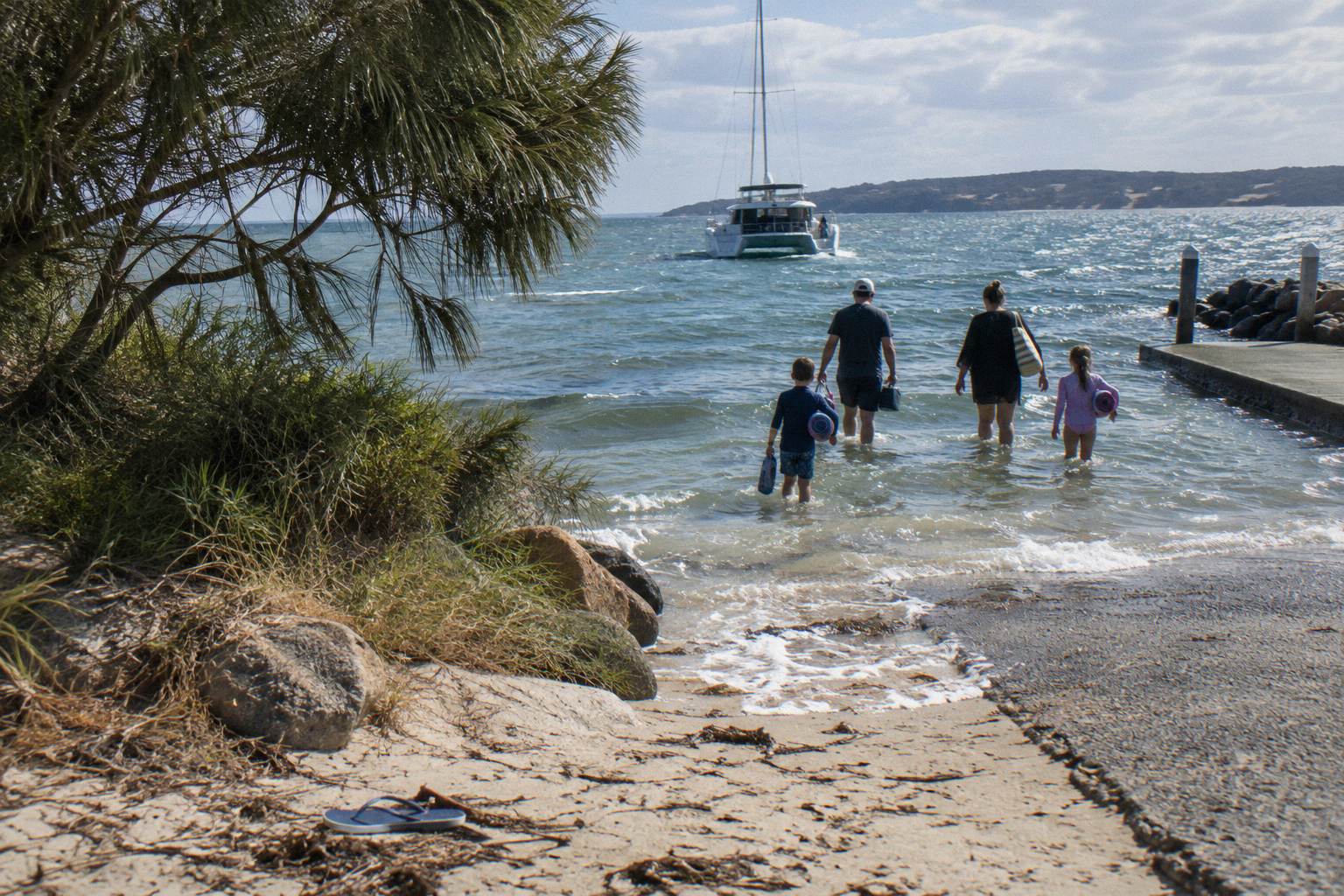
The featured option is the Dunsborough Whale Watching Tour With Naturaliste Charters, a listed 2.5-hour cruise on the 23 metre catamaran Alison Maree, rated 4.7 across 137 reviews, with the booking page showing AUD 71 per person and free cancellation up to 24 hours. It departs the Quindalup boat ramp roughly 5 kilometres east of town, boards from the beach via a handrailed transfer boat, and includes morning or afternoon tea.
The beach boarding detail is worth knowing before you go, because it shapes the start of the day. Guests walk a handrailed ramp onto a smaller transfer vessel, the Indi Maree, which takes them out to the larger Alison Maree. Guests with limited mobility may need further assistance, and the booking page says the tour is not suitable for mobility impairments, so it is a question to raise before booking rather than on the ramp. The operator asks that guests arrive 15 to 30 minutes before departure, and departures run daily at 10am and 2pm through the season, August to November on the operator's FAQ, mid-August to the end of November in its own wording.
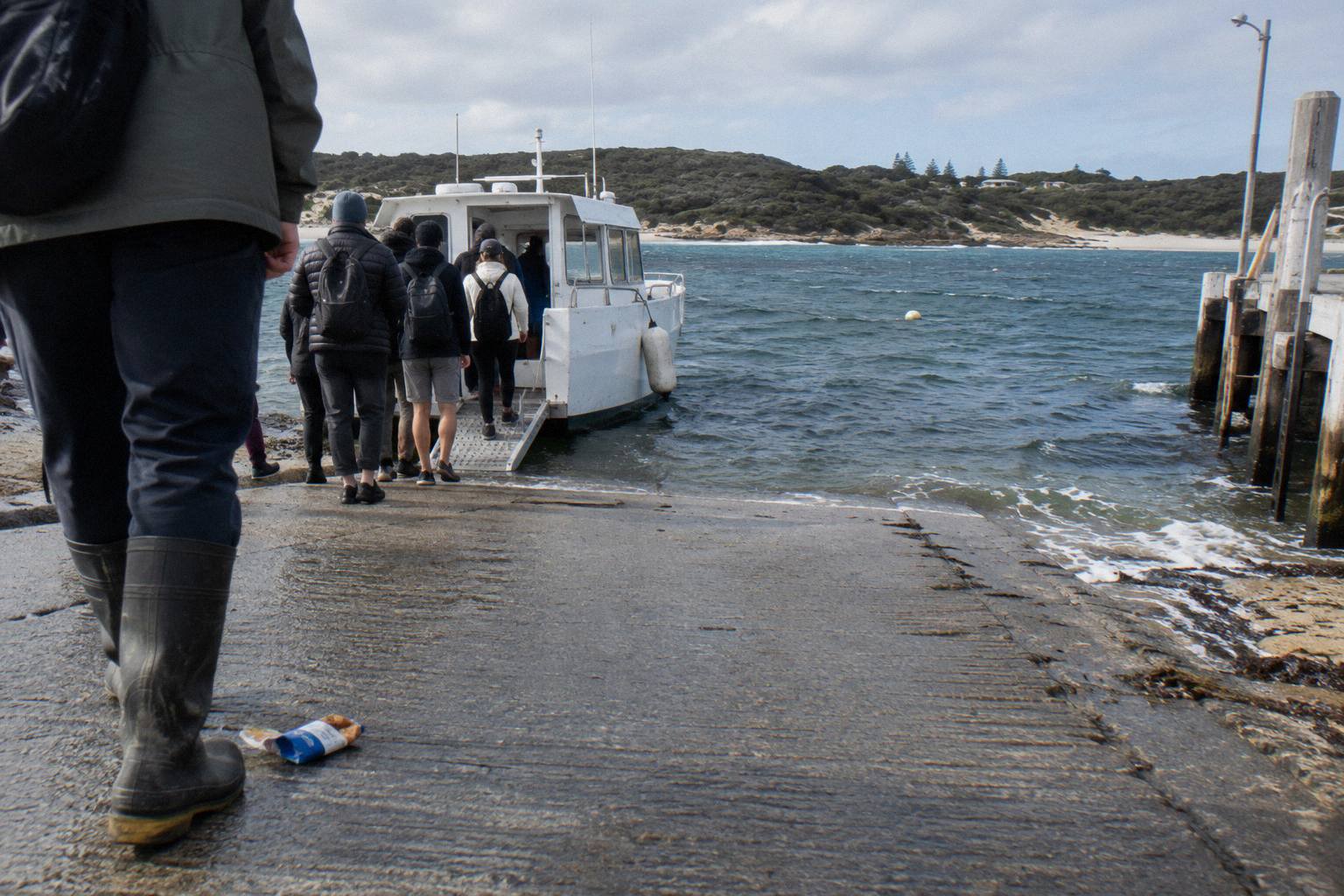
Onboard, the operator provides tea, coffee, milo, filtered water, green tea and biscuits, sells soft drinks and snacks, has two toilets with hand washing and carries life jackets for all. The cruise is about 2 hours, with the operator saying to allow up to 3 hours depending on wildlife sightings. Species the operator names for Geographe Bay include humpback and southern right whales, blue whales from October, minke whales as chance encounters in October and November, and dolphins often riding the bow wave. A full breakdown of what happens on a whale cruise from Dunsborough walks through the whole day from ramp to return.
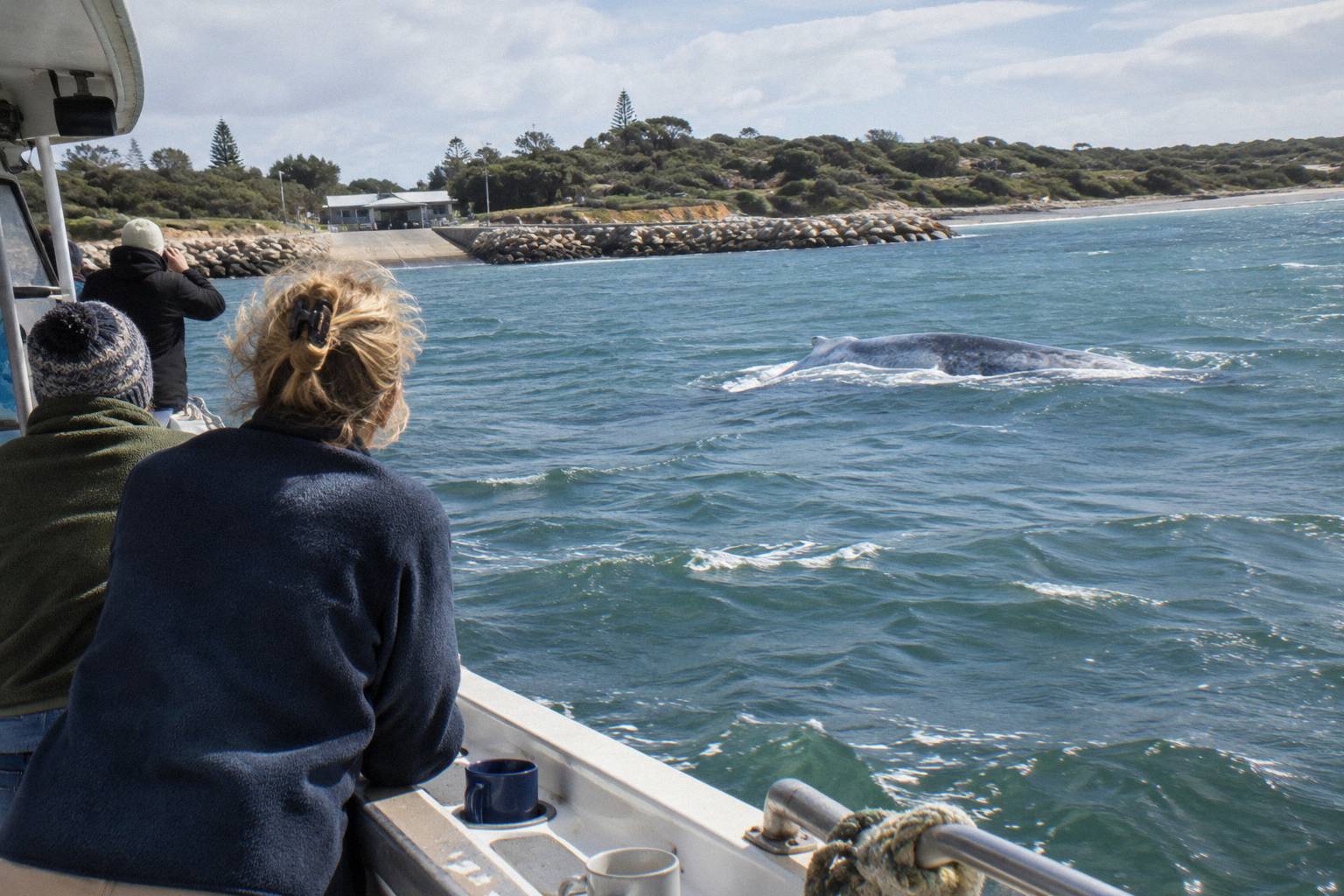
It bears repeating plainly: this cruise, like every tour covered on this site, is a watching trip, not a swim. The price can change, so treat AUD 71 as what the booking page shows rather than a promise. For the practicalities of timing, how long a whale cruise from Dunsborough runs covers the listed durations and why the same trip can vary by an hour.
Augusta: The Same Law, A Different Season
Augusta offers the same lawful experience on a different calendar: southern right and humpback whales in Flinders Bay from May to August, watched from a vessel under the same 100 and 300 metre rules. The Augusta Whale Watching Tour With Naturaliste Charters is listed at 2 hours, rated 3.9 across 14 reviews, with the booking page showing AUD 71 per person and free cancellation up to 24 hours. It departs Augusta Boat Harbour.
The Augusta window fills the months when Dunsborough is quiet. Southern right whales breed and nurse in sheltered south coast waters, and the operator season there runs May to August, roughly the mirror of the Geographe Bay spring. For anyone planning a full year around whales in the region, the season-by-season detail sits in the month-by-month Geographe Bay whale season, which also flags where Augusta picks up the slack.
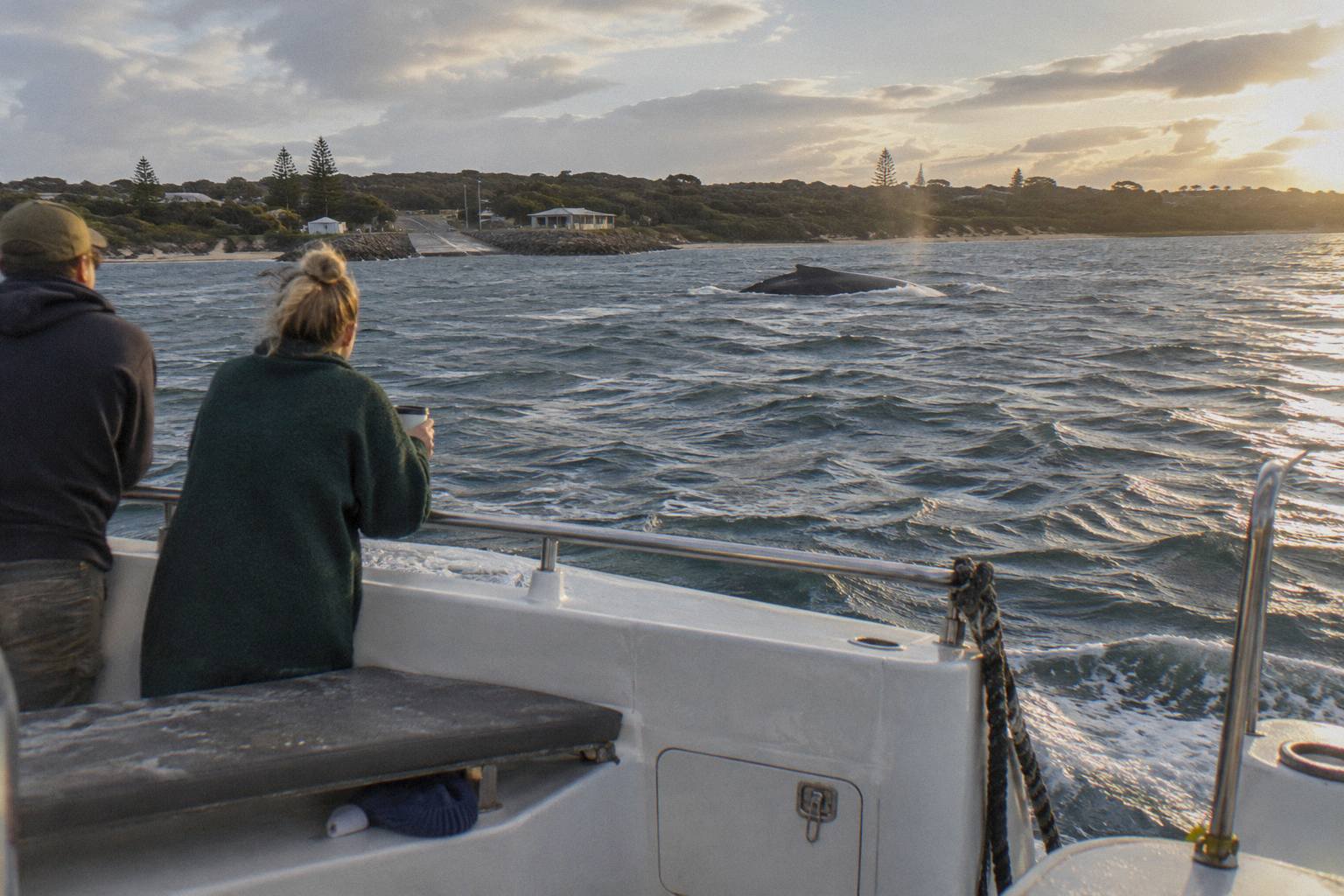
A small review pool deserves honest framing. Fourteen reviews is fourteen people, so the 3.9 rating is a thin signal either way, not a verdict. The Dunsborough trip from the same operator carries 137 reviews at 4.7, and All Sea Charters carries 438 at 4.8, but ratings are printed here side by side as facts, never compared or averaged into a ranking. What matters more for Augusta is the season and the sheltered water of Flinders Bay, which behaves differently to open-ocean swells.
The same distance law applies on every one of these departures, which is the thread running through this whole article. Whether the boat leaves Quindalup or Augusta Boat Harbour, the skipper works inside the same schedule of metres, and the whales work inside nothing but their own instincts.
Species And Timing: What You Are Watching, And When
Geographe Bay's watching season runs roughly August to the end of November, with humpbacks and southern right whales from mid-August or September and mothers and calves resting in the bay on the southward return. Pygmy blue whales pass through in spring, mostly from October to December, and minke whales appear as chance encounters in October and November. Augusta covers May to August with southern rights and humpbacks.
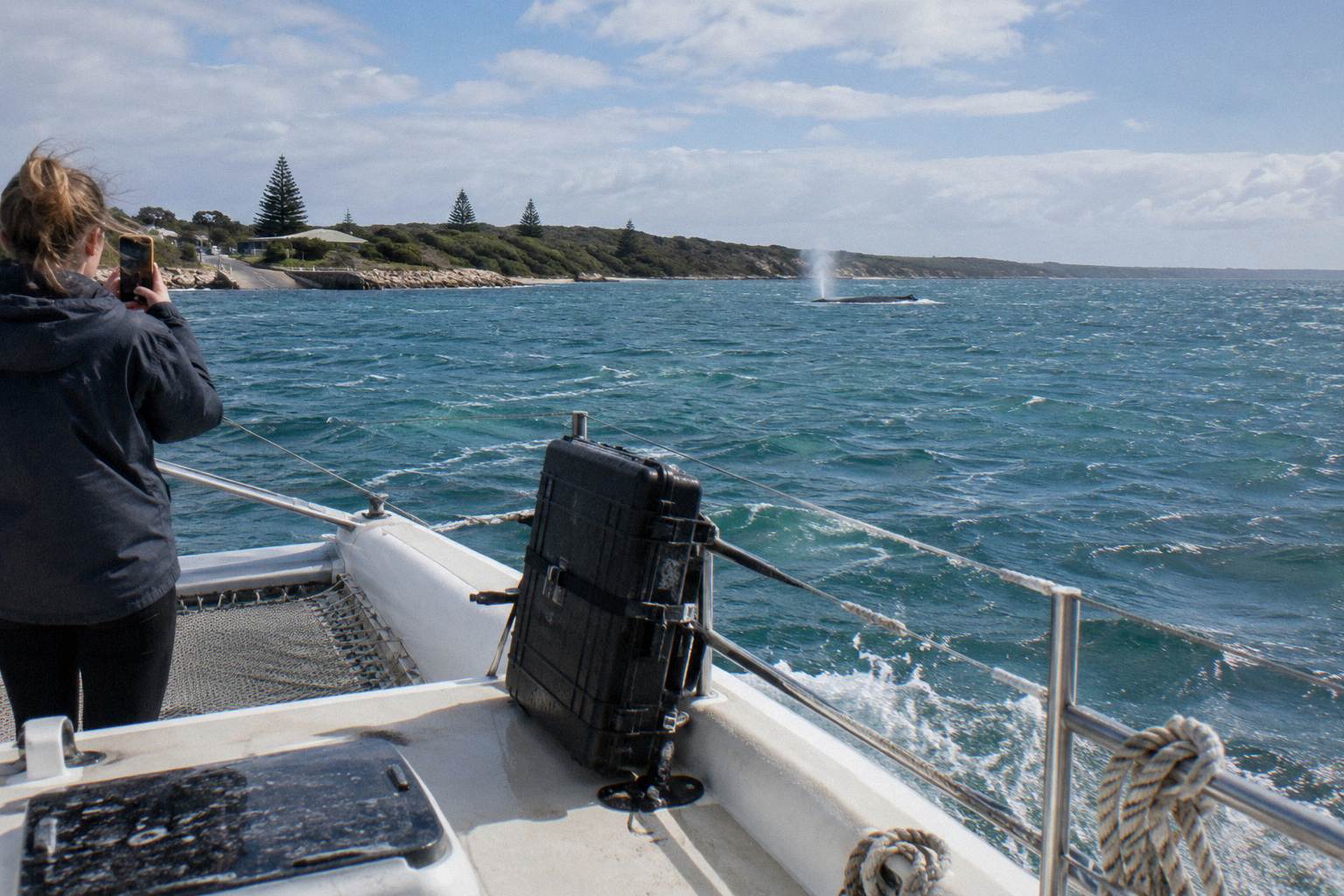
Operators describe the window slightly differently, and the honest way to report that is to say so. Naturaliste Charters runs its Dunsborough season August to November, "mid-August to the end of November" on its FAQ. All Sea Charters says mid August to early December, with a main window of September to early November in its own page text. Safe wording across all sources is late winter to early summer, peak spring, and the DBCA notes that humpbacks begin their southern migration through these waters.
| Species | Where covered here | Season as stated | Notes |
|---|---|---|---|
| Humpback whale | Geographe Bay and Flinders Bay | Mid-August/September to November; Augusta May to August | Mothers and calves rest in the bay on the southward return |
| Southern right whale | Geographe Bay and Flinders Bay | Mid-August/September to November; Augusta May to August | Breeds and nurses in sheltered south coast waters |
| Pygmy blue whale | Geographe Bay | Mostly October to December | Uses the bay as a narrow transit corridor |
| Minke whale | Geographe Bay | October and November | Chance encounters only |
The blue whale detail is the one most first pages of search results miss. The International Marine Mammal Habitat factsheet for the Geographe Bay and Eucla Shelf coastal waters notes that large numbers of pygmy blue whales, with calves, use Geographe Bay and the Naturaliste Plateau as a narrow transit corridor, gives the eastern Indian Ocean population estimate as 662 to 1,559 individuals, and lists the species as Endangered. A 2014 SouWEST and IFAW research report recorded blue whale song and sightings in the bay during November surveys. A watching cruise in late spring is one of the few places on this coast where an Endangered species is a realistic, lawful sighting rather than a stroke of luck.
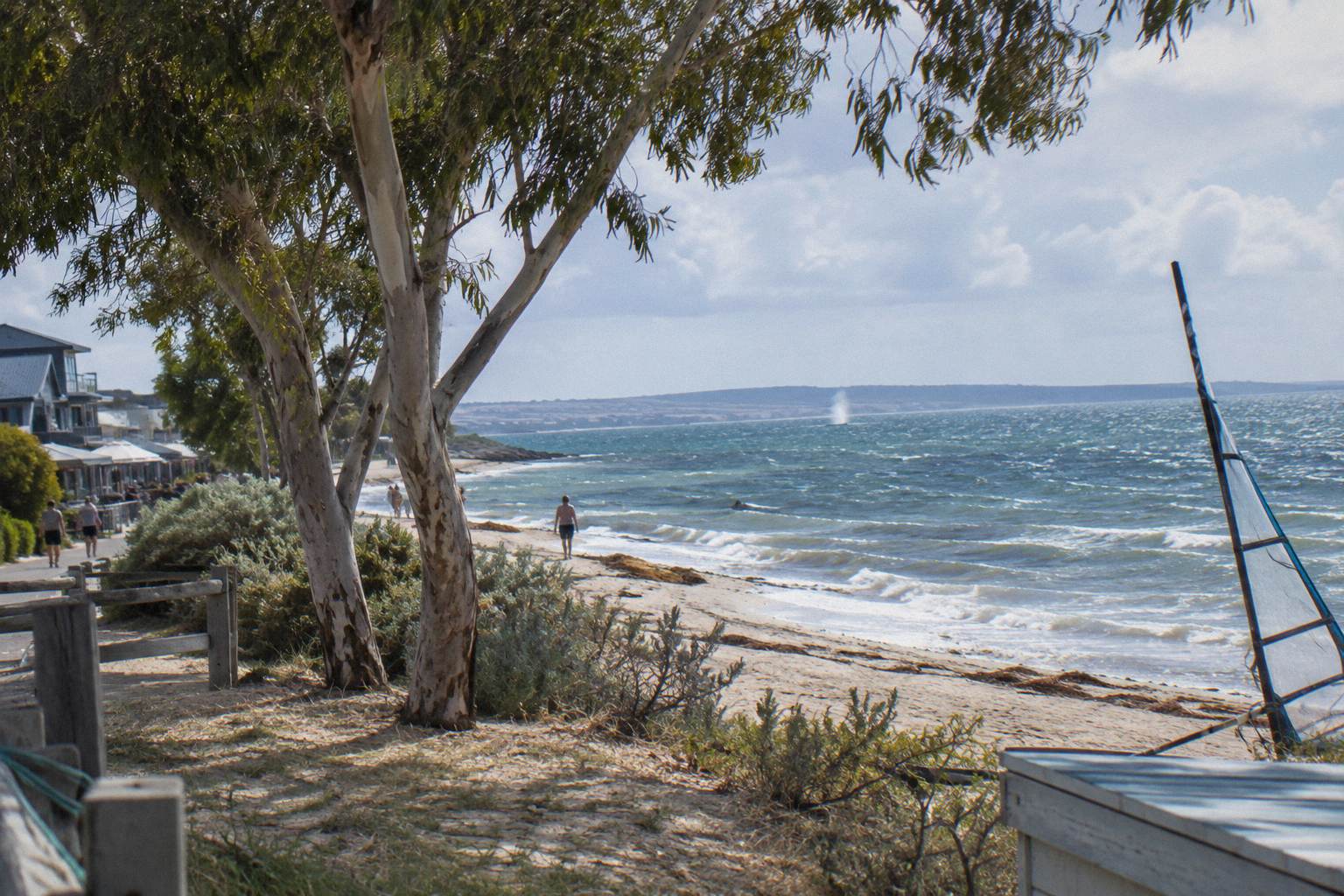
None of this brings the whales within reach of a swimmer, and that is the point of the season table in an article about swimming. Knowing when each species passes tells you when to be on a boat, and the boat is where the law wants you. For depth on the rarest of these, whether it is rare to see a blue whale from Dunsborough gives the honest framing.
Common Questions About Swimming With Whales In Western Australia
Can You Swim With Humpback Whales In Western Australia?
Not in Geographe Bay, and not on any tour covered here. WA law makes it illegal to swim within 100 metres of a whale. The only licensed in-water humpback program runs in Ningaloo Marine Park State waters and the Muiron Islands Marine Management Area, as the Department of Biodiversity, Conservation and Attractions states it.
How Close Can A Boat Legally Get To A Whale In Western Australia?
A vessel must stay at least 300 metres from a whale within a 60 degree arc to its front or rear, and at least 100 metres to the side. A person in the water must stay 100 metres away and a drone 60 metres. Staying closer is an offence with a fine of AUD 5,000.
What Happens If A Whale Swims Up To The Boat?
Regulation 114 requires the person in charge to put the vessel in neutral or switch off, or move away at no more than 6 knots until the legal distance is restored. A swimmer approached by a whale must move away. The whale approaching does not make staying close lawful.
Do Any Dunsborough Tours Offer Swimming With Whales?
No. Every tour covered on this site is a watching cruise. The featured Dunsborough trip, rated 4.7 across 137 reviews with the booking page showing AUD 71 per person, is a listed 2.5-hour viewing cruise with free cancellation up to 24 hours.
Why Is Ningaloo Allowed To Run Whale Swims?
Regulation 112 exempts activity authorised under a licence or by the DBCA CEO from the distance rules, and the licensed in-water humpback program operates under that authority. No such licence covers Geographe Bay or anywhere on this coast.
What Is The Legal Way To Be Close To Whales From Dunsborough?
Book a licensed whale-watching cruise. Boats hold the regulated distances, whales often approach on their own terms, and when one does the crew cuts the engines and lets the animal decide. This site, Dunsborough Whale Watching, covers those cruises and nothing else.
If a swim was the plan, the honest reframe is that the cruise is the experience on offer, and the whales do not know the difference between a boat that paid for a licence to watch and one that wished it could swim. Being on the water with humpbacks, southern rights and, late in spring, pygmy blue whales, is what Geographe Bay lawfully provides.