How Close Can A Whale Cruise Boat Legally Get In Western Australia?
The exact legal distances whale cruise boats must keep in WA waters, what happens when a whale approaches, the fines, and why no swim-with-whales tour exists in Geographe Bay.
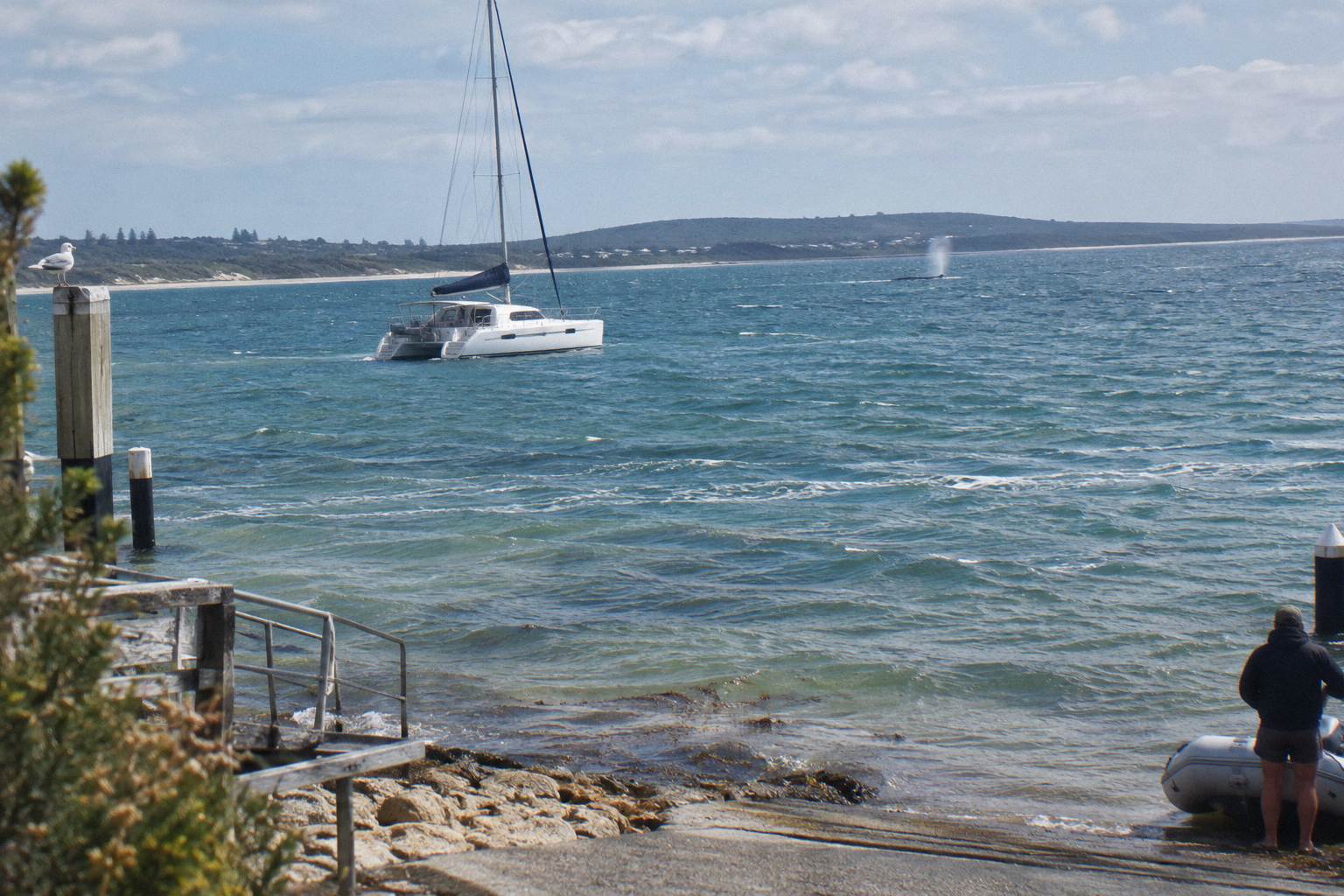
A whale cruise boat in Western Australia must stay at least 100 metres from a whale when approaching from the side, and at least 300 metres when inside a 60 degree arc to the front or rear of the animal. The distances come from the Biodiversity Conservation Regulations 2018, and staying closer is an offence carrying a fine of AUD 5,000. Licensed charter operators work inside those limits every day of the season.
Those numbers surprise a lot of first-time passengers. Boats often look much closer to the whales than they are, because a large whale viewed across 100 metres of open water still fills a surprising amount of horizon, and because the operators who run Geographe Bay cruises are experienced at holding a steady, lawful position that still gives everyone on deck a clear view. The rules do not quietly bend for paying customers. They are written into state regulations, they apply to every vessel on the water, and the person in charge of the boat is the one who answers for a breach.
The framework is also more detailed than most people expect. It does not contain a single catch-all number; it splits by who or what is approaching, by which direction they arrive from, and by which animal is involved. Whales and dolphins get different buffers. Boats, aircraft and drones get different buffers again. A passenger who understands the structure can read a cruise in real time, watching the skipper work within a system rather than guessing how near the boat will dare to go.
This matters to a reader choosing a tour as much as it matters to a skipper. An operator who explains the distance rules plainly, and who follows them, is an operator whose behaviour around the animals has been thought through. The pages gathered here on Dunsborough Whale Watching cover where and when to cruise; this one covers the legal framework underneath every one of those trips.
If you are already weighing up a specific trip, these are the three Geographe Bay and south coast cruises this site tracks most closely:
All three are licensed whale cruises with free cancellation up to 24 hours on their booking pages, and all three operate under exactly the distance rules set out below. Nothing in the roster sits outside them, and nothing a booking page can promise changes them.
What The Regulations Actually Say About Vessel Distances
The controlling law is Part 5, Division 2 of the Biodiversity Conservation Regulations 2018, regulations 110 to 114, with the whale-specific distances set out in Schedule 5, Division 1. For a vessel and a whale the key figures are 100 metres and 300 metres: 100 metres to the side, 300 metres within the 60 degree arc ahead of or behind the whale.
The full schedule of distances reads like this, and it is worth seeing in one place:
| Who or what | Minimum distance from a whale | The rule in plain words |
|---|---|---|
| A person in the water | 100 m | Swimming within 100 m of a whale is illegal, full stop, outside licensed programs |
| A vessel to the side | 100 m | Approaching from the side is the only lawful angle at the shorter distance |
| A vessel front or rear arc | 300 m | Inside a 60 degree arc ahead of or behind the whale, the buffer triples |
| A drone | 60 m | Aerial devices have their own, shorter limit, still enforced |
| A fixed-wing aircraft | 300 m | Applies to any non-helicopter aircraft |
| A helicopter | 500 m | The largest buffer in the schedule |
| A person and a dolphin | 50 m | Dolphins carry their own, smaller set of limits |
| A vessel and a dolphin | 100 m | Applies to the same dolphin interaction |
Two features of that table deserve a closer look. The first is the difference between the side and the front or rear arc. The regulations treat an animal's path of travel as its most sensitive zone: a boat sitting directly ahead of a migrating humpback forces the whale to change course or dive under, so the law pushes vessels out to 300 metres there. To the side, where the whale can see the boat and keep its line, 100 metres is considered enough. That asymmetry is why a competent skipper holds station off the whale's flank rather than cutting across its bow. It is also why two boats watching the same whale can look, from shore, as though they are behaving differently when both are fully inside the law.
The second is the drone line. Passengers sometimes assume a small camera drone is a harmless exception, but a 60-metre limit applies and it is policed. The Department of Biodiversity, Conservation and Attractions repeats the point in its own whale watching advice, alongside two further rules: approach from the side only, and abandon an interaction at any sign of distress. That third instruction matters more than its brevity suggests. It hands the crew a duty to walk away from a sighting, even a good one, if the animal changes behaviour in a way that signals stress. The official text of the regulations is published as a PDF by the Western Australian legislation office, and the department's public guidance sits on the DBCA whale watching advice page.
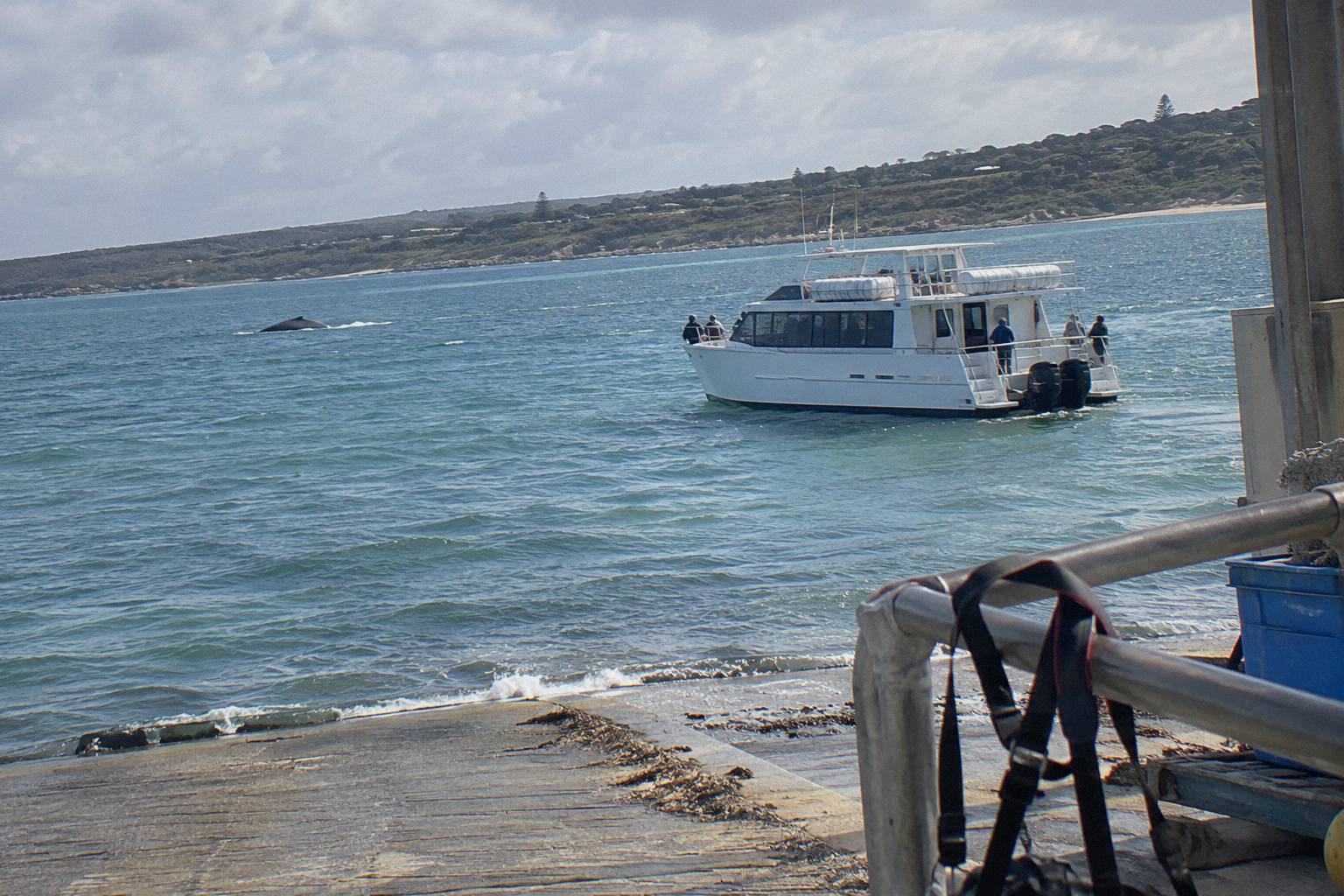
The penalty side of the ledger is regulation 113: staying closer than the permitted distance is an offence, and the penalty is a fine of AUD 5,000. That figure applies to a person, a vessel master, an aircraft operator or a drone pilot alike. For a licensed charter operator it is also a commercial risk on top of a legal one, which is one reason the established operators build their entire routine around staying outside the line. A skipper who drifts inside the buffer risks more than a ticket; repeat behaviour of that kind is the sort of thing that costs a charter business its standing, its licensing arrangements and its season.
It is worth being precise about what the offence actually is, because the wording trips people up. The regulations do not say a boat must stay within a distance; they say it must not stay closer than the distance. The offence is proximity itself, not the manner of the approach. Intent is irrelevant. A vessel that is pushed inside the buffer by a swell, a current or an inattentive hand on the throttle is in the same position as one whose master deliberately closed the gap, which is exactly why regulation 114 exists to define the lawful response once the gap closes.
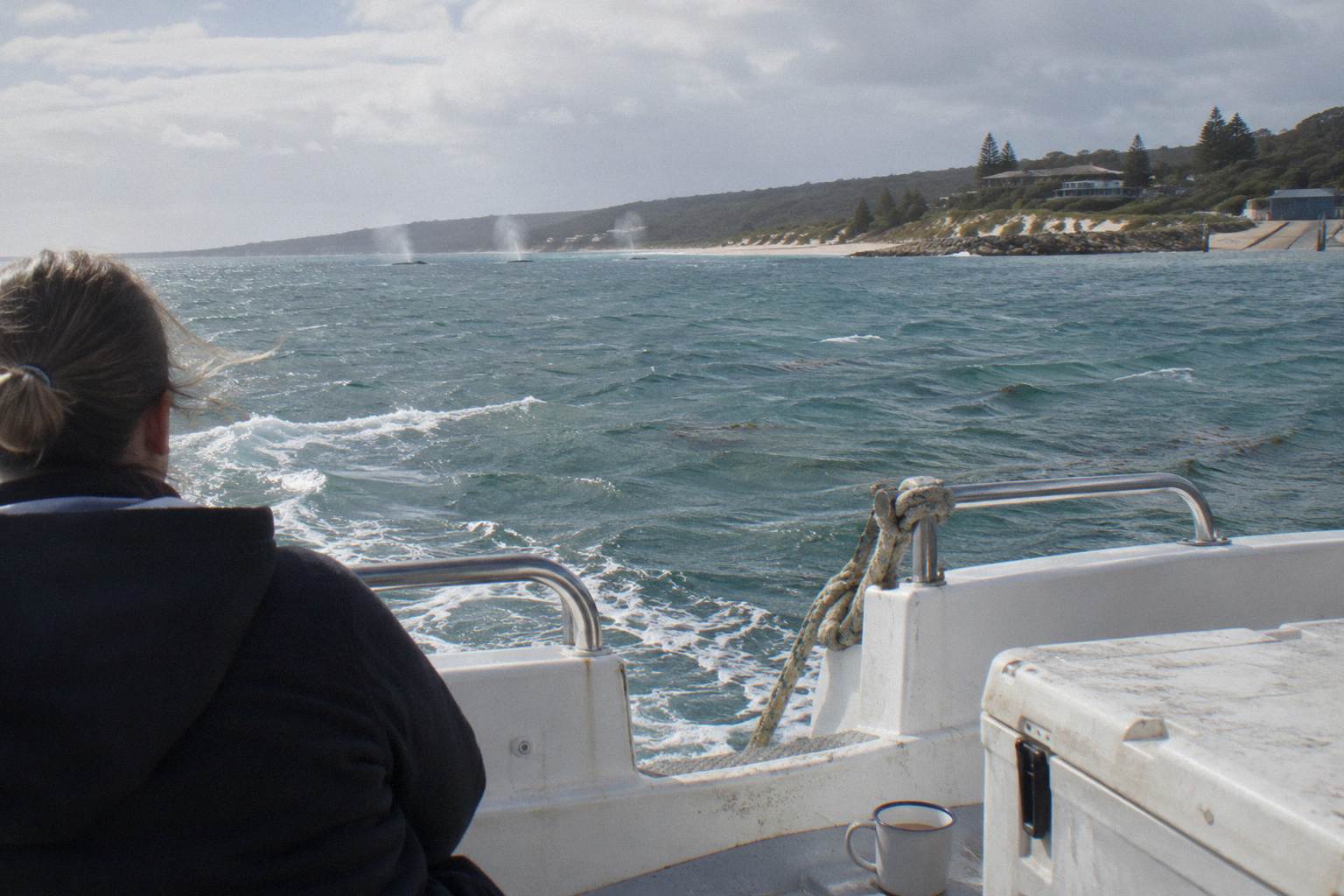
Curious readers are often the same readers who go on to book, and vetting the operator is a fair use of that curiosity:
What Happens When A Whale Approaches The Boat?
Regulation 114 covers the reverse situation, and it is the part of the law most passengers actually witness. If a whale comes to the vessel inside the legal distance, the person in charge must put the boat in neutral or switch the engines off, or move away at no more than 6 knots until the distance is restored. A swimmer approached by a whale must move away.
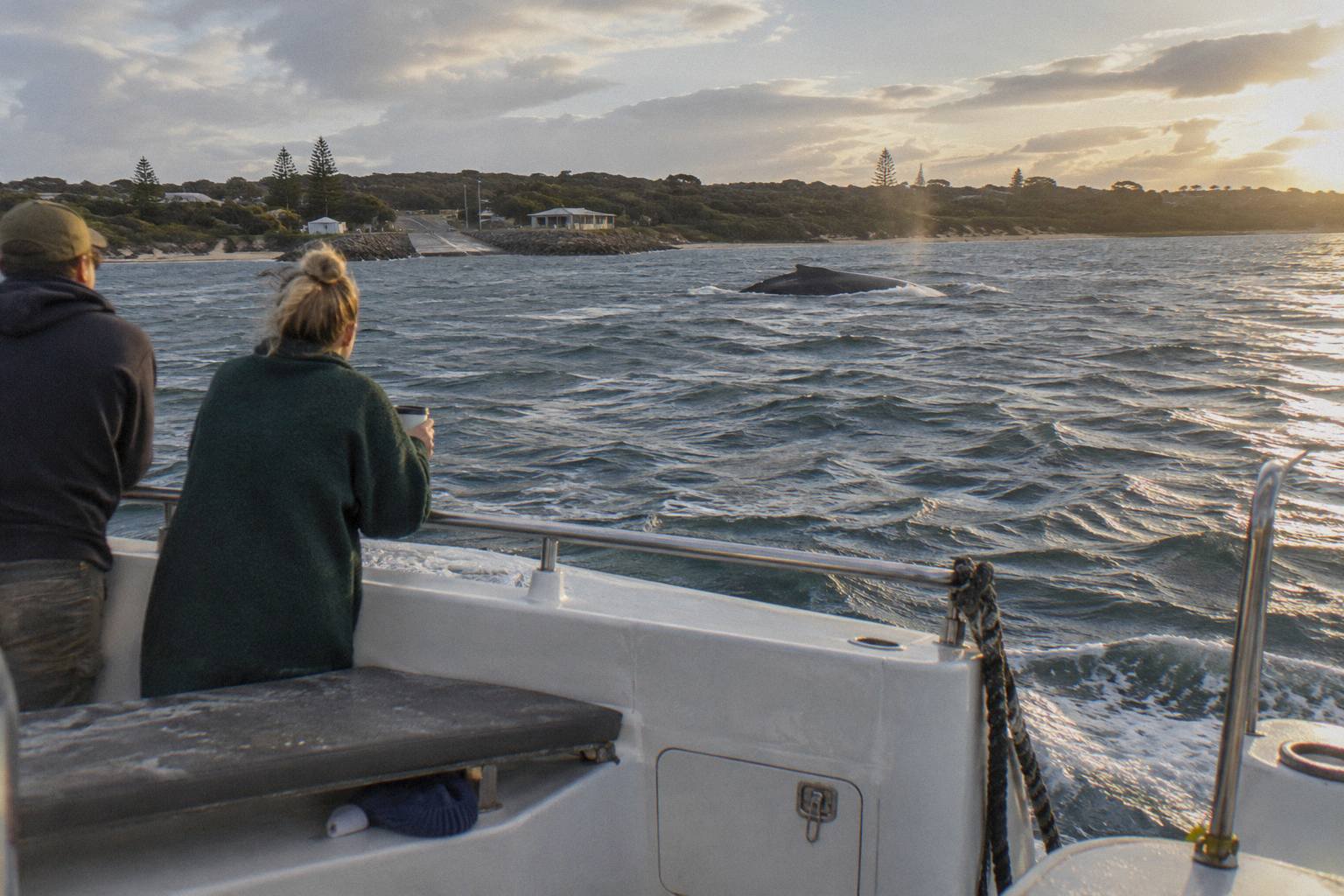
Whales, in other words, are not bound by the regulations, and they do not always cooperate with them. A curious juvenile humpback, or a mother repositioning with a calf, can and does drift toward a stationary boat. The law anticipates this: the vessel's obligation is to stop being a threat, cut power, and let the animal control the encounter. Passengers regularly describe this as the best moment of a cruise, a whale choosing to pass close while the boat sits silent, and it is entirely lawful precisely because the whale made the approach.
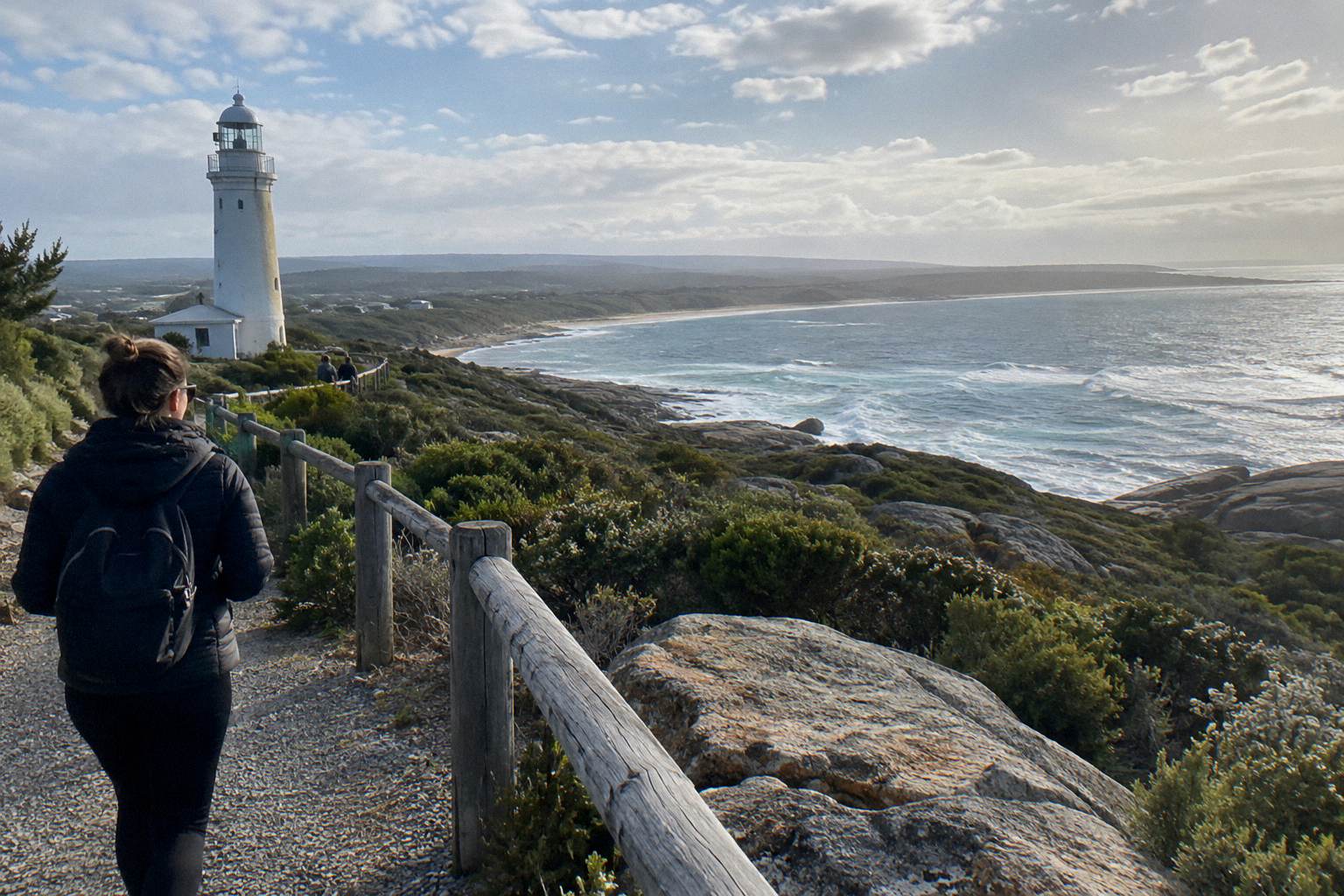
The detail in the wording rewards a second read. The engine response is not a single fixed action: the person in charge may put the vessel in neutral, or switch off altogether, or withdraw at no more than 6 knots until the legal distance is restored. Which of those is right depends on where the whale is and where it is heading. A boat directly in an animal's path will usually withdraw slowly rather than sit dead in the water ahead of it. A boat already to the side will usually just go quiet and let the whale pass. The 6-knot ceiling on the retreat exists so that the cure is not worse than the problem, a vessel fleeing at speed creates noise and wake of its own.
What the skipper may not do is treat a voluntary approach as permission to follow. The moment the whale moves off, the 100-metre and 300-metre buffers apply again, and re-closing the gap would be an offence under regulation 113. This is the practical difference between a licensed whale cruise and a private boat owner who motors up to a blowing whale: the cruise crew spend their whole season managing exactly this boundary, and the law is written with their working reality in mind.
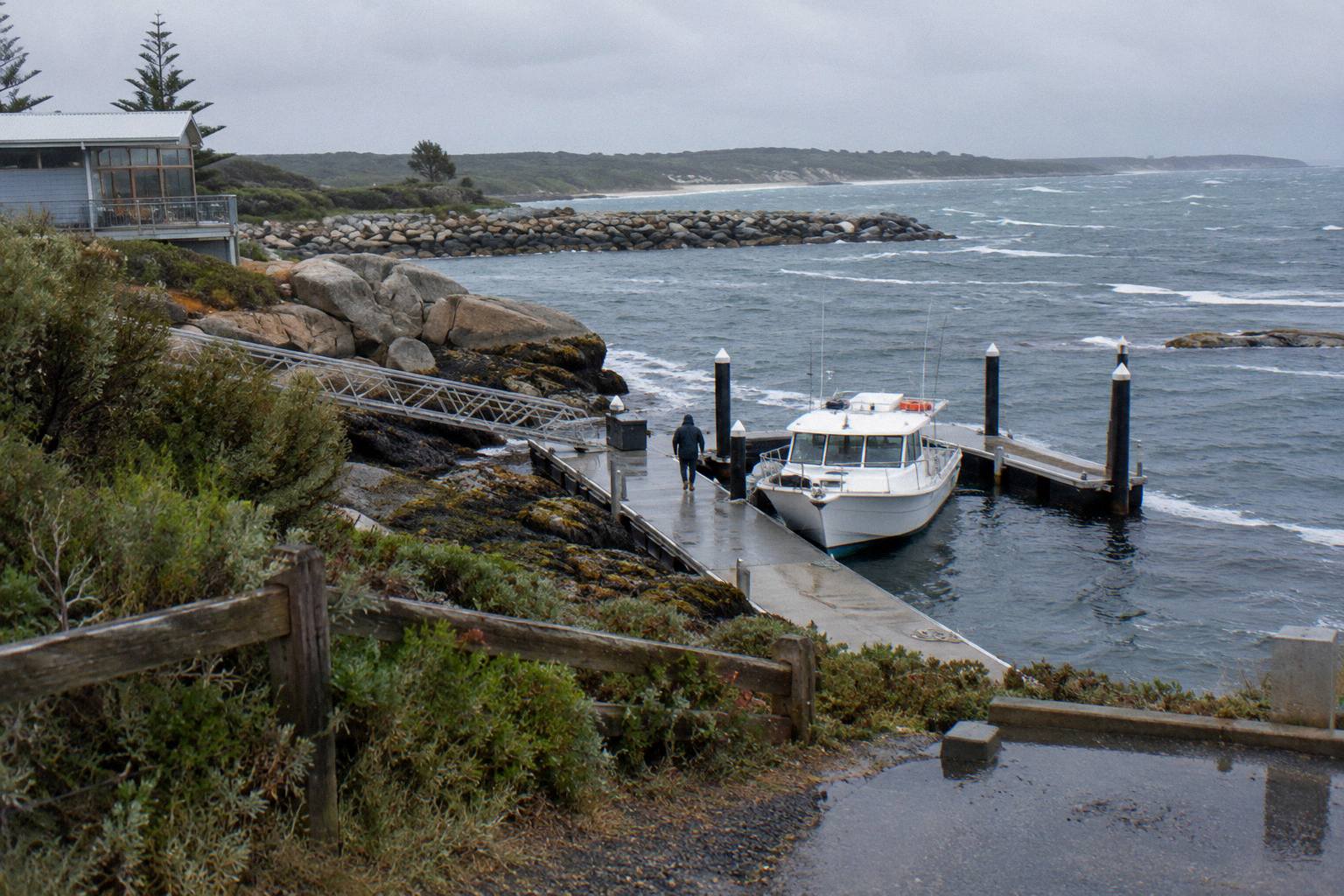
The same rules govern every operator in the region, not only the boats leaving Quindalup. The All Sea Charters cruise from Busselton, Augusta or Dunsborough, rated 4.8 across 438 reviews and listed at 2 to 2.5 hours, works under identical distances, and its price is shown on the booking page rather than printed here:
The site's guide to whether whales come close to the boat in Geographe Bay looks at the encounter side of this in more detail, including how the crew behave during an approach and what a close pass actually looks like from the deck.
Why There Is No Swimming With Whales In Geographe Bay
Because state law makes it illegal for an individual to swim within 100 metres of a whale, and the only licensed in-water humpback interactions in Western Australia happen in Ningaloo Marine Park State waters and the Muiron Islands Marine Management Area. Regulation 112 exempts activity authorised under a licence, and no such licence exists for Geographe Bay.
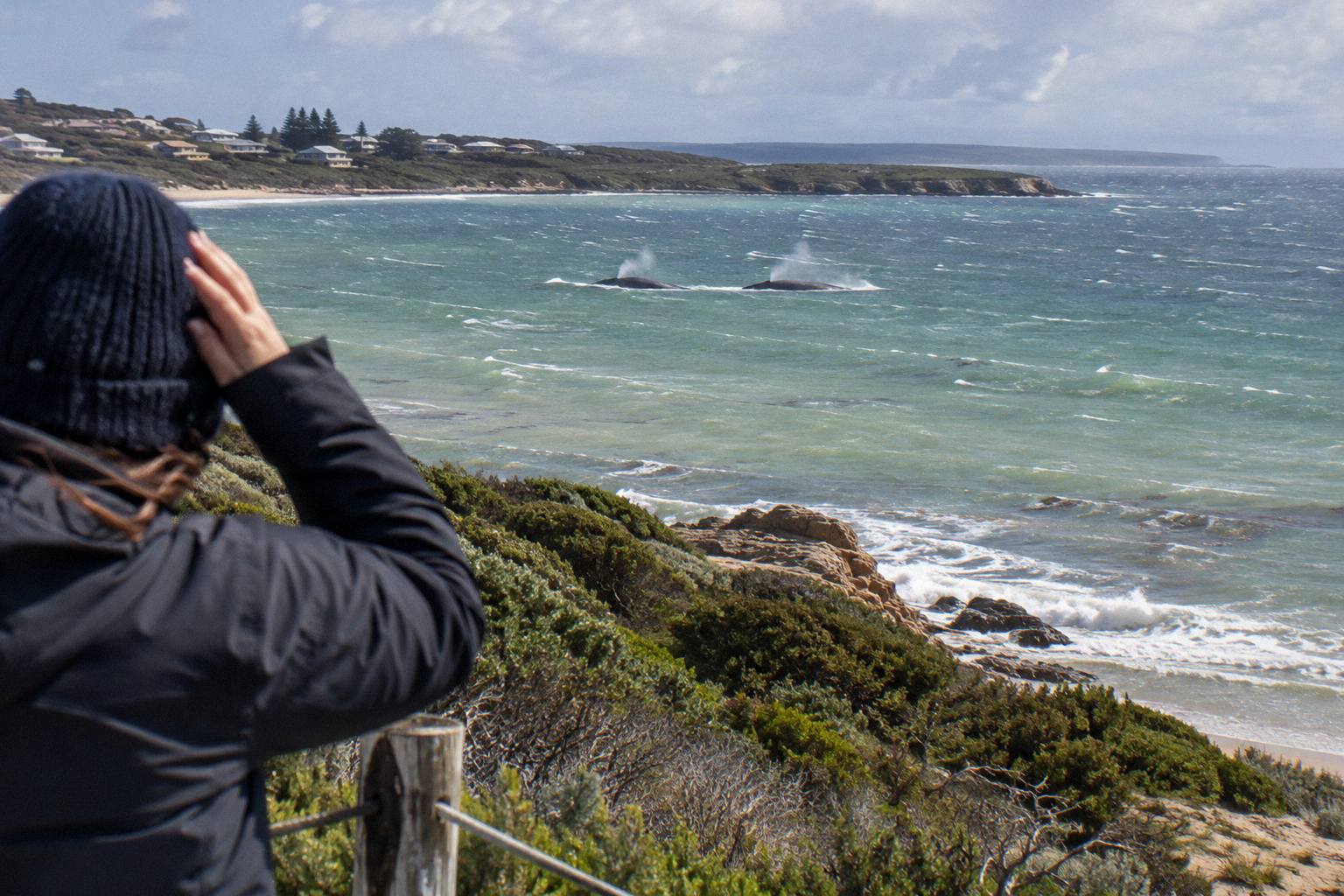
The department's own wording is blunt: "Under State legislation, it is illegal for individuals to swim within 100m of a whale." The licensed Ningaloo program, where participants enter the water with humpbacks under strict conditions, exists because that activity is authorised under a licence issued under regulation 112. That exemption is narrow, geographic and hard-won, and it does not extend to the south west. No tour sold out of Dunsborough, Busselton or Augusta puts a paying guest in the water with a whale, and any product that implies otherwise should be treated with suspicion.
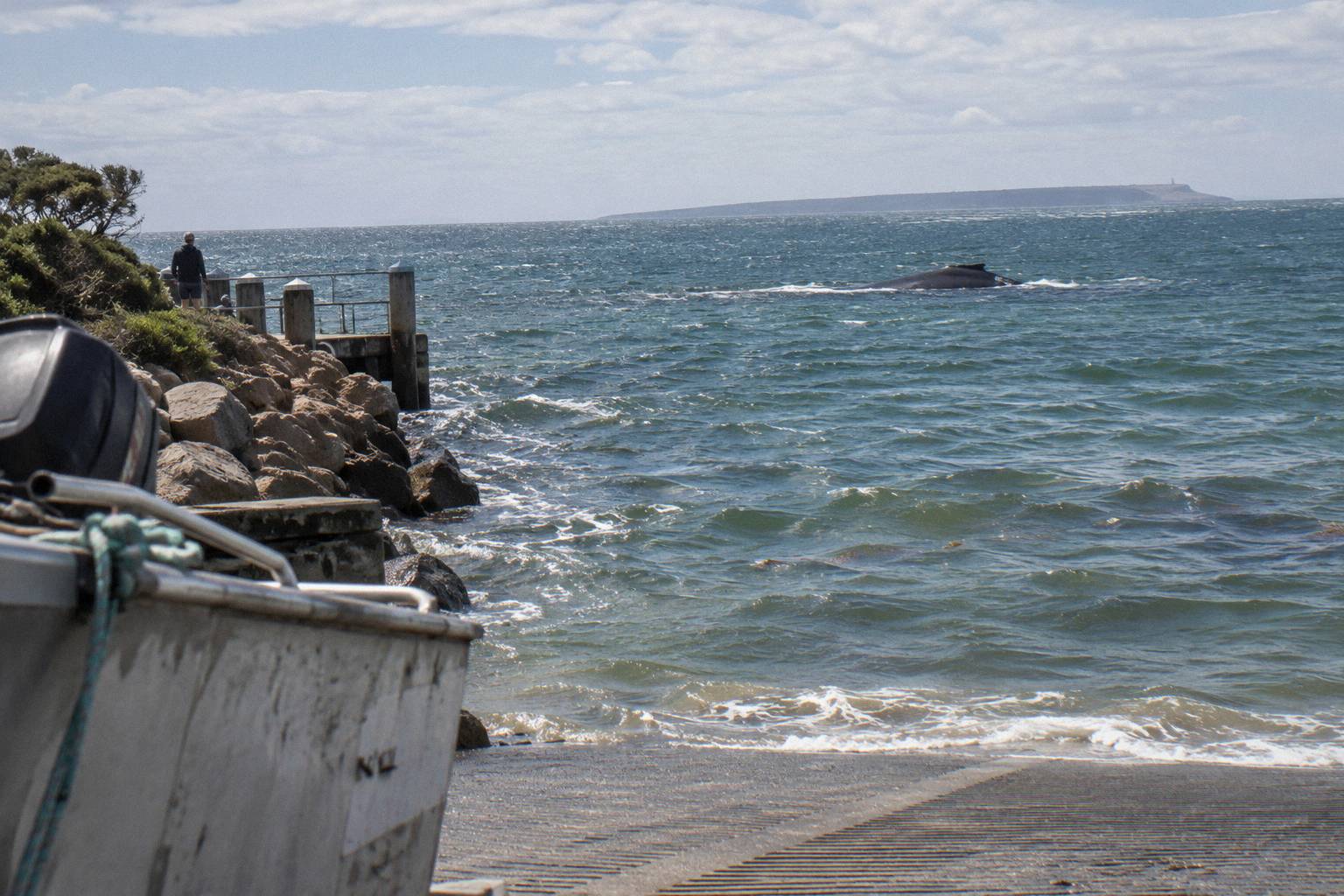
This is worth stating plainly because the marketing around whale tourism can blur it. Swim-with-whales imagery from other parts of the world circulates freely online, and a visitor might reasonably assume the south west offers something similar. It does not. What Geographe Bay offers is a boat-based view of humpbacks, southern rights and, from October, passing pygmy blue whales, held at the distances the law prescribes. The site's longer treatment of the question, whether you can swim with humpback whales in Western Australia, works through the licensing detail, and the department's page on swimming with humpback whales is the primary source.
Regulation 114 has one further clause that belongs in this section rather than anywhere else: a swimmer approached by a whale must move away. Even in the extraordinary case where a whale seeks out a person in the water, the human's legal duty is to increase the distance, not to enjoy the moment. It is a small line of text that says a great deal about how the regulations are framed. The whale's interests lead; human curiosity follows, or it does not enter the water at all.
The closest legal thing to being in the water near the bay's marine life is an eco trip with optional snorkelling, which is not a whale cruise and does not put snorkellers near whales at all:
The Geographe Bay Eco And Snorkel Trip, is a 2-hour eco boat trip with a minimum age of 6, free cancellation up to 24 hours, and its price shown on the booking page. It belongs in this conversation only to draw the line clearly: snorkelling happens away from whales, on a trip where the distance rules are never in play.
Do The Dunsborough Operators Publish Their Own Distance Policy?
No. Naturaliste Charters, the operator behind the Dunsborough whale cruise, says only that its vessels keep "a specific distance" and prints no figure of its own. The only enforceable numbers are the regulatory ones, 100 metres and 300 metres, and any operator in the state who publishes a distance is publishing the same figures.
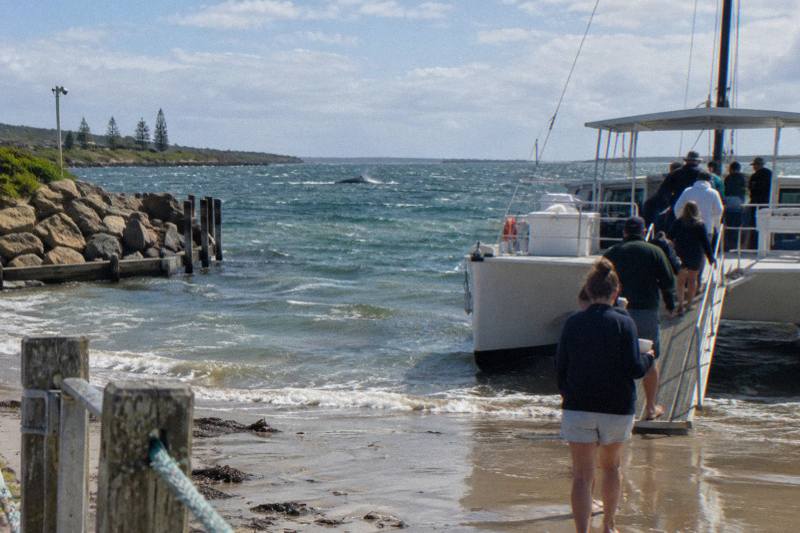
That absence of a house number is not evasiveness; it is the correct legal position. There is no separate, stricter operator standard to disclose, because the regulations already set the standard. What an operator can usefully publish is behaviour: how the crew approach, from which angle, and what they do when a whale closes the distance. The Dunsborough Whale Watching Tour With Naturaliste Charters, rated 4.7 across 137 reviews and listed at 2.5 hours, runs on the 23-metre Alison Maree catamaran with beach boarding via a handrailed ramp at Quindalup, and the tour's own page here carries the practical detail alongside a live availability check on the operator's listing. The booking page shows AUD 71 per person, a price that can change.
For passengers, the practical takeaway is a set of behaviours to expect on a lawful cruise, whoever runs it:
| Situation on the water | What a lawful operator does | The rule behind it |
|---|---|---|
| First contact with a whale | Approach from the side, never head-on | DBCA advice and Schedule 5 |
| Whale ahead of or behind the boat | Hold outside 300 m in the arc | Schedule 5, Division 1 |
| Whale moves toward the boat | Neutral or engines off, wait | Regulation 114 |
| Whale shows distress | Abandon the interaction | DBCA advice |
| Private drone over a whale | Keep it 60 m away or grounded | Schedule 5 |
A reader who knows this table can read a crew's behaviour in real time, which is a better gauge of an operator than any slogan. A crew that explains the 300-metre arc over the PA, that goes quiet when a whale turns toward the boat, and that leaves a sighting when an animal changes behaviour is a crew working the regulations as they were written. A crew that chases, that looms in front of a travelling whale, or that lets passengers lean over with a drone is not, whatever the brochure says.
The Augusta operation deserves a mention here too, because it shows the same framework applied on a different coast. The Augusta Whale Watching Tour With Naturaliste Charters, rated 3.9 across 14 reviews, is a 2-hour cruise from Augusta Boat Harbour with free cancellation up to 24 hours and a booking-page price of AUD 71 per person:
A small review pool like 14 reviews says little on its own, and this site prints the count rather than dressing it up. The legal distances, though, are identical in Flinders Bay and Geographe Bay, which is the point that carries over: the rules are state-wide, not local custom.
The site's wider comparison of how to choose a whale cruise from Dunsborough puts the distance rules in the fuller context of boat type, timing and price.
Does The 100-Metre Rule Mean You See Less From The Boat?
In practice, no. Humpbacks and southern right whales are large enough that a whale at 100 metres is clearly visible, and the breaches, tail slaps and blows passengers remember are visible from much further away. The rule shapes the angle of the encounter, not the quality of it, and whales frequently close the distance themselves under regulation 114.
It helps to picture the geometry. A humpback surfacing 100 metres off the beam of a 23-metre catamaran is roughly a boat-length-and-a-half away, close enough for a passenger with a phone camera to fill the frame. The 300-metre arc matters only for positioning, and a skipper who wants a good view simply will not sit in front of the animal. Meanwhile the behaviour that makes the trip, a breach or a mother rolling with a calf, throws water and noise across hundreds of metres of flat spring water and draws every eye on deck regardless of exact range.
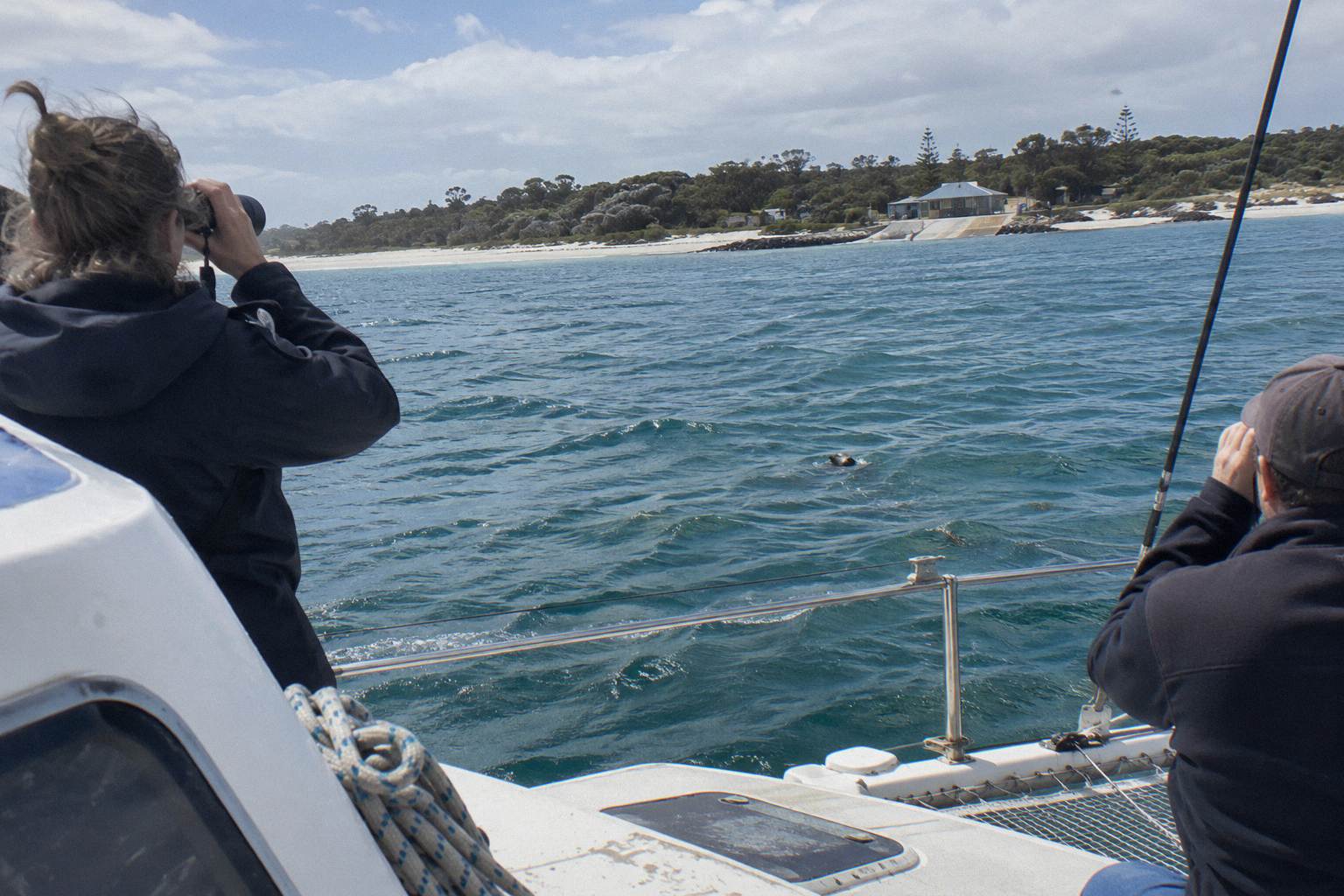
There is also a seasonal dimension to how close anything needs to be. Geographe Bay's cruise season runs from about August to the end of November, and in spring the bay holds resting mothers and calves on the southern return, animals that are often slow, surface-oriented and tolerant of a lawful boat to the side. The site's month-by-month Geographe Bay whale season guide covers what is in the water when. Nothing about the distance rules changes by month; what changes is how much whale there is to see at 100 metres.
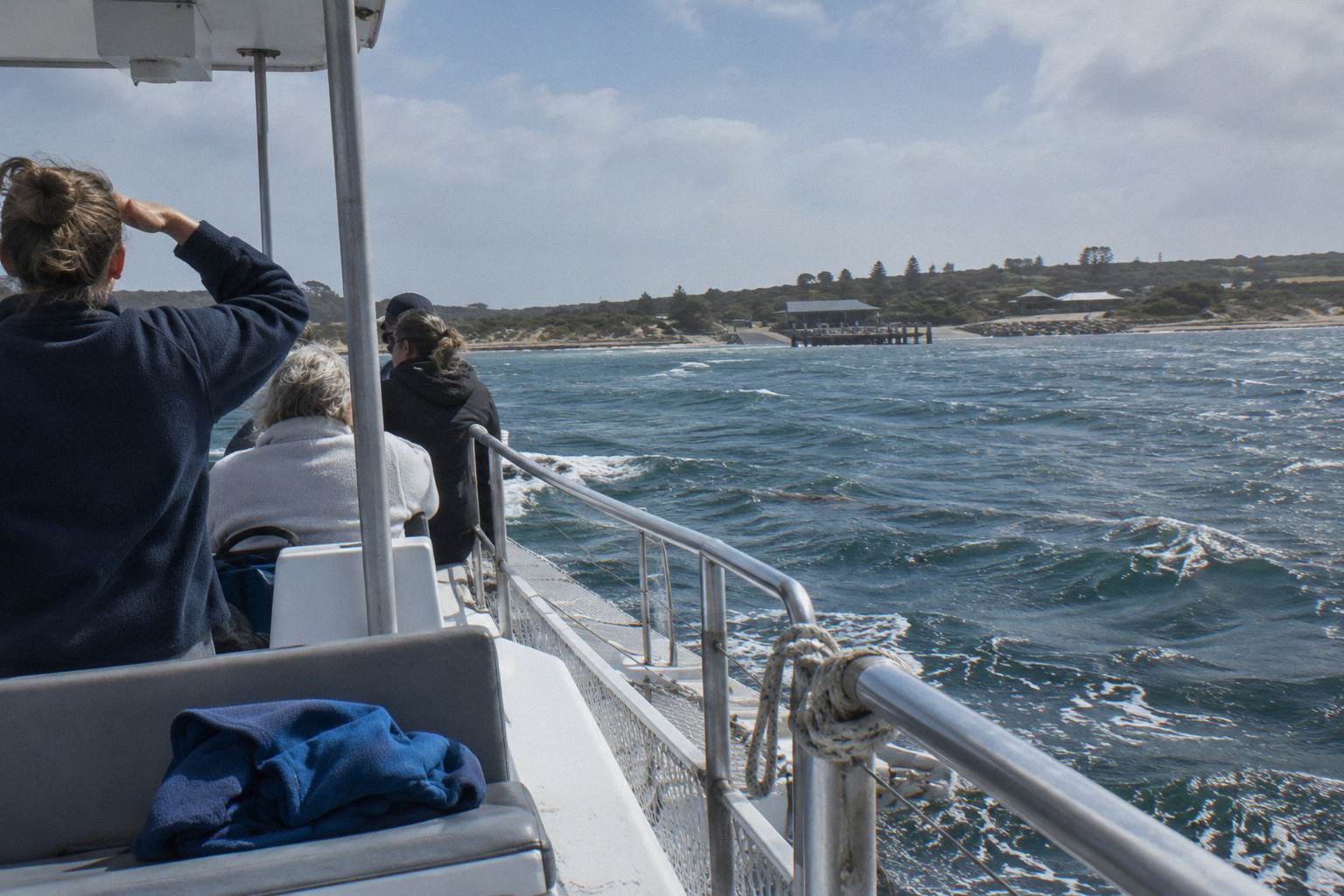
The rules arguably improve the viewing rather than limiting it. A boat that approaches from the side at a lawful distance presents itself to the whale as a predictable, stationary feature of the environment, and predictable objects are the ones animals tolerate longest. Encounters that begin lawfully tend to last longer, because nothing in them forces the whale to leave. A chase, by contrast, produces one fluke and a dive, and then nothing. Passengers sometimes conflate closeness with quality, when patience and angle are what a good sighting is actually made of.
One more framing helps set expectations honestly. Sightings are never promised, and the question of what the odds of seeing a whale on a cruise actually are is separate from the law. The distance rules do not reduce the odds; they define the envelope within which every lawful encounter in the state happens. Readers weighing the broader value question can also read this site's take on whether a whale cruise is worth it, which treats the law as one input among several.
Each lists free cancellation up to 24 hours on its booking page, and each operates inside the same distances described above.
Common Questions About Whale Approach Distances In Western Australia
How Close Can A Whale Cruise Boat Legally Get In Western Australia?
100 metres to the side of a whale and 300 metres within a 60 degree arc to the front or rear, under the Biodiversity Conservation Regulations 2018. Staying closer is an offence with a fine of AUD 5,000 under regulation 113.
Can A Whale Swim Up To The Boat Instead?
Yes, whales are not bound by the rules. When one closes the distance, regulation 114 requires the vessel's engines to go to neutral or off, or a retreat at no more than 6 knots until the buffer is restored.
Can You Swim With Whales In Dunsborough?
No. It is illegal to swim within 100 metres of a whale in WA, and the only licensed in-water humpback interactions are in Ningaloo Marine Park State waters and the Muiron Islands Marine Management Area. No Geographe Bay tour offers a swim.
How Close Can A Drone Fly To A Whale?
At least 60 metres. Drones, aircraft and helicopters each carry their own minimum distances in Schedule 5, with helicopters held to the largest buffer at 500 metres.
Do Dolphin Rules Differ From Whale Rules?
Yes. A person must stay 50 metres from a dolphin and a vessel 100 metres, smaller buffers than the 100-metre and 300-metre figures that apply to whales.
Do The Rules Change During Whale Season?
No. The distances in the regulations apply year-round to every vessel, person and drone in WA waters, in season and out. What changes by month is which whales are in Geographe Bay, not how close boats may go.