What Happens On A Whale Cruise From Dunsborough, Start To Finish
From the 15 to 30 minutes of arrival time at the Quindalup ramp, to the beach boarding, the two hours or more on the water and the return, here is the full run of a Dunsborough whale watching tour.
Short answer
Arrive 15 to 30 minutes early at the Professional Fisherman's Boat Ramp in Quindalup, walk a handrailed ramp onto the Indi Maree and transfer to the 23 m catamaran Alison Maree, cruise for about 2 hours with departures at 10am and 2pm, with tea, coffee and biscuits on board, and return to the same ramp.
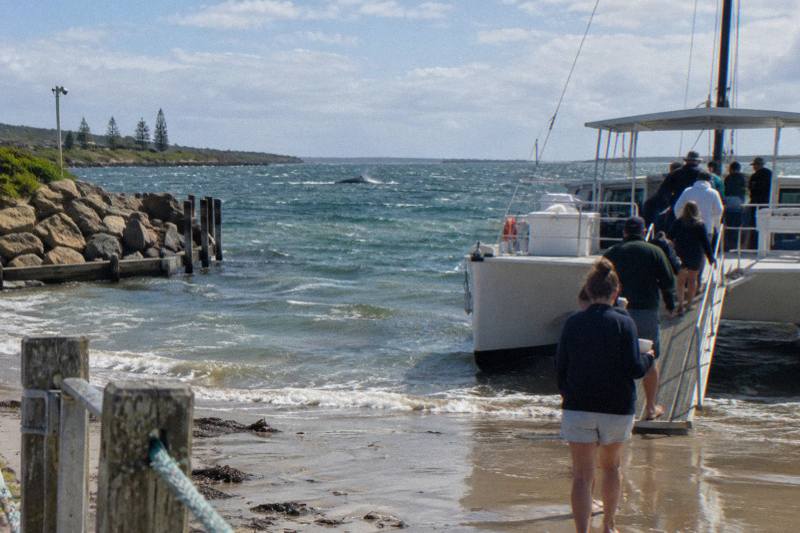
A whale watching tour from Dunsborough follows a shape that surprises a few first timers: it starts on a beach, not a jetty. Guests walk a handrailed ramp straight off the sand at Quindalup onto a small transfer vessel, then move out to a 23 m catamaran waiting in deeper water. That detail, plus the two departure times, the tea and biscuits, and the way the crew behaves when a whale comes close, is what this page covers, step by step, using only what the operator states and what Western Australian law sets out. The trip described here is the Dunsborough Whale Watching Tour With Naturaliste Charters, rated 4.7 across 137 reviews, with the booking page showing AUD 71 per person, a price that can change. This site, Dunsborough Whale Watching, walks through the whole day below.
Before You Leave: Arrival, Parking And The Quindalup Ramp
The operator asks guests to arrive 15 to 30 minutes before departure at the Professional Fisherman's Boat Ramp, opposite 306 Geographe Bay Road in Quindalup, roughly 5 km east of Dunsborough town, with departures daily at 10am and 2pm during the season. Arriving inside that window matters because boarding happens off the beach and takes a little longer than a jetty departure.
Quindalup sits on the northern shore of Geographe Bay, a short drive from the town centre. The ramp the cruise uses is a working fishermen's ramp, not a marina, so the arrival is low key: you park nearby, meet the crew, and get fitted with a life jacket, which the operator says it carries for all guests. The 10am and 2pm departures mean you can plan the morning around the cruise or treat it as an afternoon outing, and either slot works with a day built around Dunsborough itself.
One practical note on timing: the operator lists the cruise at about 2 hours but says to allow up to 3 hours depending on wildlife sightings, and the booking page lists it at 2.5 hours. Build your day around the longer figure rather than the shorter one. If a pod of dolphins stays at the bow wave or a whale lingers near the boat, the skipper uses that buffer, and nobody on board is watching the clock. If you are still weighing up the time budget, our guide on how long a whale cruise from Dunsborough runs breaks the listed and real durations down tour by tour.
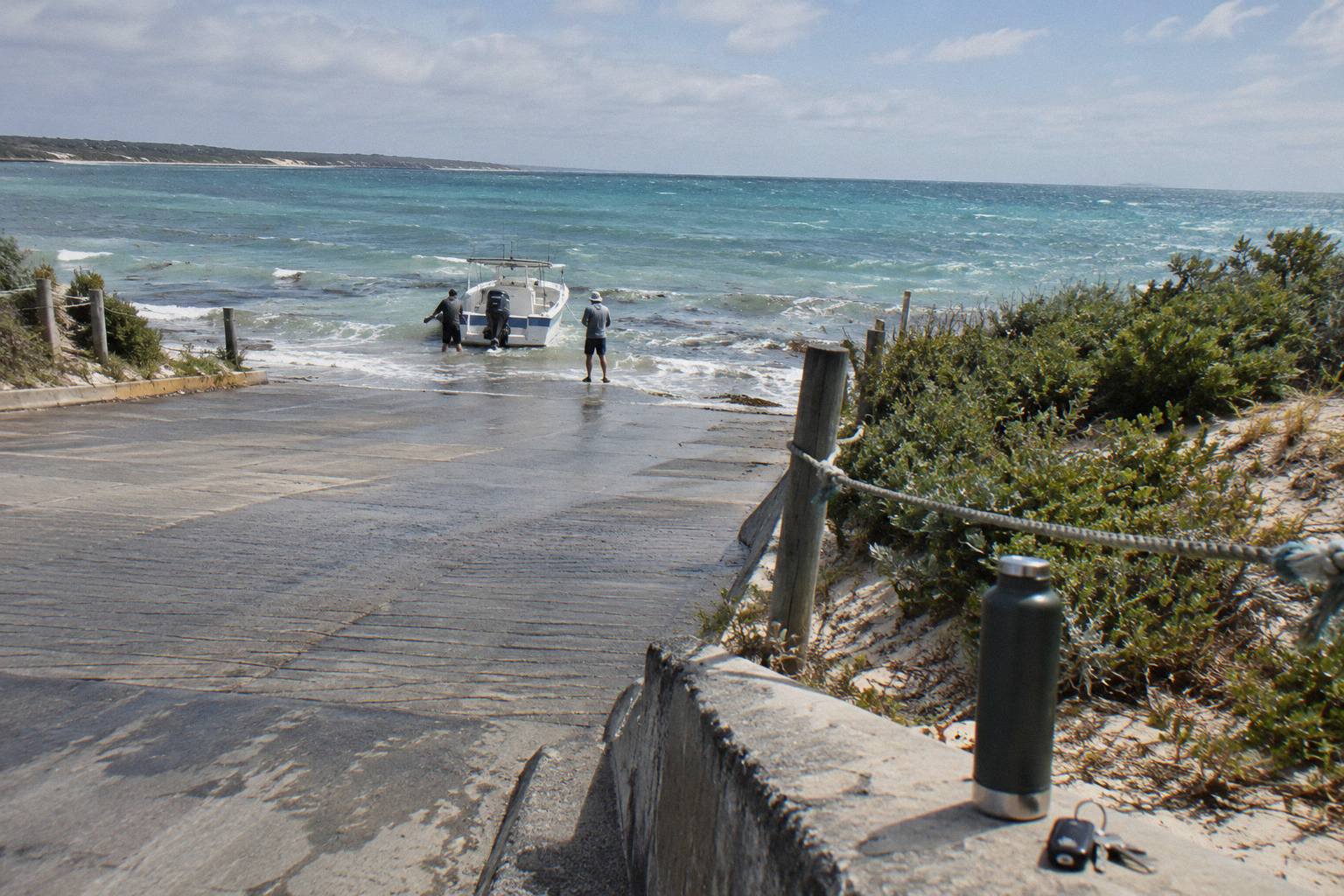
The ramp is also where the mobility question gets answered. The operator states that guests with limited mobility may need further assistance with beach boarding, and the booking page says the tour is not suitable for mobility impairments. If that could apply to someone in your group, raise it with the operator before booking rather than at the ramp, because the transfer between vessels happens on the water and there is no jetty or gangway alternative at this departure point.
Season matters as much as timing. Cruises run from August to November, with the operator's FAQ describing the window as mid-August to the end of November, and the wider framing used across this site is late winter to early summer. There is no point turning up in January: the boats run to the whale migration, and the migration has a schedule of its own. Our Geographe Bay whale season month by month guide maps exactly which weeks carry which species.
The Beach Boarding And Transfer To The Alison Maree
Guests walk a handrailed ramp from the beach onto the Indi Maree, a smaller transfer vessel, which then carries everyone out to the Alison Maree, a 23 m catamaran, where the cruise itself runs. This two stage boarding is the single detail that most distinguishes a Dunsborough departure from a typical marina whale cruise, and it is routine, quick and dry.
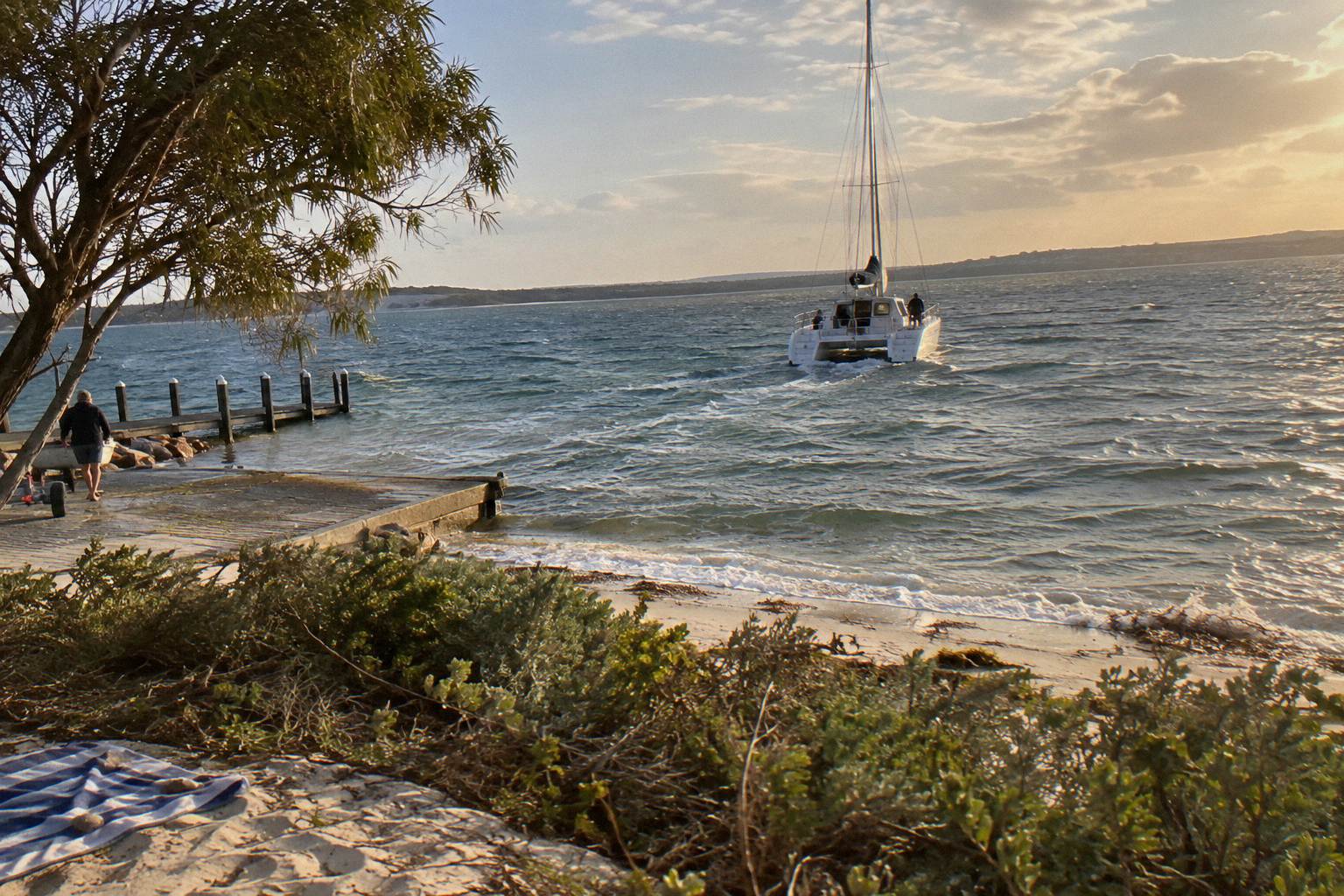
The transfer stage exists because Quindalup has no deep water berth. The Indi Maree handles the shallow approach, the Alison Maree waits in the clearer water of the bay, and the changeover happens within sight of shore. The operator does not state an exact time for the transfer, and this page will not invent one, but in practice it is a short hop that happens before the cruise proper begins. Once everyone is aboard the catamaran, the vessel heads out into Geographe Bay on the search.
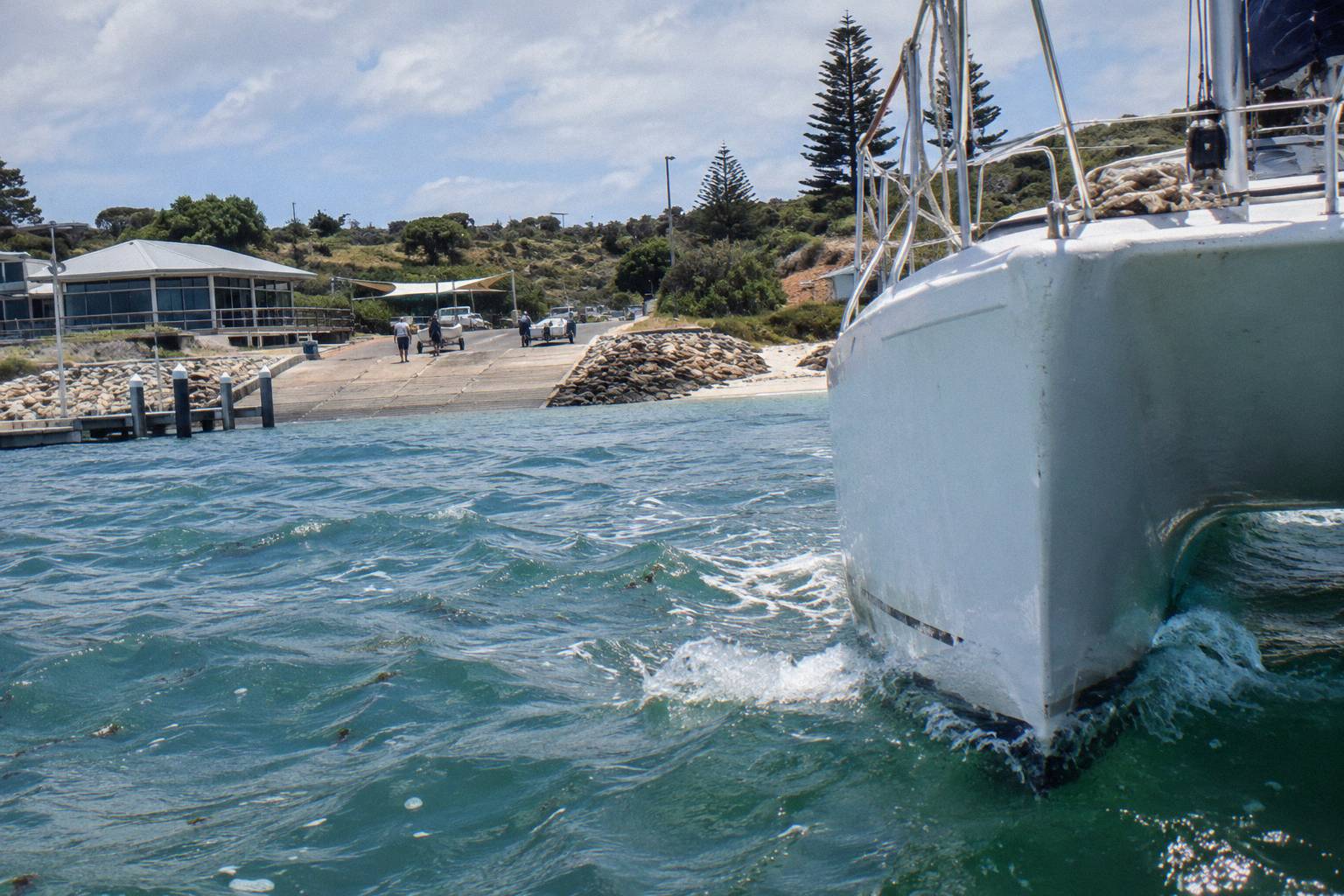
The catamaran itself is the working end of the tour. At 23 m it is a substantial platform with, per the operator, two toilets with hand washing, space to move between decks, and complimentary tea, coffee, milo, filtered water, green tea and biscuits, with soft drinks and snacks for sale. The booking page for the Dunsborough tour describes a 2.5 hour cruise on board the Alison Maree with morning or afternoon tea and a guided tour. Life jackets are carried for all guests, which matters for families: the operator describes the trip as open to all ages, with no minimum age stated.
If you are comparing this beach boarding departure against other options in the region, the three cruises below cover the main choices: the Dunsborough ramp trip itself, the larger All Sea Charters operation, and the Augusta alternative if your dates fall earlier in the year. Note that Naturaliste Charters states plainly that tours no longer depart from Busselton, so Dunsborough is the departure point for this operator in Geographe Bay.
The comparison between the two Geographe Bay operators is worth a sentence or two. All Sea Charters Whale Watching From Busselton, Augusta And Dunsborough is rated 4.8 across 438 reviews, runs a listed 2 to 2.5 hour cruise with departure options from Busselton, Augusta or Dunsborough, and carries free cancellation up to 24 hours on the booking page. Its price is not printed here: it is shown on the booking page. Our guide on Busselton or Dunsborough for a whale cruise works through the trade offs in full.
Out On The Water: What The Crew Does During The Cruise
Once the Alison Maree is in the bay, the cruise runs for about 2 hours, with the operator saying to allow up to 3 hours depending on wildlife sightings. The crew searches for whales, keeps the vessel at the legal approach distance, and dolphins often appear at the bow wave during the run out and back. Tea, coffee and biscuits are served while the boat is under way.
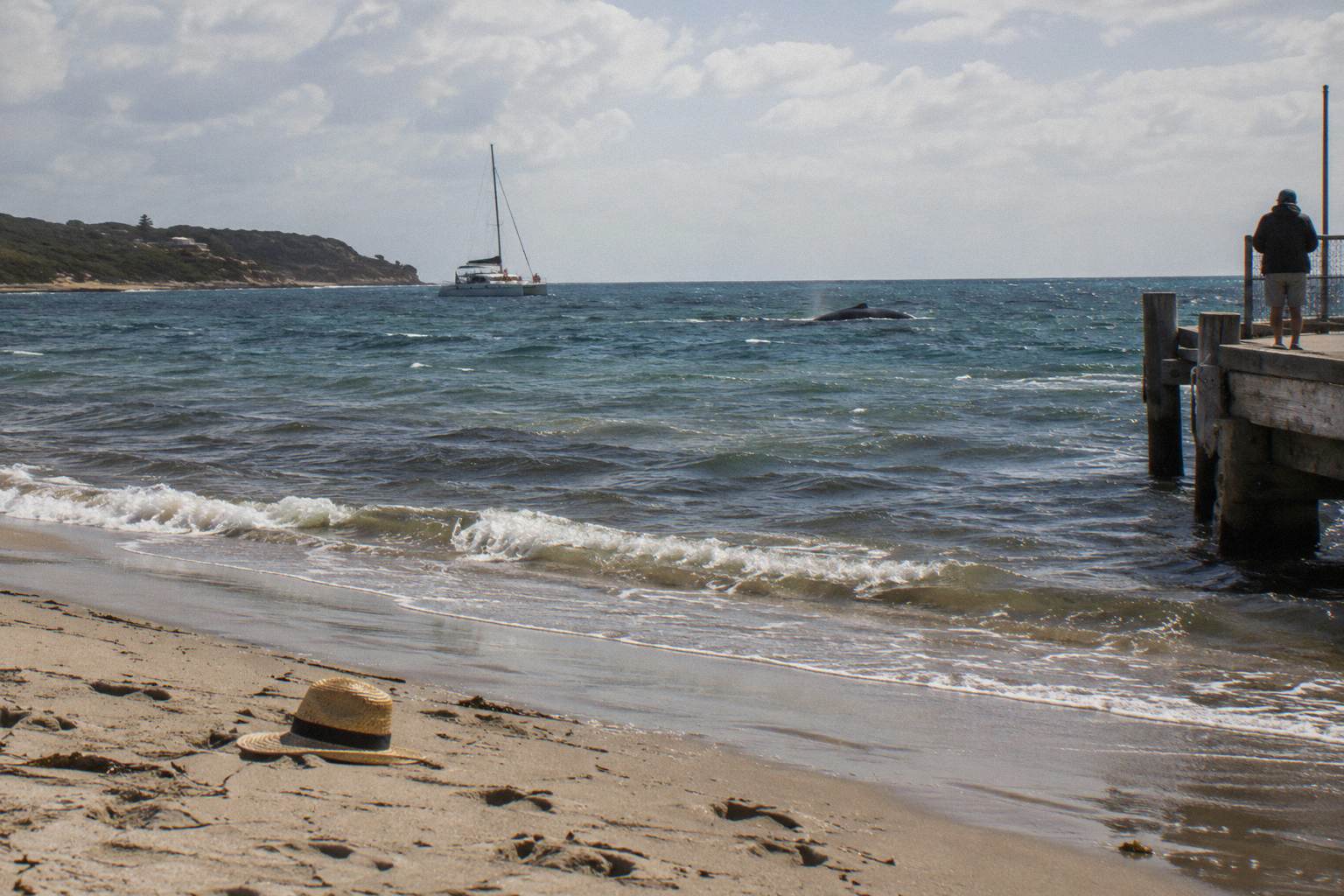
The pattern of the cruise is search, approach and observe. The skipper works the bay looking for blows and surface activity, then positions the catamaran where whales are likely to surface within view, without closing to an illegal distance. On most trips the dolphins find the boat before the whales do: the operator notes dolphins often ride the bow wave, and this is one of the reliably repeatable moments of a Geographe Bay cruise, especially for children on board.
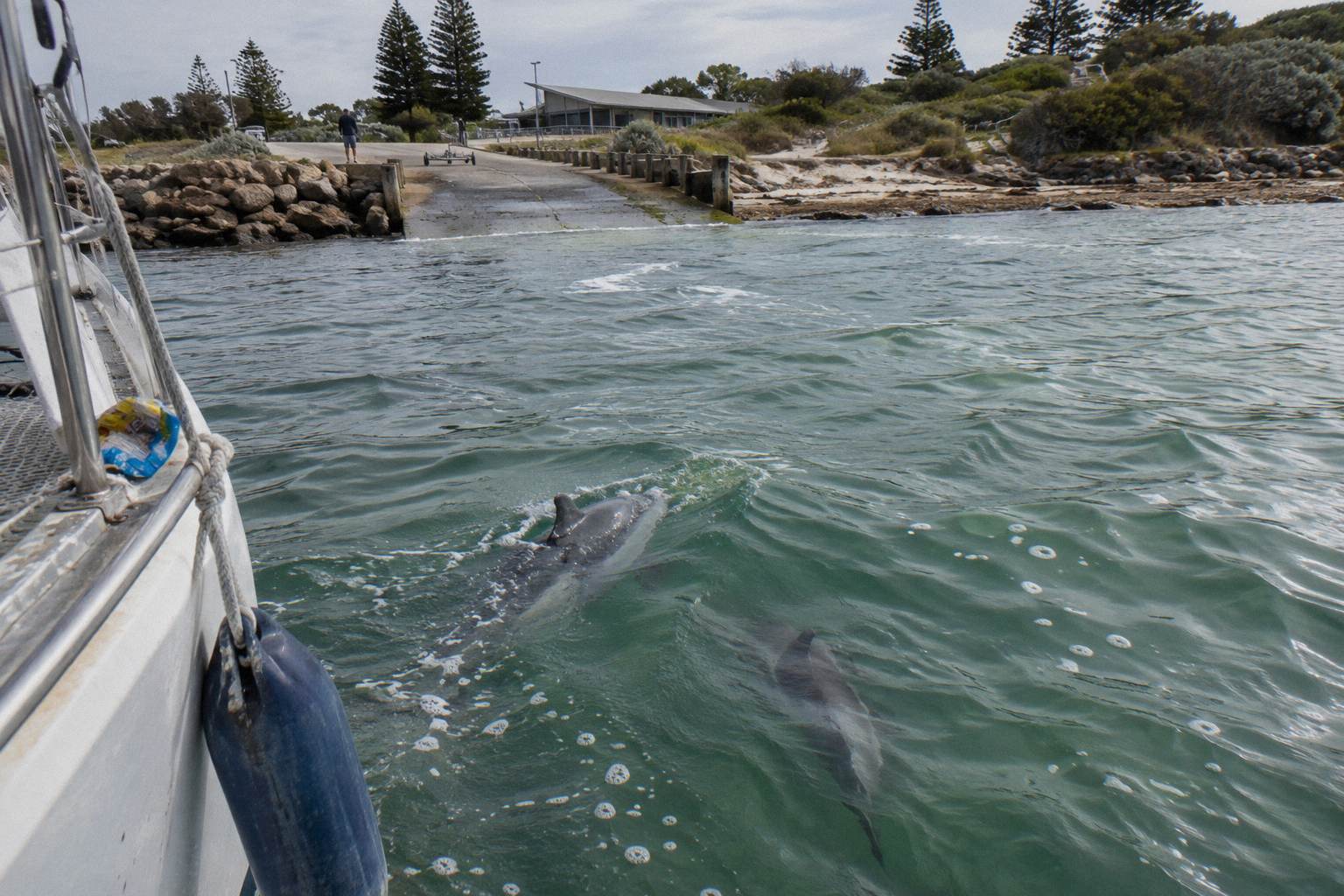
What the crew does when a whale comes near is set by regulation, not by mood. The operator says its vessels keep a specific distance and prints no figure, so the numbers below come from the law itself, and the next section covers them in detail. The practical effect on board is that a whale can approach the vessel, and when one does, the person in charge must put the boat in neutral or switch off, or move away at no more than 6 knots until the legal distance is restored. For guests this can be the best part of the trip: engines cut, the boat sits quiet, and the whale decides what happens next.
If you are weighing whether the day is worth the fare, the cruise described here is the featured trip on this site, and you can check availability through the button below. Free cancellation up to 24 hours applies on the booking page.
The table below summarises what the operator states at each stage of the Dunsborough trip, so you can see the whole day at a glance.
| Stage | What the operator states |
|---|---|
| Arrival | Arrive 15 to 30 minutes before departure |
| Departure point | Professional Fisherman's Boat Ramp, opposite 306 Geographe Bay Road, Quindalup |
| Departure times | Daily, 10am and 2pm |
| Boarding | Handrailed beach ramp onto the Indi Maree, transfer to the Alison Maree (23 m catamaran) |
| Duration | About 2 hours, allow up to 3 hours depending on wildlife sightings; listed at 2.5 hours |
| On board | Tea, coffee, milo, filtered water, green tea, biscuits; soft drinks and snacks for sale; two toilets with hand washing; life jackets for all |
| Ages | Open to all ages, no minimum age stated |
| Season | August to November; mid-August to the end of November on the operator's FAQ |
How Close Can The Boat Get? The Law On Approach Distances
Under Western Australia's Biodiversity Conservation Regulations 2018, a person must stay at least 100 m from a whale, and a vessel must stay at least 300 m from a whale within a 60 degree arc to its front or rear, and at least 100 m to the side. Staying closer is an offence carrying a fine of AUD 5,000, and if a whale approaches the boat, the person in charge must cut engines or move away slowly.
These figures come from Schedule 5 of the regulations, and they are the law for everyone on the water, not a courtesy code. A drone must stay at least 60 m from a whale, which is worth knowing if you film from a boat, and for dolphins the distances are shorter: 50 m for a person and 100 m for a vessel. The official text is published by the Western Australian legislation office, and the state's parks authority repeats the practical version: stay at least 100 m from whales, approach from the side only, and abandon an interaction at any sign of distress, per DBCA whale watching advice.
| Who or what | Required distance from a whale | Required distance from a dolphin |
|---|---|---|
| Person in the water | 100 m | 50 m |
| Vessel, to the side | 100 m | 100 m |
| Vessel, within a 60 degree arc front or rear | 300 m | 100 m |
| Aircraft (not a helicopter) | 300 m | not stated here |
| Drone | 60 m | not stated here |
Regulation 114 is the clause that shapes the best moments of a cruise. If a whale approaches the vessel inside the legal distance, the person in charge must put the vessel in neutral or switch off, or move away at no more than 6 knots until the distance is restored. A swimmer approached by a whale must move away. Regulation 112 exempts activity authorised under a licence, which is how the licensed in-water humpback program at Ningaloo exists, and DBCA states it plainly: "Under State legislation, it is illegal for individuals to swim within 100m of a whale", with licensed in-water humpback interactions only in Ningaloo Marine Park State waters and the Muiron Islands Marine Management Area. No swim with whales is offered in Geographe Bay or on any tour covered on this site. Our page on how close whale cruise boats can legally get and our longer piece on whether whale watching is safe cover the rules and the practicalities in more depth.
Which Whales You May See, By Month
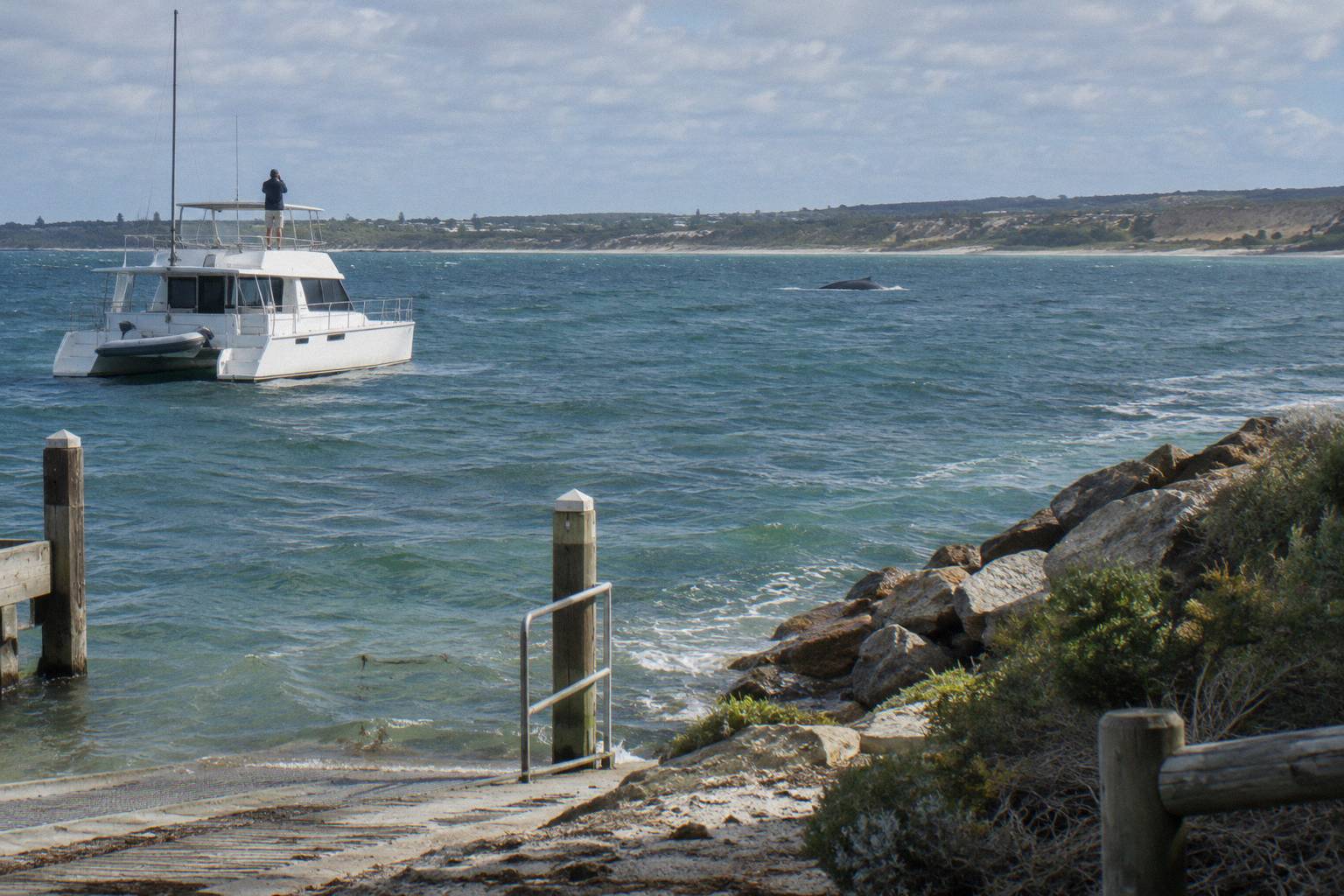
The operator names four whale species on the Dunsborough cruise: humpback and southern right whales through the main season, blue whales from October onwards, and minke whales in October and November as chance encounters, with dolphins often at the bow wave. Cruises run mid-August to the end of November, so the month you choose changes what is possible.
The shape of the season comes from the migration itself. Operators describe humpback and southern right whales in the bay from mid-August or September to November, with mothers and calves resting in Geographe Bay on the southward return, and DBCA notes humpbacks begin their southern migration in this period. Southern right whales breed and nurse in sheltered south coast waters including Geographe Bay, per the International Marine Mammal Habitat factsheet for the area. Blue whales are the late season prize: the operator says from October onwards, and the safe general wording is that blue whales pass through Geographe Bay in spring, mostly from October to December.
| Month | Species the operator names for the Dunsborough cruise |
|---|---|
| August (mid) | Humpback and southern right whales from the season opening |
| September | Humpback and southern right whales |
| October | Humpback and southern right whales; blue whales from October onwards; minke whales as chance encounters |
| November (to end) | Humpback and southern right whales; blue and minke whales possible |
If your travel dates fall between May and August rather than spring, the same operator runs the Augusta Whale Watching Tour from Augusta Boat Harbour, listed at 2 hours, rated 3.9 across 14 reviews, with the booking page showing AUD 71 per person, a price that can change. Our guide on Augusta's whale season from June to August explains what changes in Flinders Bay.
For readers who would rather pair the cruise with something else in the water, there is also the Geographe Bay Eco And Snorkel Trip, an eco boat trip with an optional snorkel, listed at 2 hours, minimum age 6, with the price shown on the booking page. It is not a whale cruise, but it shares the bay.
Weather, Sea Conditions And What To Wear
Cape Naturaliste averages put the mean daily maximum at 16.6 °C in August rising to 21.6 °C in November, with mean minima from 10.1 to 12.5 °C, and the sea sits at about 17 to 19 °C across the season. The operators advise dressing in layers, sun protection and a camera, and those three pieces of advice cover the whole range of conditions you will meet on the water.
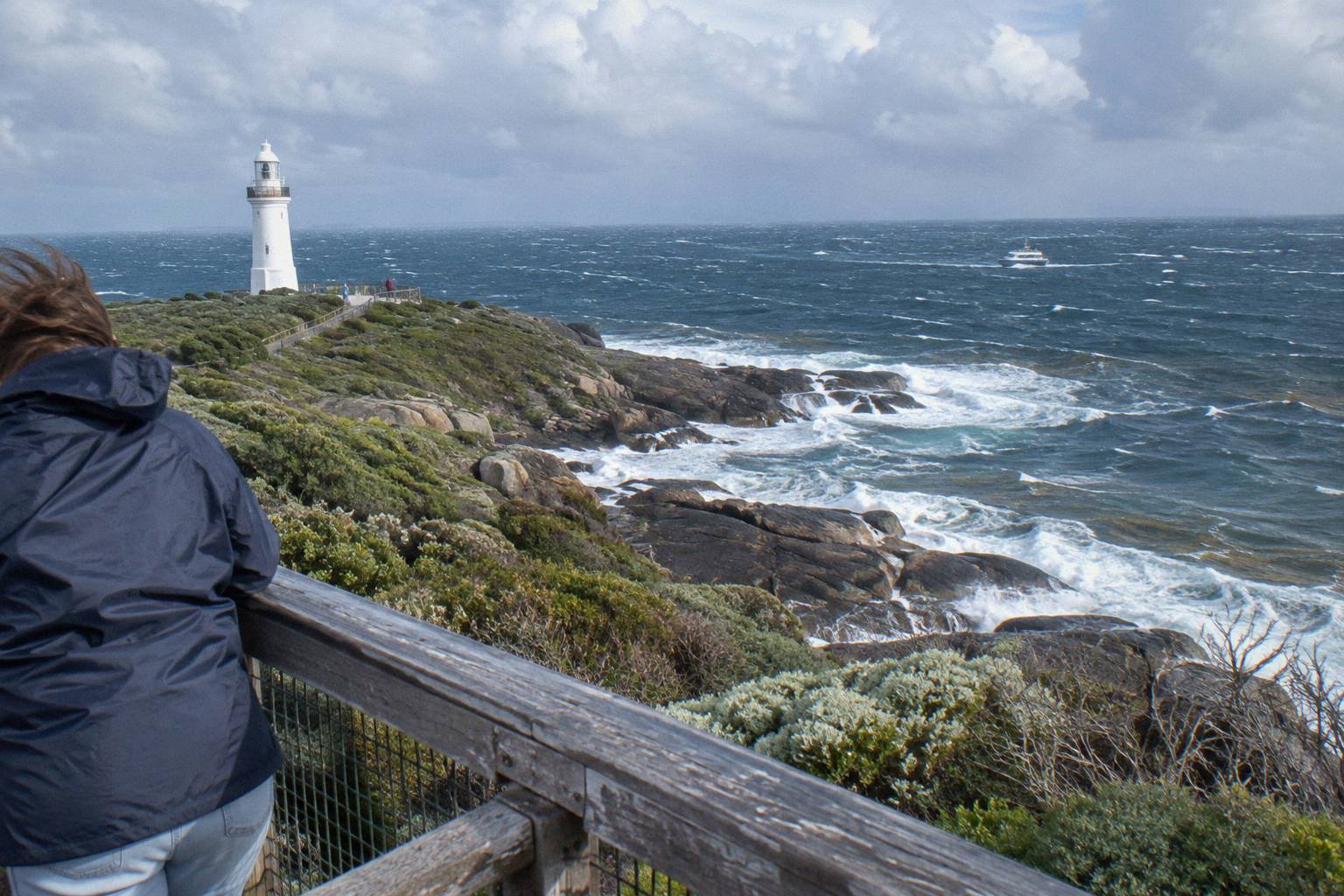
The air and rainfall figures come from the Bureau of Meteorology's Cape Naturaliste station averages, published at bom.gov.au, and the sea temperature from seatemperature.info, an aggregator of satellite data, which is why it is printed here as a range rather than a precise figure. What the numbers say in practice: spring in the south west is changeable, November is markedly drier and warmer than August, and the gap between standing on deck in the wind and sitting in the sun can be ten degrees. Layers solve that.
| Month | Mean max air (C) | Mean min air (C) | Mean rainfall (mm) | Sea avg (C) |
|---|---|---|---|---|
| August | 16.6 | 10.1 | 113.0 | about 17.1 |
| September | 17.5 | 10.4 | 74.6 | about 17.2 |
| October | 19.0 | 11.1 | 48.8 | about 18.0 |
| November | 21.6 | 12.5 | 25.3 | about 19.1 |
Seasickness is the other honest planning item. The operator's FAQ advises taking medication per the packaging, staying outside, watching the horizon and avoiding heavy meals, and does not claim a cure. Geographe Bay is sheltered by Cape Naturaliste, which helps, but nobody can promise calm water for a specific date. Our page on seasickness on a Geographe Bay whale cruise covers the precautions in detail, and our what to wear on a whale cruise in Western Australia guide handles the layering question.
The Return To Quindalup And After The Cruise
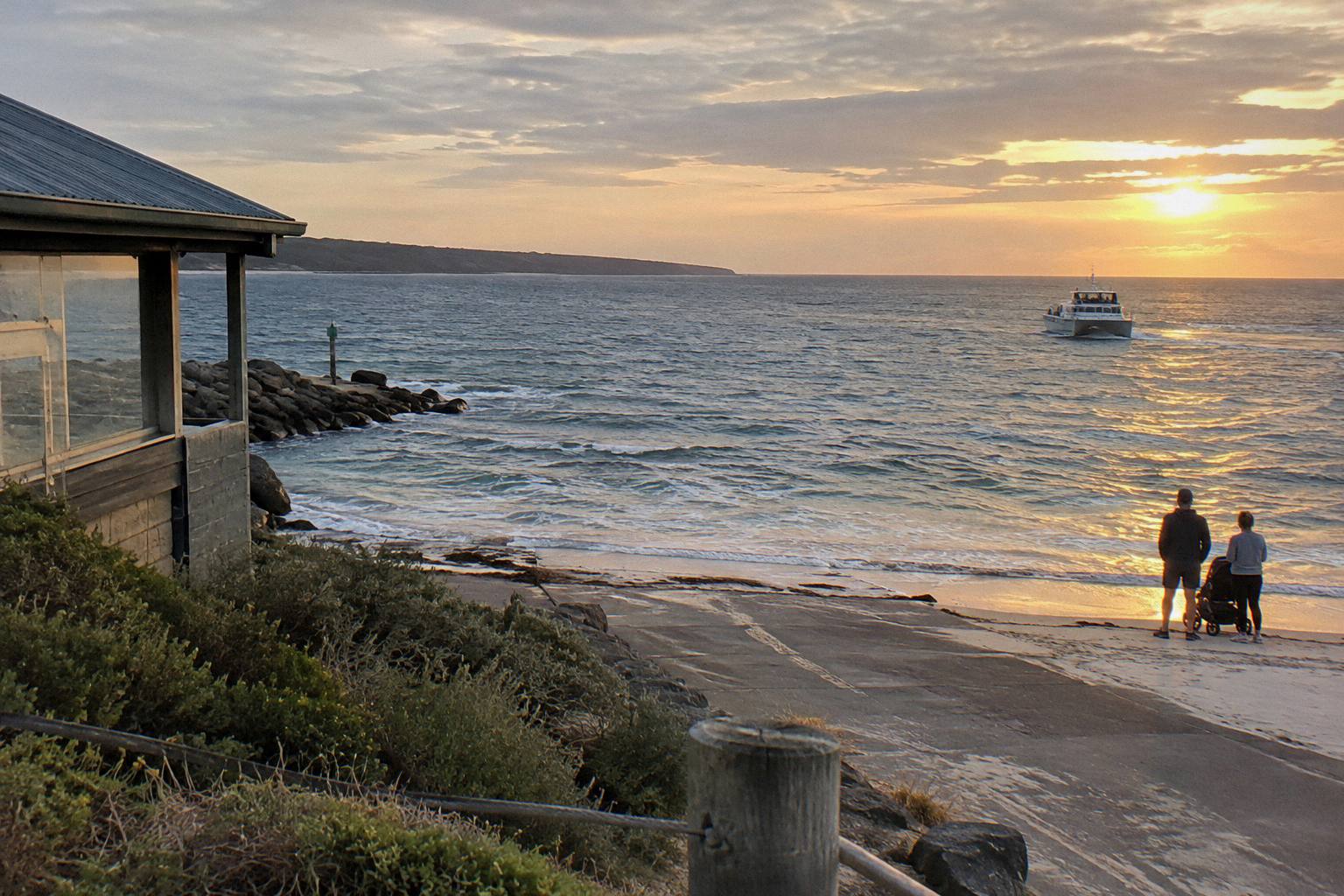
The cruise ends where it began: the Alison Maree comes back toward the shore, guests transfer across to the Indi Maree, and the smaller vessel brings everyone onto the beach ramp at Quindalup. Allow up to 3 hours door to door on the water, and plan the rest of your day around a return that can run longer than the listed 2.5 hours when wildlife holds the boat out.
Because the return uses the same two stage transfer, the same mobility caution applies in reverse. Everyone walks off the Indi Maree up the handrailed ramp, and guests with limited mobility may need further assistance. Parking is at the ramp, so there is no transfer back to a marina office or a coach leg; you are back at your car within minutes of the boat touching the beach.
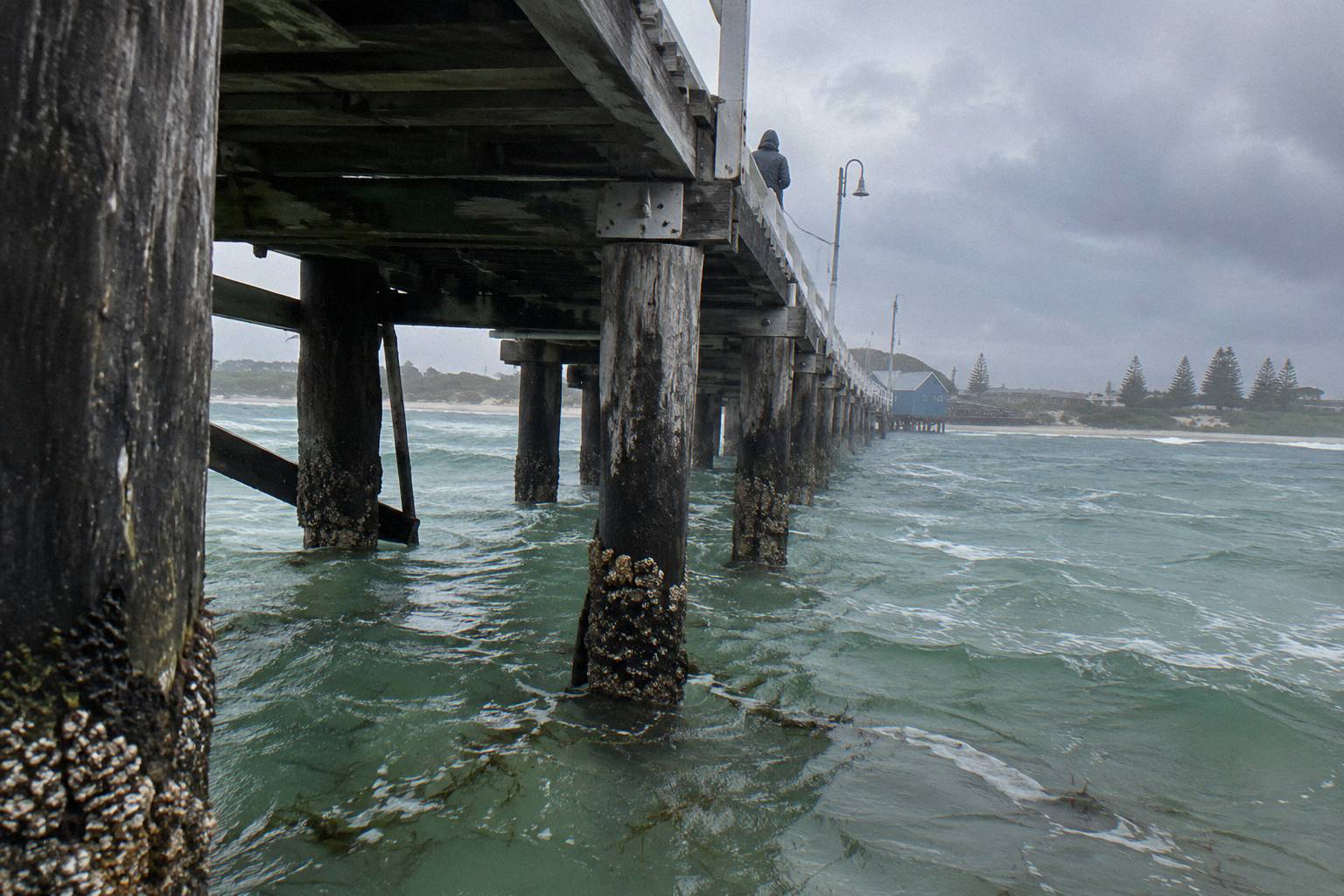
The rest of the day is yours, and Dunsborough's position makes it easy to use. Cape Naturaliste Lighthouse is about 13 km away, roughly a 30 minute drive including stops, and the town centre with its cafes is 5 km west of the ramp. If you have travelled from further afield, Busselton is about 25 minutes away, and our guide to pairing the Busselton Jetty and a whale cruise on the same day shows how the two fit together.
For travellers who prefer to keep the whole day on land, there is also the Coastal Wildlife Eco Tour from Busselton, a land based coastal walk and drive with pickup included, listed at 3.5 hours, with the price shown on the booking page and free cancellation up to 24 hours.
What Happens If No Whales Are Seen
Naturaliste Charters' own no-sighting policy page states that if no whales are sighted, guests can join the operator again for free, with the free return valid for 2 years, for one tour only, non-transferable, and subject to availability, weather and minimum numbers, for bookings made direct with the operator. The operator's Dunsborough page headline uses the words Guaranteed Whale Sightings, which is the operator's own headline, quoted here, not a promise from this site.
Two cautions sit inside that policy. First, those are direct-booking terms, and whether a free return applies to a booking made through a reseller is not stated: ask the operator before booking if that matters to you. Second, the Augusta tour's booking page carries its own line, "Our guarantee: see whales or join us again for free!", and that wording belongs to that page and that tour, not to every departure. The other Geographe Bay operator's page says: "If whales are not seen on your first whale-watching cruise, you can come back for free another time", with the terms not printed on the page, so ask the operator directly.
This site never writes "guaranteed" in its own voice and never quotes an odds figure, because none of the operators publish verifiable odds. If you want the fuller picture on what sighting promises actually cover, our page on the sighting guarantee and what it covers goes through each operator's wording side by side, and our piece on the odds of seeing a whale on a cruise explains why no honest number exists.
Common Questions About A Dunsborough Whale Cruise
How Early Should I Arrive For A Whale Cruise From Dunsborough?
The operator asks guests to arrive 15 to 30 minutes before departure at the Professional Fisherman's Boat Ramp, opposite 306 Geographe Bay Road, Quindalup. Boarding is off the beach via a handrailed ramp, so the extra time is used for life jackets and the transfer vessel, not a queue at a jetty.
How Long Does The Cruise Actually Take?
The cruise runs about 2 hours, with the operator saying to allow up to 3 hours depending on wildlife sightings, and the booking page lists it at 2.5 hours. Plan the day around the longer figure, because the skipper can use the full window when whales or dolphins hold the boat out.
Can A Whale Come Right Up To The Boat?
A whale may approach the vessel, and when one does the law requires the person in charge to put the boat in neutral or switch off, or move away at no more than 6 knots until the legal distance is restored. The vessel itself must stay at least 100 m to the side of a whale and 300 m within a 60 degree arc to its front or rear.
Is Food And Drink Included On The Cruise?
The operator states that tea, coffee, milo, filtered water, green tea and biscuits are complimentary, with soft drinks and snacks for sale on board. There are two toilets with hand washing and life jackets for all guests.
What Happens If We Do Not See Any Whales?
Naturaliste Charters' no-sighting policy page says guests can join the operator again for free, valid for 2 years, for one tour only, non-transferable, and subject to availability, weather and minimum numbers, for bookings made direct with the operator. Whether it applies to a reseller booking is not stated, so ask the operator before booking.
Can Children Go On The Cruise?
The operator describes the Dunsborough trip as open to all ages, with no minimum age stated, and life jackets are carried for all guests. Our guide to a whale cruise with kids from Dunsborough covers the practical detail for families.