Which Side Of The Boat Is Best For Whales?
No operator states a best side of the boat for whale watching from Dunsborough, so this guide works through what is stated, the law on approach distances, and how to pick a spot by vessel layout and traveller type.
No operator, regulator or booking page for this coast states a best side of the boat for seeing whales, and this article will not invent one. What is on the record is more useful anyway: Western Australian law fixes how close a vessel may come and from which direction, the two Dunsborough operators publish real details about their vessels' decks, and whales themselves ignore seating charts. The side you pick matters far less than where the boat is allowed to be, how it must behave near a whale, and how quickly you can move once something surfaces.
The question itself is completely reasonable. You have booked a cruise, or you are about to, and you want the best seat. Cruise boats from Dunsborough carry dozens of people, whales surface without warning, and the difference between a great view and a distant splash can feel like it comes down to which rail you lean on. This guide takes that instinct seriously and works it through: what the law says about boat position relative to a whale, what each local vessel actually offers in terms of deck space, and how different travellers, from photographers to families with small children, can reason about a spot.
One thing to settle immediately and only once: the claim that one side is best is folklore, not fact, for this coast. No source states it, and no source here even hints at it. So instead of pretending otherwise, the rest of this article replaces the question with better ones. If you want the practical framing of the whole season first, the Geographe Bay whale season month by month guide covers when each species passes, and this page assumes you already know roughly when you will be on the water.
What The Law Actually Says About Boat Position
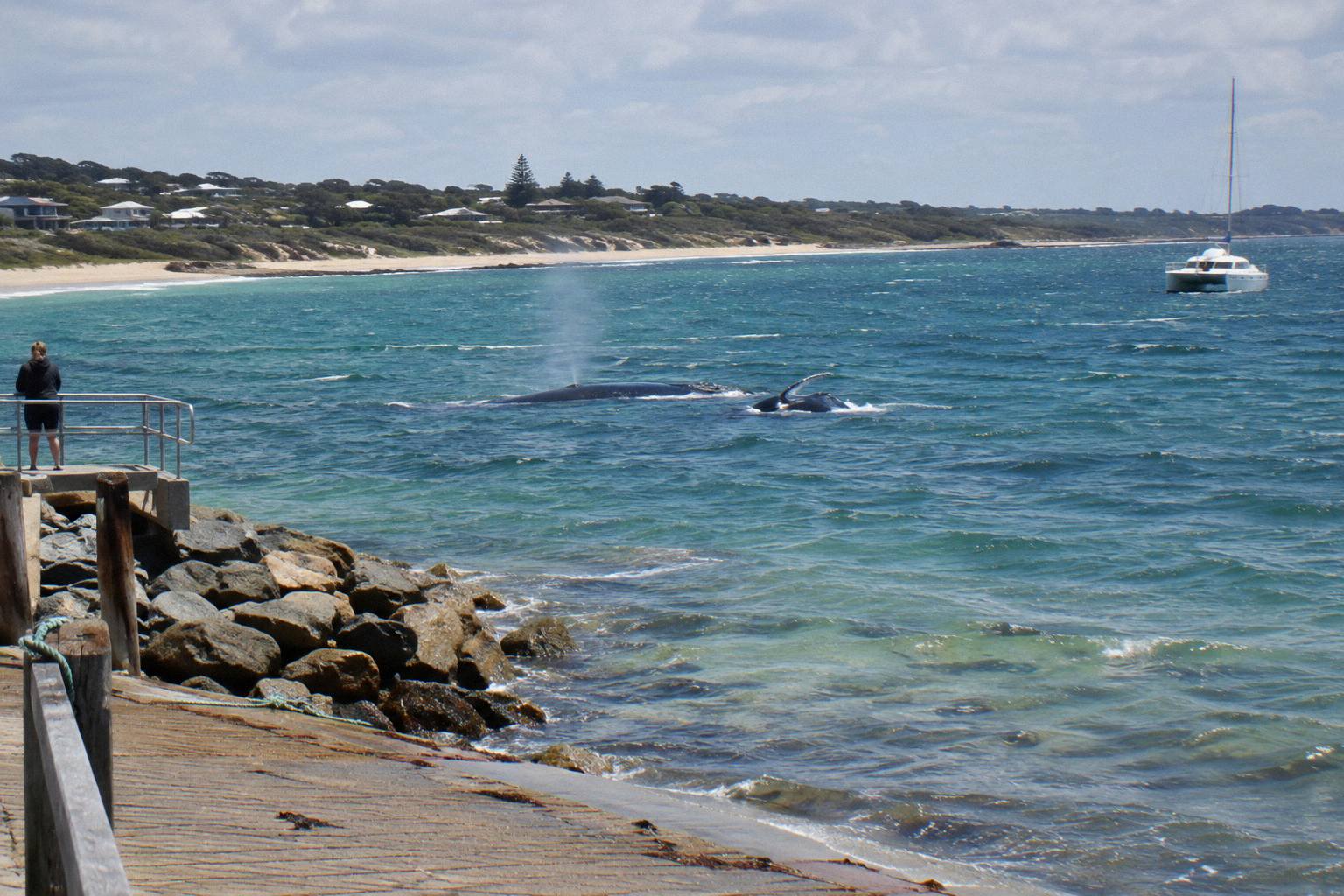
Under the Biodiversity Conservation Regulations 2018 (WA), a vessel must stay at least 300 m from a whale within a 60 degree arc to the front or rear of the animal, and at least 100 m to the side, with a fine of AUD 5,000 for staying closer. That single sentence does more to explain where you will see whales from than any seating advice, because it means the boat cannot chase, cut off, or box in a whale. The geometry is fixed: boats may sit alongside an animal at no less than 100 m, but must give far more room in front of and behind it, where a whale travels.
The full text lives in Part 5 Division 2, regulations 110 to 114 and Schedule 5 Division 1, published in the official version of the regulations. The distances for people in the water are stricter still: a person must stay at least 100 m from a whale, which is precisely why no swim-with-whales product exists in Geographe Bay. The Department of Biodiversity, Conservation and Attractions states it plainly: "Under State legislation, it is illegal for individuals to swim within 100m of a whale", and licensed in-water humpback interactions happen only in Ningaloo Marine Park State waters and the Muiron Islands Marine Management Area. Regulation 112 is the clause that allows such licensed exceptions to exist at all.
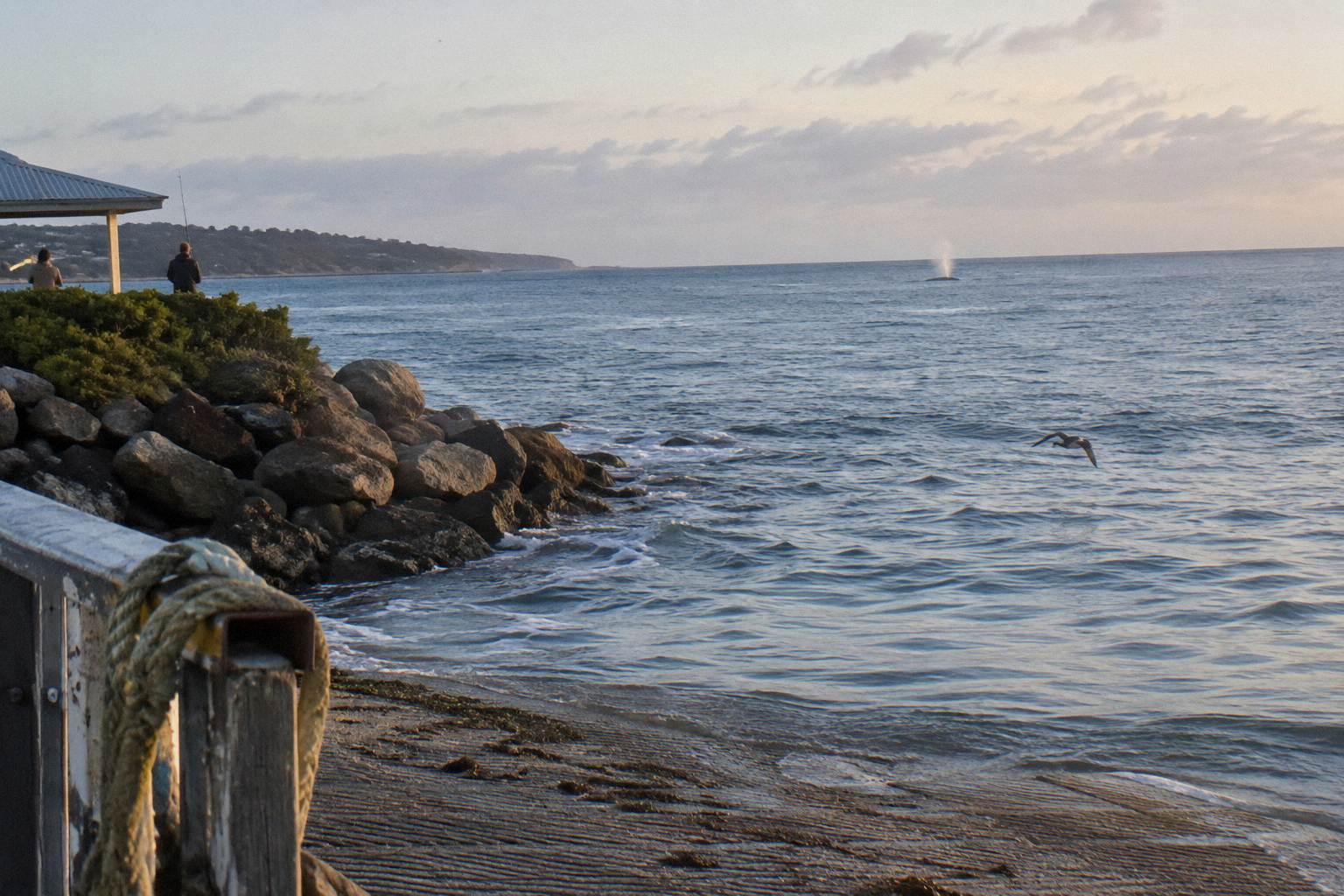
For a passenger, the most interesting part is regulation 114. If a whale approaches the vessel inside the legal distance, the person in charge must put the boat in neutral or switch it off, or move away at no more than 6 knots until the distance is restored. In practice this is when the closest, most memorable encounters happen: not because the boat creeps in, but because a curious whale decides to come and inspect a stationary vessel. When that happens, the side of the boat you are on is simply the side the whale chose, and anyone able to move along a deck will get a view. The DBCA's whale watching advice adds the operator's side of the bargain: approach from the side only, and abandon the interaction at any sign of distress.
| Who or what | Required distance from a whale | Source |
|---|---|---|
| A person in the water | At least 100 m | Schedule 5, Biodiversity Conservation Regulations 2018 |
| A vessel, to the side of a whale | At least 100 m | Schedule 5, Biodiversity Conservation Regulations 2018 |
| A vessel, in a 60 degree arc front or rear | At least 300 m | Schedule 5, Biodiversity Conservation Regulations 2018 |
| A drone | At least 60 m | Schedule 5, Biodiversity Conservation Regulations 2018 |
Dolphins, which often ride the bow wave on these cruises, have their own shorter distances: 50 m for a person and 100 m for a vessel. The penalty figure in regulation 113 applies to a person, a vessel master, an aircraft operator or a drone operator alike. None of this is fine print for passengers, since your skipper's legal obligations shape every minute of your viewing, and knowing them explains why the boat behaves the way it does around an animal.
Where Whales Usually Appear Around A Dunsborough Cruise Boat
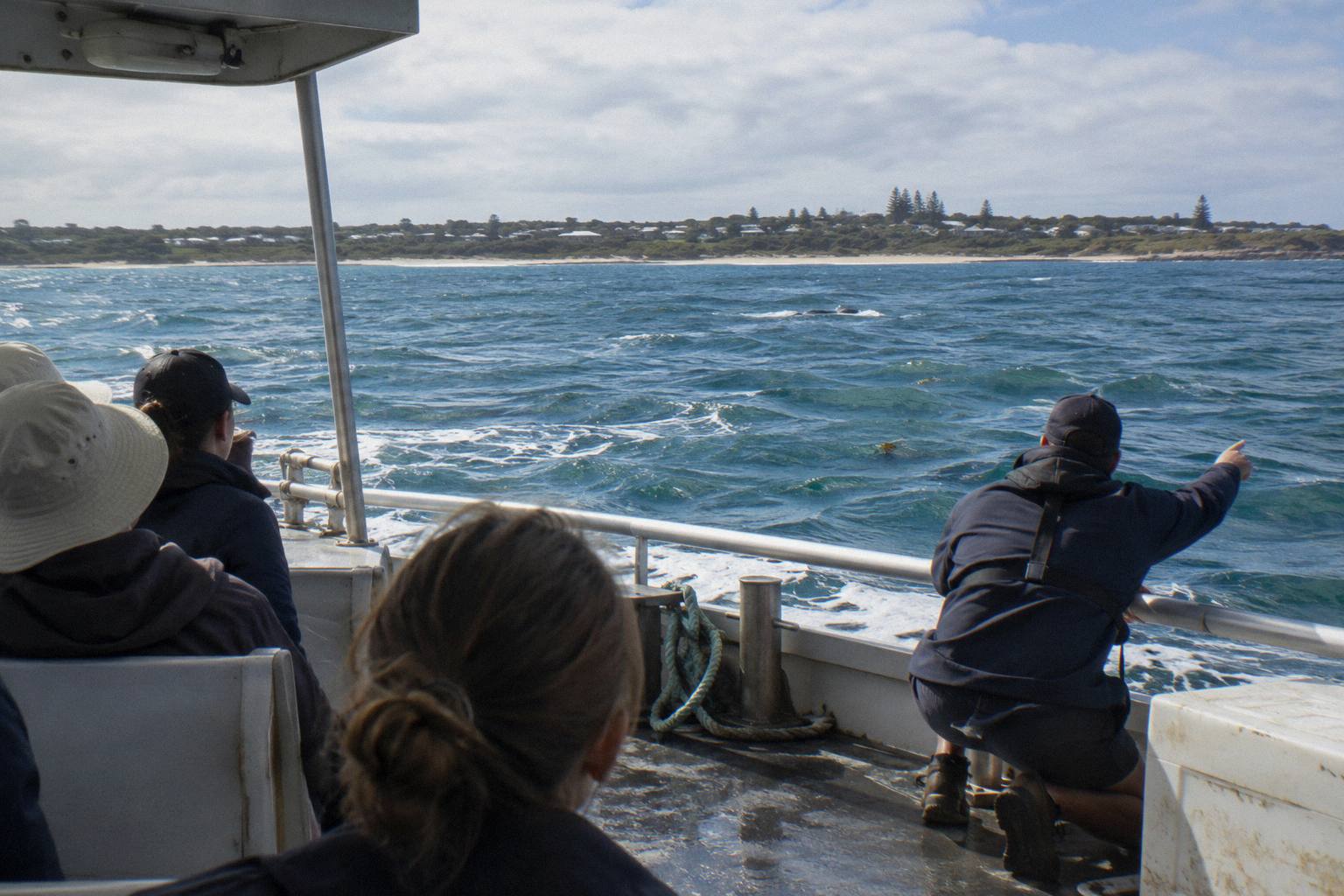
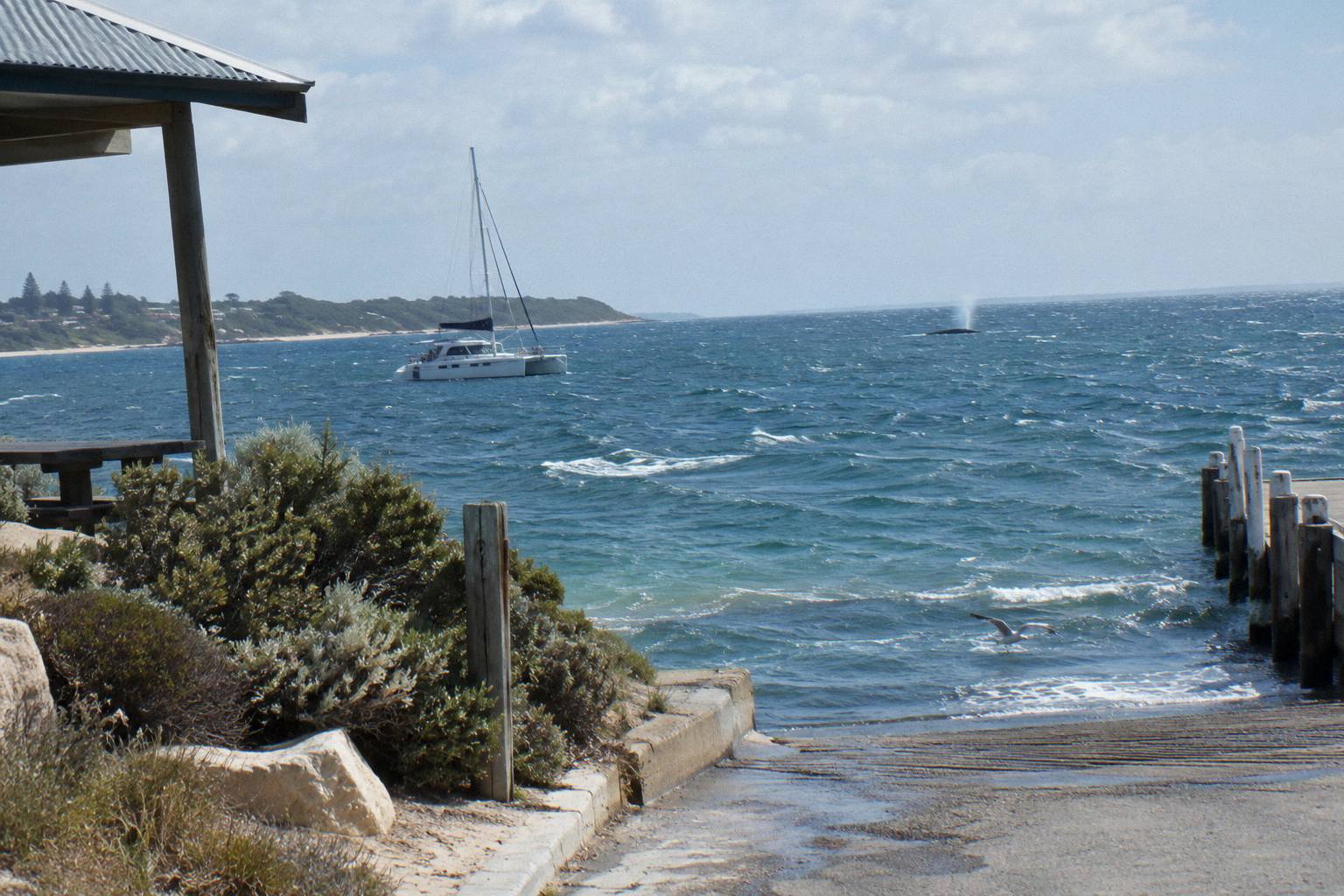
Whales surface on their own schedule, at angles the boat cannot predict, so the "best side" on any given cruise is the side the whale happens to be on, and both Dunsborough vessels offer outside deck space on more than one side. The law above explains why: a boat holding station 100 m to the side of a moving whale will drift through relative angles as the whale travels, meaning the sighting swings around the vessel during an encounter. A whale off the port bow at the start of a sighting can end up off the starboard quarter ten minutes later without the boat moving illegally at all.
Species behaviour adds another layer. Humpbacks and southern right whales are the staples of the Geographe Bay season, which runs from August to November, and mothers with calves rest in the bay on the southern return migration. Pygmy blue whales pass through the bay in spring, mostly from October to December, using the bay and the Naturaliste Plateau as a narrow transit corridor, according to the Important Marine Mammal Area factsheet for these waters. Minke whales appear as chance encounters in October and November. None of these animals publishes an itinerary relative to your seat.
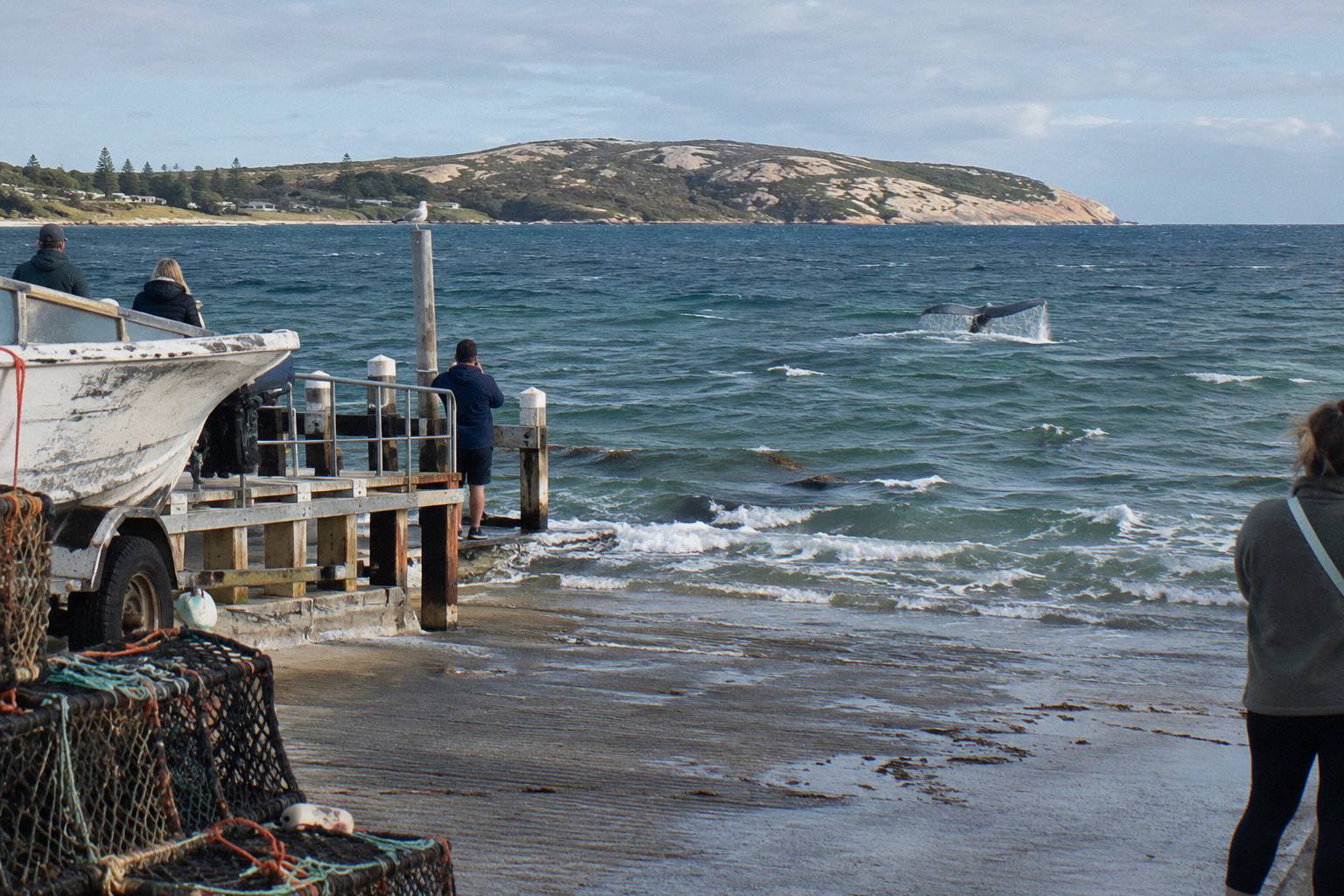
The practical conclusion most experienced whale watchers reach is that mobility beats position. On any vessel with walkaround outside access, the passenger who can move calmly from one rail to another sees more than the passenger who claimed a single spot and defended it. On a 23 m catamaran, the distance from one side to the other is a matter of seconds of walking, and the typical whale encounter lasts long enough, with repeated surfacings, that the whole deck gets a turn.
That logic also defuses the sun and glare question, which no local source answers either. Rather than guess at light angles by time of day, treat it as a photography problem you solve on the day: the best time of day for a whale cruise in Geographe Bay guide covers the departure windows operators actually publish, and the what to wear on a whale cruise in Western Australia guide handles layers, which matter more than seating on a spring morning on the water.
Does The Vessel Layout Change Your Answer?
Yes, layout matters more than side: the two Dunsborough operators publish different vessels, the Alison Maree a 23 m catamaran boarded from the beach via a smaller transfer boat, and Whale Song a 17 m catamaran with a climate-controlled cabin and two outside decks. These are the stated facts about each boat, and they are the only vessel facts on the record for this coast. Where a detail is not stated, this article says so once and moves on, because the decision logic does not actually depend on it.
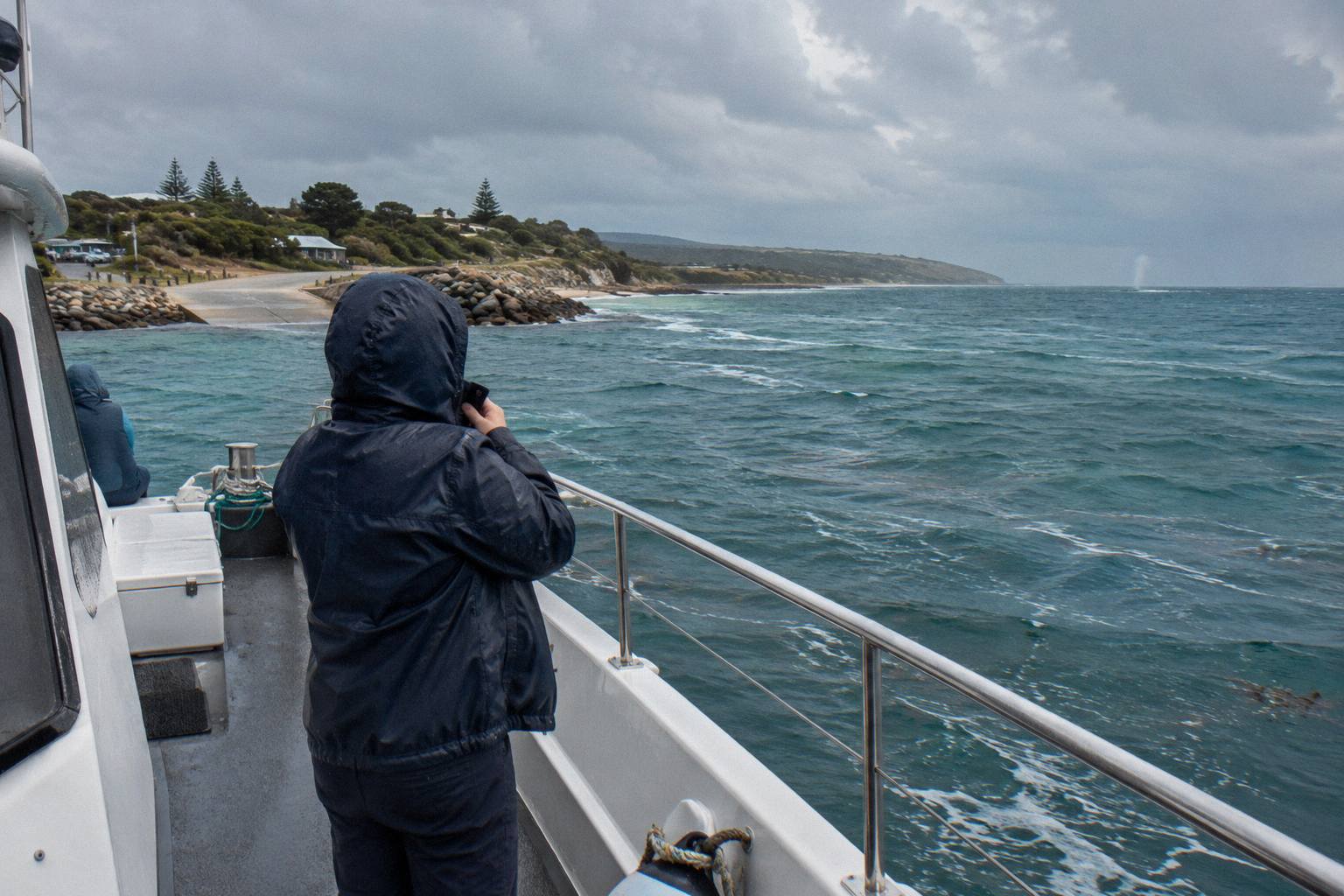
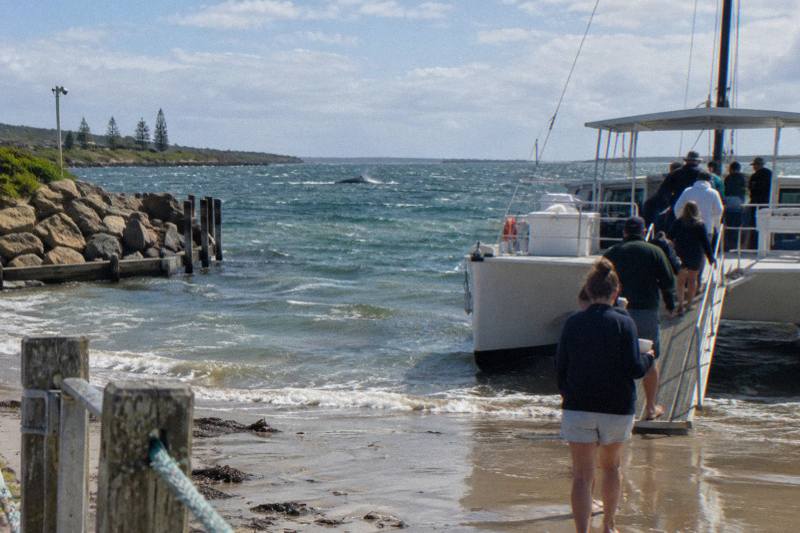
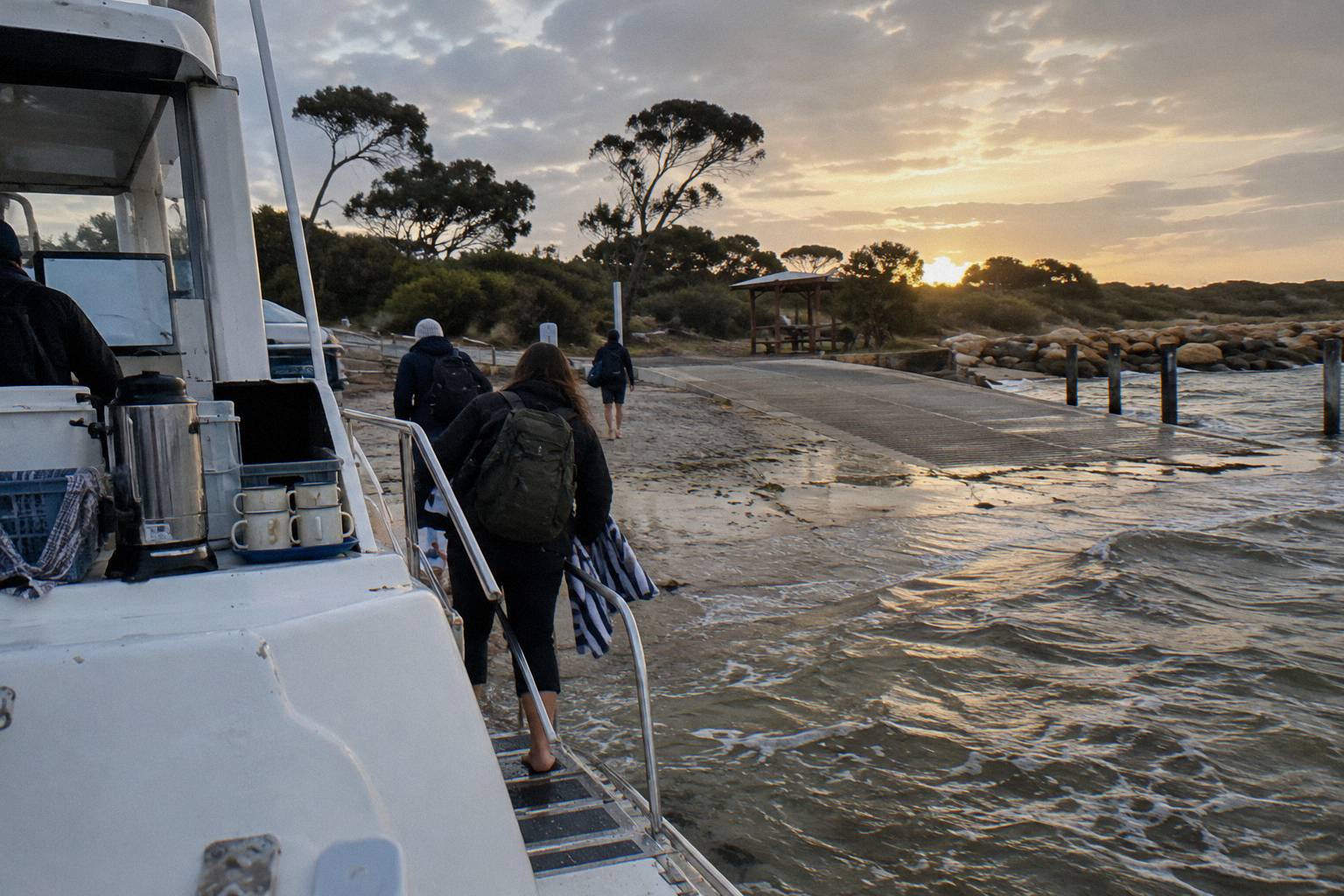
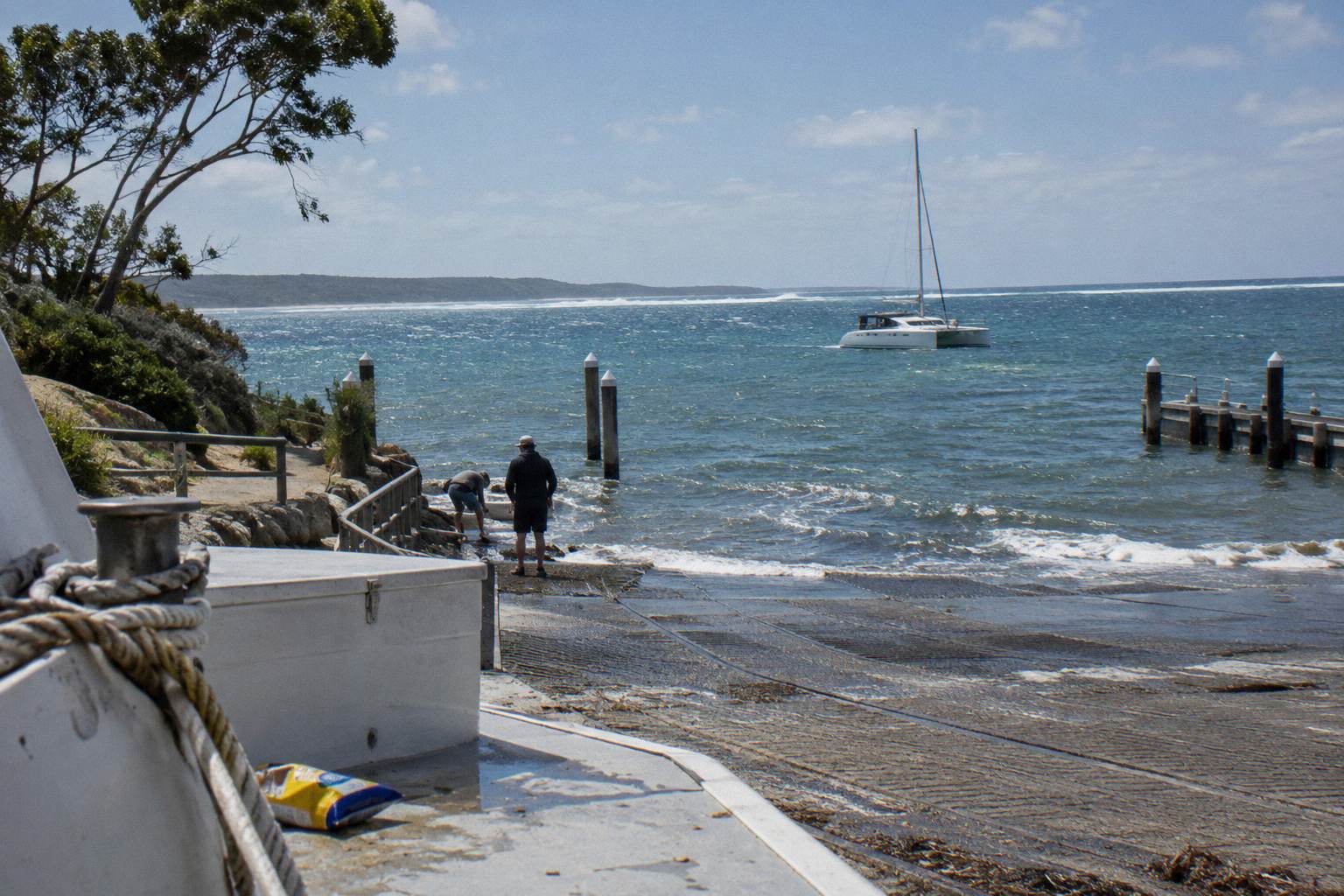
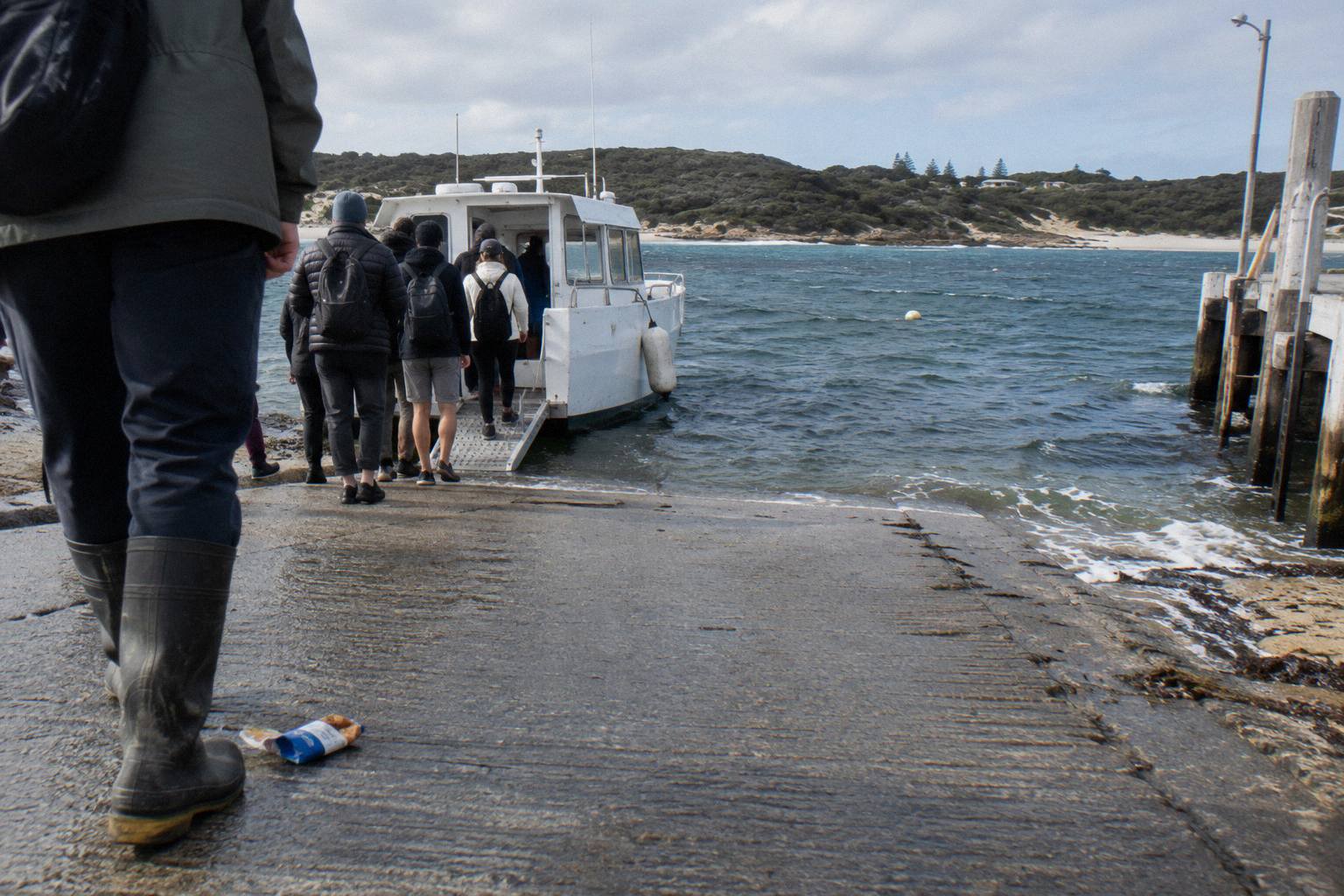
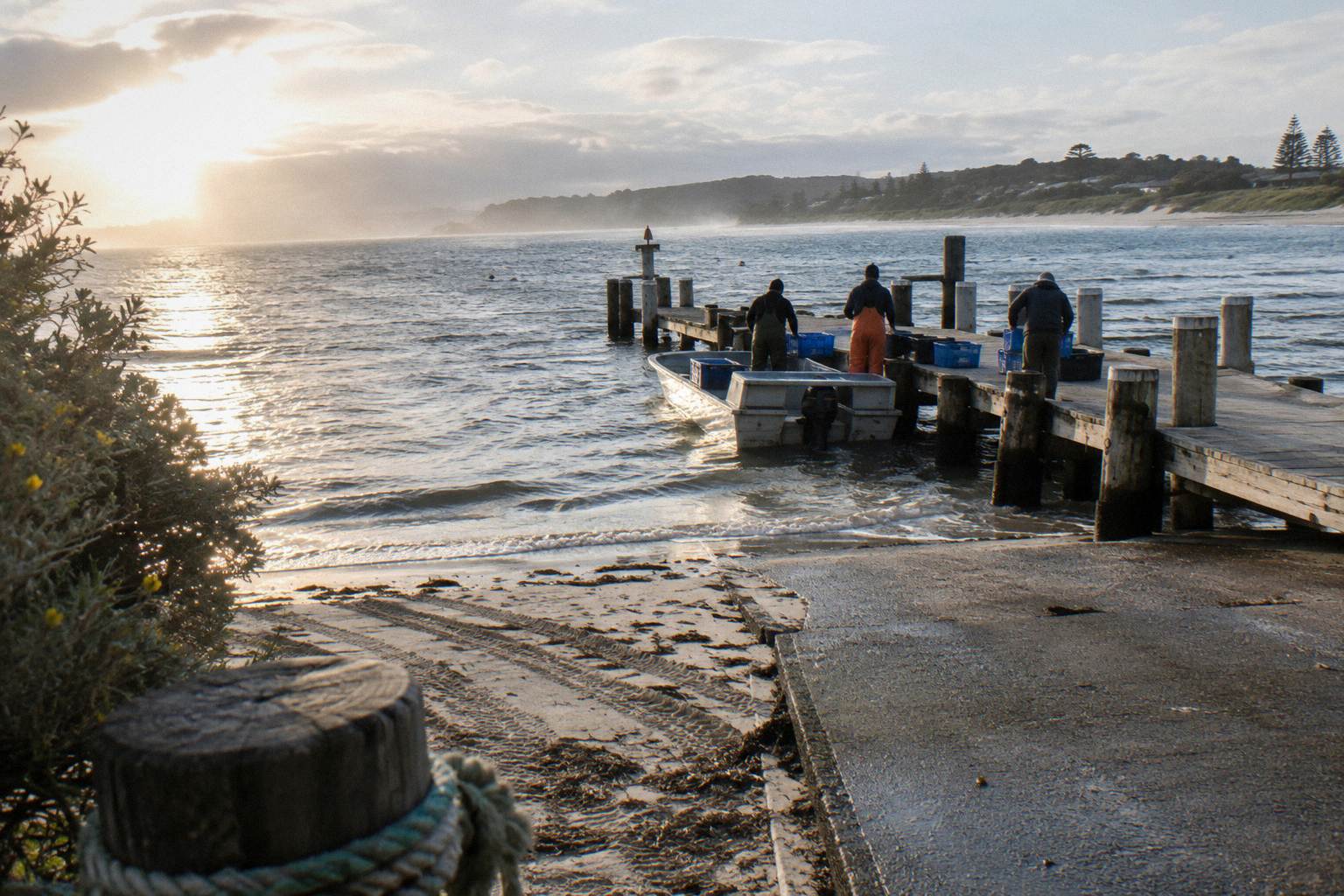
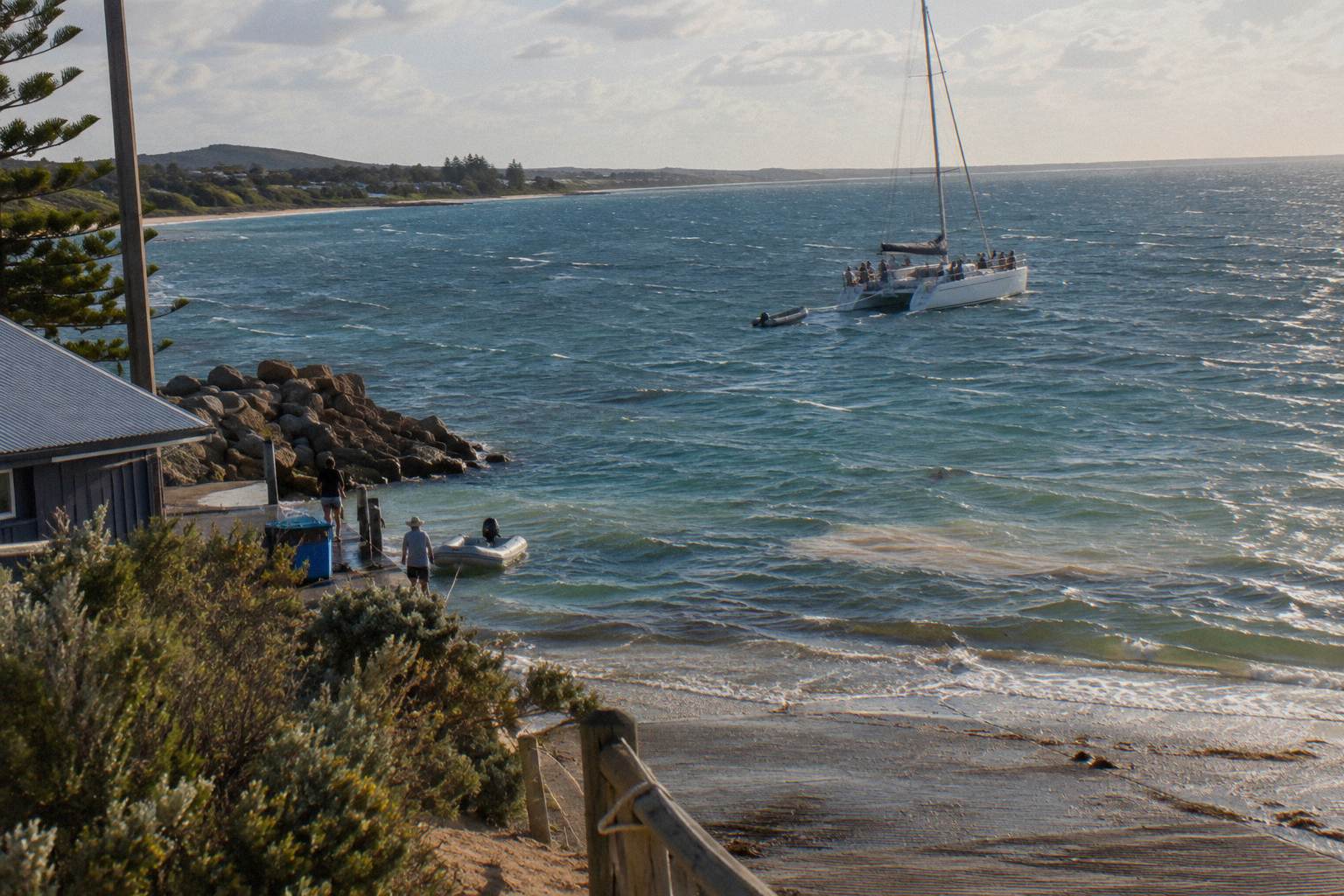
Naturaliste Charters runs the Dunsborough trip on the Alison Maree. Boarding is from the beach at the Professional Fisherman's Boat Ramp opposite 306 Geographe Bay Road in Quindalup, roughly 5 km east of Dunsborough town: guests walk a handrailed ramp onto the Indi Maree, then transfer to the larger Alison Maree. The operator's booking page for Dunsborough Whale Watching Tour With Naturaliste Charters lists a 2.5-hour cruise with morning or afternoon tea and a guided commentary, rated 4.7 across 137 reviews, and shows AUD 71 per person, a price that can change. Free cancellation up to 24 hours applies on the booking page. Guests with limited mobility may need further assistance, and the booking page says the tour is not suitable for mobility impairments. Beyond that, the deck plan of the Alison Maree is not stated, so ask the operator directly if you need to know rail positions, shaded areas or indoor seating before you board.
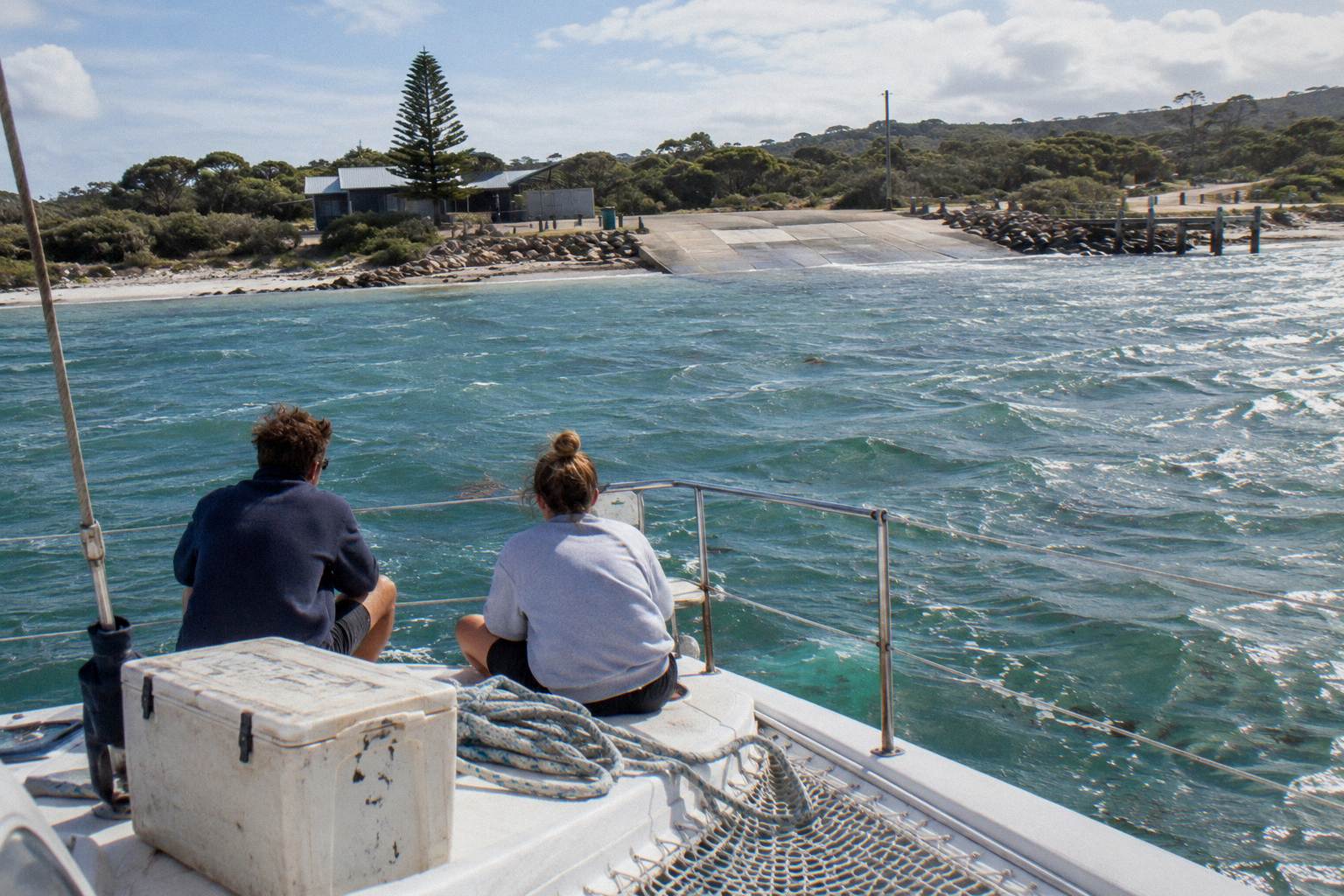
All Sea Charters runs Dunsborough trips on the Whale Song, a 17 m aluminium catamaran described on the operator's own Dunsborough page as having a climate-controlled cabin, two outside decks, an accessible toilet and anti-nausea wristbands on board. The booking page for All Sea Charters Whale Watching From Busselton, Augusta And Dunsborough lists a 2 to 2.5 hour cruise with three departure options, Busselton, Augusta or Dunsborough, tea and coffee onboard and hotel pickup and drop-off; which departure option carries the hotel pickup is not stated, so confirm with the operator. It is rated 4.8 across 438 reviews, with the price shown on the booking page and free cancellation up to 24 hours. Two outside decks is the single most useful layout fact on this page for the side question: it means more than one vantage point exists, so no single seat owns the view.
| Vessel | Operator | Stated layout facts | Where stated |
|---|---|---|---|
| Alison Maree | Naturaliste Charters | 23 m catamaran; boarded from the beach via the Indi Maree transfer boat; tea, coffee and biscuits included; two toilets; life jackets for all | Operator and booking pages |
| Whale Song | All Sea Charters | 17 m aluminium catamaran; climate-controlled cabin; two outside decks; accessible toilet; anti-nausea wristbands on board | Operator's Dunsborough page |
Notice what the table does not say. Neither operator states which side faces the whales, how many people fit along each rail, or whether one deck is higher than the other. Those are questions for a pre-booking email or phone call, and the checklist section below gives you the exact wording to use. A vessel with two outside decks already answers the strategic question: pick a deck based on comfort and sightlines, not a compass direction.
Choosing A Spot By Traveller Type
Since no source names a best side, the workable method is to match your priorities to the spot that serves them: photographers want clear sky against the horizon, families want rail height and elbow room, and prone-to-seasickness passengers want the stern, fresh air and the horizon in view. None of that is operator promise; it is ordinary small-boat reasoning applied to two known catamarans, and it is the kind of advice that survives contact with an actual whale encounter better than any seating chart would.
For photographers, the highest outside position usually beats any particular side, because shooting slightly downward over people's heads avoids heads and rail clutter. A telephoto lens matters more than a seat: at the legal 100 m side distance, a full-frame breach needs reach. Ask the crew where the highest passenger-accessible point is, and be there when the boat goes to neutral under regulation 114, because a stationary boat is the steadiest platform you will get.
For families, the practical priorities are a rail the child can see over with help, proximity to the toilet, and room to step back from the crush when a whale surfaces on the popular side. The Dunsborough trip states no minimum age, "open to all ages" per the operator, and the booking page price of AUD 71 covers everyone in the party at the listed rate, with infants' arrangements on the booking page. The whale cruise with kids from Dunsborough guide goes deeper on ages, timing and expectations.
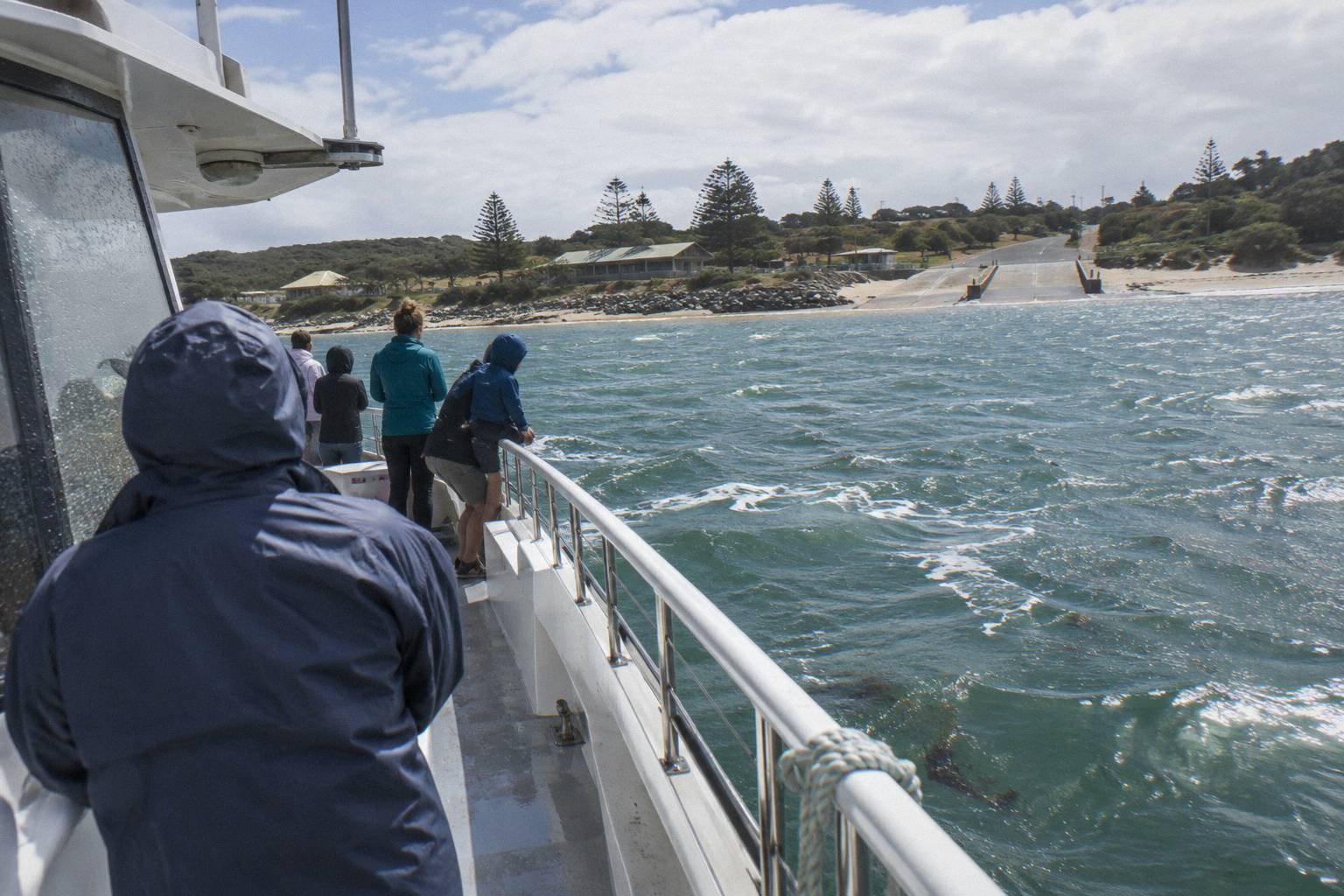
For passengers worried about seasickness, mid-vessel near the centreline is the classic choice, where pitch and roll are smallest, and staying outside watching the horizon helps. The operator's own FAQ advice is to take medication per its packaging, stay outside, watch the horizon and avoid heavy meals, and the operator makes no cure claims. Whale Song carries anti-nausea wristbands on board, a stated fact; the Alison Maree's arrangements on that point are not stated. The seasickness on a Geographe Bay whale cruise guide covers the full toolkit.
| If you are | Pick a spot based on | Why it beats choosing a side |
|---|---|---|
| A photographer | The highest outside deck, clear horizon behind you | Steadier angles when the boat holds station, fewer heads in frame |
| With young children | A rail you can share, near the toilet and open space | You can move to the sighting side as a group, safely |
| Prone to seasickness | Mid-vessel, outside, eyes on the horizon | Motion is least at the centreline; fresh air and horizon view help |
| With limited mobility | A stated accessible position, confirmed before booking | The Dunsborough beach boarding is not suited to mobility impairments |
The pattern across all four rows is the same: every workable rule is about you and the boat, not about the whales. That is not a dodge, it is what the evidence supports. Whales approach from where they please, the boat must respond lawfully, and the passenger who is comfortable, mobile and correctly dressed will outperform the passenger holding the "right" seat every time.
Questions Worth Asking The Operator Before You Board
Ask the operator about deck access, rail height, shelter, seating, and how much you can move around during a sighting; these details are rarely spelled out in listings, but any operator can answer every one of them in a single email or phone call, giving you a short pre-booking checklist that turns unstated facts into clear answers before you commit. The facts on this page go as far as the published record goes, and the remaining gaps are exactly the questions a good operator answers in seconds. Write them down and ask when you book, which also tells you something about how the operator treats its passengers.
The five questions that matter most for the side-of-the-boat decision:
- Can passengers move between sides during a sighting, or is deck access restricted underway?
- Is there a higher and a lower outside deck, and are both open to passengers?
- Where is the indoor or sheltered space, and can you see the water from it?
- Is there seating along the rails, or standing room only?
- For anyone with limited mobility in the group, what boarding and on-board assistance exists?
The last question deserves extra weight on the Dunsborough trip because beach boarding is part of the experience: the handrailed ramp onto the transfer boat, then the step across to the Alison Maree. The booking page states the tour is not suitable for mobility impairments, so a direct conversation before paying is not optional for those travellers; it is the difference between a good day and a bad one. Whale Song's accessible toilet is stated on the operator's page, but accessible boarding is not, so ask rather than assume.
None of these questions presumes a right to break safety rules, and none should. Crew will always restrict movement at certain moments, and life jackets are carried for all passengers on the Naturaliste trip. The point of asking is to know, before you stand on the dock, whether your plan of moving to whichever side the whale appears on is physically possible on this particular boat.
What The Dunsborough Booking Pages Actually State
Across the two operators' Dunsborough pages, three cruises appear, and everything they list, meaning the stated figures, the ratings paired with review counts, and the stated inclusions, forms the complete set of facts a reader needs before choosing a seat. This section gathers them in one table so you can compare without re-reading operator pages, and it is also where the featured Dunsborough trip fits the side question most directly: a 23 m catamaran with room to move makes the side question smaller than it looks. Dunsborough Whale Watching covers the whole season elsewhere on this site; this page stays on the booking-page facts.
The Dunsborough Whale Watching Tour With Naturaliste Charters departs Quindalup daily at 10am and 2pm through a season running mid-August to the end of November, on a cruise listed at 2.5 hours with the operator advising to allow up to 3 hours depending on wildlife sightings. It is rated 4.7 across 137 reviews, with the booking page showing AUD 71 per person, a price that can change, and free cancellation up to 24 hours on the booking page. Its sister product, the Augusta Whale Watching Tour With Naturaliste Charters, is rated 3.9 across 14 reviews, a small pool to read much into, with the booking page showing AUD 71 per person, listed at 2 hours, and the same 24-hour free cancellation window.
The All Sea Charters cruise is rated 4.8 across 438 reviews, the largest review pool among the three, with the price shown on the booking page and free cancellation up to 24 hours. Its Dunsborough season runs mid-August to early December on the operator's page, which also describes the main window as September to early November, on a cruise of approximately 2.5 to 3 hours departing from Geographe Bay Road, Dunsborough; the exact ramp and clock times are not published. For context on the neighbouring fishery, the Augusta whale season June to August guide explains the southern-rights-and-humpbacks window at Flinders Bay.
| Cruise | Rating and reviews | Booking page price | Listed duration | Free cancellation |
|---|---|---|---|---|
| Dunsborough Whale Watching Tour With Naturaliste Charters | 4.7 across 137 reviews | AUD 71 per person | 2.5 hours | Up to 24 hours |
| All Sea Charters From Busselton, Augusta And Dunsborough | 4.8 across 438 reviews | Price shown on the booking page | 2 to 2.5 hours | Up to 24 hours |
| Augusta Whale Watching Tour With Naturaliste Charters | 3.9 across 14 reviews | AUD 71 per person | 2 hours | Up to 24 hours |
Read the ratings honestly, as the counts demand. A 4.8 across 438 reviews reflects a lot of passengers; a 3.9 across 14 reviews is a small pool that one good or bad month can move. Neither number says anything about which side of the boat anyone sat on, which is rather the point of this whole article. Ratings tell you about the operator and the day out; the whales decide the seating.
Common Questions About Which Side Of The Boat Is Best For Whales
Which Side Of The Boat Is Best For Whales?
No source for Dunsborough or Geographe Bay states a best side, and whales surface at angles no seating plan can predict. Both local vessels offer outside space on more than one side, so a passenger who can move calmly to the sighting rail sees more than one who fixes on a single "best" seat.
Do Whales Come Close To The Boat In Geographe Bay?
They can. Under regulation 114, if a whale approaches a vessel inside the legal distance, the person in charge must put the vessel in neutral or switch off, or move away at no more than 6 knots until the distance is restored. Close encounters happen when whales choose to inspect a stationary boat.
How Close Can Whale Cruise Boats Legally Get?
A vessel must stay at least 300 m from a whale within a 60 degree arc to the front or rear, and at least 100 m to the side, under the Biodiversity Conservation Regulations 2018. Staying closer is an offence carrying a fine of AUD 5,000. A person in the water must stay at least 100 m away.
Can I Book A Specific Side Or Seat On A Dunsborough Whale Cruise?
Neither operator's booking page states reserved sides or seats. Ask the operator before booking whether deck access is open during a sighting and whether both outside decks are available to passengers; on Whale Song two outside decks are stated, and the Alison Maree's deck plan is not published.
Is There A Best Deck Rather Than A Best Side?
Often, yes. A higher outside deck gives clearer sightlines over heads for photography, while mid-vessel positions near the centreline move least, which suits passengers prone to seasickness. These are comfort judgements, not operator claims, and both beat fixating on a side.
Does The Sun Or Glare Make One Side Better?
No local source states a sun or glare rule for these cruises. Treat light as a photography problem to solve on the day: dress in layers, bring sun protection, and plan to move decks rather than rely on a compass direction to keep the light behind you.