What Time Of Year Do Humpback Whales Migrate Past Dunsborough?
Humpback whales pass Geographe Bay on their southern migration from about mid-August to the end of November, with operators describing mothers and calves resting in the bay in spring. Here is the month-by-month wording.
Humpback whales migrate past Dunsborough from about mid-August to the end of November, heading south on their return migration. Naturaliste Charters describes its Dunsborough season as mid-August to the end of November, while All Sea Charters says mid August to early December with a main window of September to early November. Western Australia's parks agency notes humpbacks begin their southern migration through these waters in spring.
That is the honest answer, and it comes with an important shape. The season is not one flat stretch of identical whale watching. It builds. The first humpbacks moving south through Geographe Bay arrive in late winter, the flow thickens through September and October, and by November the bay is doing something quite different: it becomes a resting place, with mothers and calves pausing in the sheltered water on their way toward the Southern Ocean. So the question is really two questions. When are humpbacks passing through, and when are they lingering?
The two Dunsborough operators word their seasons slightly differently, which is worth seeing side by side rather than smoothed into a false single date.
| Operator | Season wording for Dunsborough | Daily departures stated |
|---|---|---|
| Naturaliste Charters | "mid-August to the end of November" (FAQ); August to November on the tour page | 10am and 2pm |
| All Sea Charters | "mid August to early December"; the same page also says "September to early November" for the main window | Times not published on the page |
Neither operator is wrong. Whales do not file a timetable. The overlap is September to November, and that overlap is where a trip planned around humpbacks belongs. If you want the full picture of how the season builds month by month, including what changes in the water, the Geographe Bay whale season month by month guide breaks it down further.
Which Months Give You The Best Chance From A Boat?
September and October sit inside both operators' stated main window for humpbacks, and both run daily cruises through those months. Naturaliste Charters departs Dunsborough at 10am and 2pm daily through the season; All Sea Charters also runs daily but does not publish clock times. Booking a month inside the overlap beats chasing the very first or last week.
There is no single "best month" that any official source will put its name to, and this site will not invent one. What the sources do say is consistent: humpbacks and southern right whales are described in the bay from mid-August or September to November. Late winter to early summer is the safe framing. Within that, your decision is really about what kind of encounter you want.
Early season trips, from mid-August into September, catch the first of the southbound flow. October is when the operators start naming additional species, including blue whales, which Naturaliste Charters says appear from October onwards. November is the mothers-and-calves month, which is covered in its own section below. If your dates are flexible and humpbacks are the priority, the middle of the season, September into October, is the period both operators describe with the most confidence.
One practical note on the booking side. The Dunsborough Whale Watching Tour With Naturaliste Charters is listed at 2.5 hours on the booking page, which shows AUD 71 per person (prices can change), is rated 4.7 across 137 reviews, and carries free cancellation up to 24 hours. That flexibility matters when you are timing around a month rather than a single day: if the weather turns, a free-cancellation booking lets you rebook within the same window instead of losing the fare. The All Sea Charters cruise from Busselton, Augusta or Dunsborough is rated 4.8 across 438 reviews, with the price shown on its live listing rather than printed here. Its booking page lists a 2 to 2.5 hour cruise with three departure options, tea and coffee onboard, and anti-nausea wristbands available.
Should You Book Ahead For A Spring Date?
Spring is the busiest stretch of the Dunsborough visitor calendar outside summer, and whale cruises are a fixed-capacity product: one boat, one ramp, two departures a day for the main operator. If your trip falls in September or October, book before you leave home rather than hoping for a walk-up seat. The same logic applies to accommodation, and the where to stay for a Dunsborough whale cruise guide covers the towns that keep you close to the Quindalup ramp.
When Do Mothers And Calves Rest In Geographe Bay?
Operators describe humpback mothers and calves resting in Geographe Bay on the southward return migration, which places them in the bay through spring and especially toward November. The Dunsborough season runs to about the end of November, and the DBCA notes that humpbacks begin their southern migration in this period. November is the month most associated with cow-and-calf pairs here.
This is the part of the season that makes Geographe Bay genuinely different from a pass-through migration corridor. A bay is calm water, and a calf travelling from breeding grounds toward the Southern Ocean needs rest. The operators describe exactly that: mothers and calves pausing in the bay rather than streaming past it. For a full treatment of the humpback side of this story, including how the bay fits their annual cycle, see humpback whales in Geographe Bay.
What that means for timing is straightforward. If seeing a mother and calf together is the goal, late in the season is the period the operator wording points to, with November named repeatedly in the operators' own wording. A research report from SouWEST and IFAW recorded blue whale song and sightings in Geographe Bay during November surveys, which tells you the bay is still very much a working whale corridor that late in spring. The calf question comes up so often it has its own write-up in are humpback calves seen from Dunsborough in November.
What About Southern Right, Blue And Minke Whales?
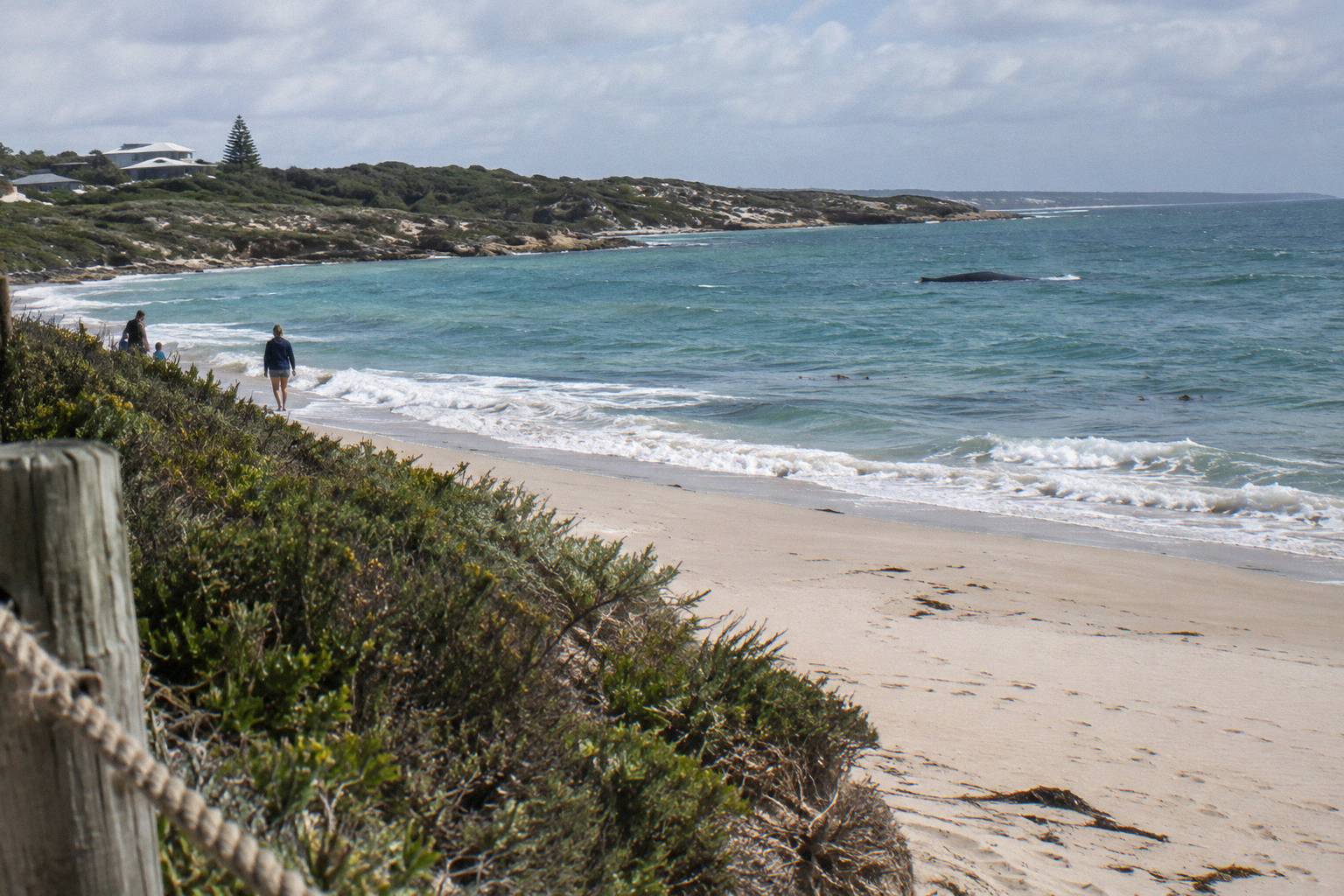
Southern right whales are described in Geographe Bay in the same late-winter-to-spring window as humpbacks, and the International Marine Mammal Habitat factsheet notes southern rights breed and nurse in sheltered south coast waters including this bay. Blue whales pass through Geographe Bay in spring, mostly from October to December. Minke whales appear in October and November as chance encounters only.
Humpbacks get the headlines, but the bay hosts more than one species, and the timing shifts by a few weeks between them. The IMMA factsheet for Geographe Bay and the Eucla Shelf coastal waters records that large numbers of pygmy blue whales, with calves, use Geographe Bay and the Naturaliste Plateau as a narrow transit corridor, and gives the eastern Indian Ocean population estimate as 662 to 1,559 animals (McCauley and Jenner 2010), with the species listed as Endangered. That is a peer-reviewed population range, not a sighting promise, and it should be read that way.
The month-by-month shape of the multi-species season looks like this, using only the operators' own wording.
| Month | Humpbacks | Other species named by operators |
|---|---|---|
| August (mid to late) | First southbound whales described in the bay | Southern rights possible |
| September | Both operators describe the main window beginning | Southern rights possible |
| October | Main window continues | Blue whales "from October onwards" (Naturaliste); minkes as "chance encounters" |
| November | Mothers and calves resting in the bay | Blue whales still passing; minkes October and November |
| Early December | All Sea Charters runs to "early December"; Naturaliste ends about end of November | Blue whales mostly October to December, per habitat sources |
Telling these species apart from a boat is a skill, and it changes what you take home from a spring cruise. The how to tell humpback, southern right and blue whales apart guide covers the visible differences. Blue whale sightings are rare enough, and special enough, that we have looked at the question directly in is it rare to see a blue whale from Dunsborough.
How Does The Augusta Season Differ From Dunsborough's?
Augusta's whale season runs May to mid-August, which is earlier than Dunsborough's August-to-November window, and it is known for southern right and humpback whales in Flinders Bay. The two seasons barely overlap. A May-to-July trip points to Augusta; a September-to-November trip points to Dunsborough.
This is the single most useful timing fact for anyone planning a Western Australia whale trip across more than one set of dates. The two towns cover almost the whole whale year between them. Augusta Boat Harbour hosts departures from May to mid-August, at 10:00am and 1:30pm for All Sea Charters, before the action shifts north to Geographe Bay as the humpbacks move south. The Augusta Whale Watching Tour With Naturaliste Charters is rated 3.9 across 14 reviews, a small pool worth stating plainly, shows AUD 71 per person on the booking page, is listed at 2 hours, and carries free cancellation up to 24 hours.
For travellers weighing the two towns against each other, the Dunsborough or Augusta for a whale cruise comparison goes deeper than dates. And if you are staying in the Margaret River region anyway, Dunsborough is about a 1 hour 10 minute to 1 hour 30 minute drive from Augusta, so in the August crossover weeks a determined traveller can technically sample both.
What If Your Trip Falls Outside The Season?
If your visit falls between December and April, no Dunsborough whale cruise is running, because both operators' seasons end by early December at the latest. The alternatives are to time a trip to Augusta's May-to-August season, or to book one of the year-round eco trips on Geographe Bay that focus on the bay itself rather than whales.
The whale-less months are real, and pretending otherwise would not help you plan. But the bay does not empty. Two rostered tours run outside the whale framework. The Geographe Bay Eco And Snorkel Trip is an eco boat trip with optional snorkelling rather than a whale cruise, listed at 2 hours, minimum age 6, with the price shown on its live listing and free cancellation up to 24 hours.
The second option keeps you on land. The Coastal Wildlife Eco Tour from Busselton is a land-based coastal walk and drive with pickup included, listed at 3.5 hours, price on the live listing, free cancellation up to 24 hours. It is a different product from a cruise and should be chosen on that basis.
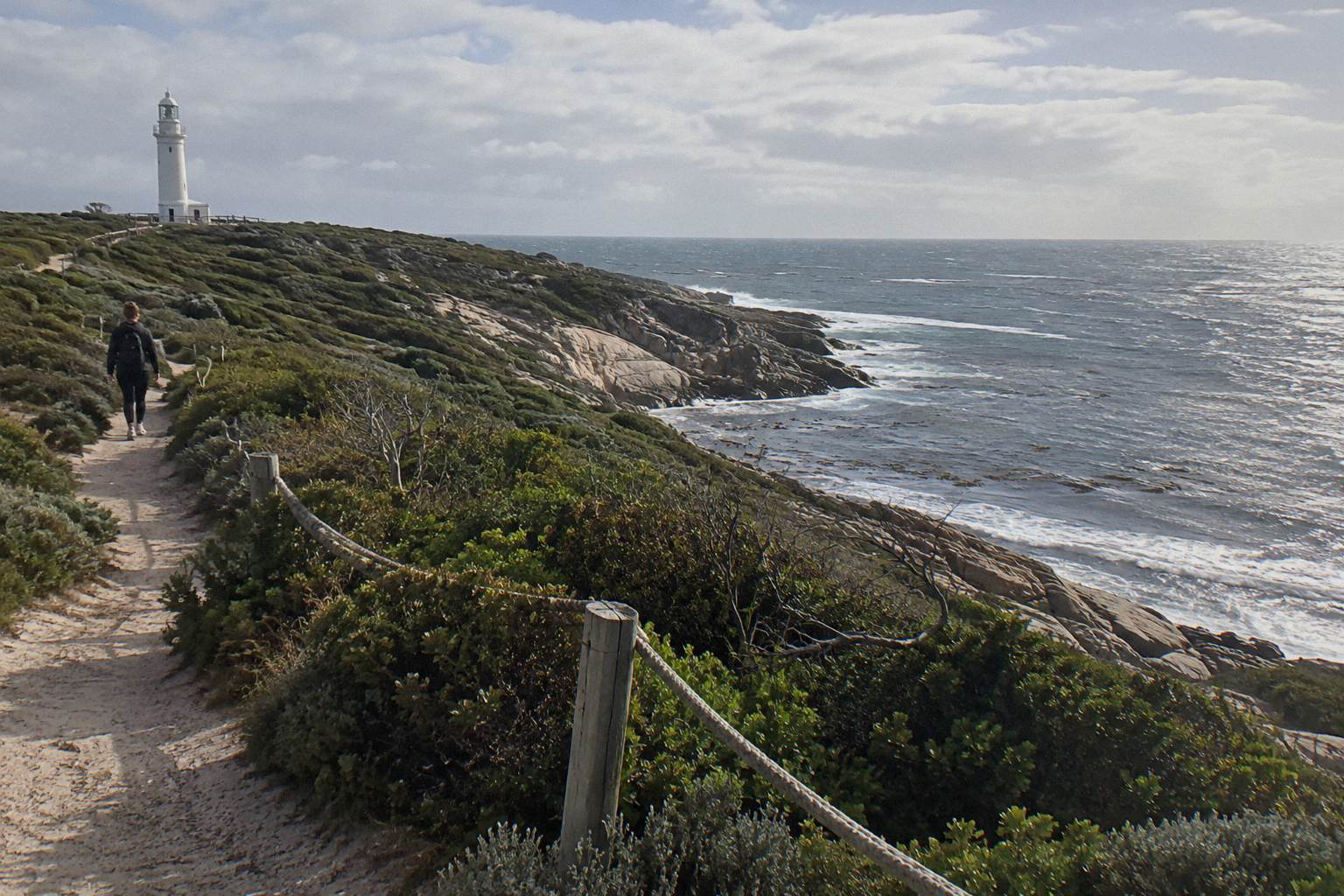
There is also a free, year-round option that costs nothing but time: watching from the shore. The whales from the shore at Cape Naturaliste guide explains where the land-based viewing works, and it pairs naturally with the land-based eco tour above. None of this replaces a boat trip in season, but it beats a wasted day in the off-months.
Do The Rules Around Whales Change By Season?
No. Western Australia's approach-distance rules apply year round, in every season: a person must stay at least 100 m from a whale, and a vessel at least 300 m within a 60 degree arc front or rear, or 100 m to the side. Drones must stay 60 m away. Breaking these distances is an offence carrying a fine of AUD 5,000.
Seasons change the whales' behaviour, not the law. The rules sit in the Biodiversity Conservation Regulations 2018, Part 5 Division 2, regulations 110 to 114 and Schedule 5 Division 1, and the official text is published by the WA legislation office. Regulation 114 adds a detail worth knowing: if a whale approaches a vessel inside the distance, the person in charge must put the vessel in neutral or switch off, or move away at no more than 6 knots until the distance is restored. In November, when curious calves are resting in the bay, that is exactly the situation a licensed cruise crew manages.
The rules also explain why this article, and this site, never offers a swim-with-whales option. The Department of Biodiversity, Conservation and Attractions states that it is illegal for individuals to swim within 100 m of a whale, and licensed in-water humpback interactions happen only in Ningaloo Marine Park State waters and the Muiron Islands Marine Management Area. No tour covered here offers one. The details are unpacked in can you swim with humpback whales in Western Australia.
A Note On How The Law Treats Boats That Keep A Distance
The operator side of this is quieter than the legal text. Naturaliste Charters says only that its vessels keep "a specific distance" and prints no figure. The numbers above are the law's, attributed to the regulations, not an operator promise. How close whales actually come of their own accord is a different question, covered in how close can whale cruise boats legally get.
How Long Is A Cruise Inside The Migration Window?
The Dunsborough Whale Watching Tour With Naturaliste Charters is listed at 2.5 hours on its booking page, and the operator describes a cruise of about 2 hours where you should allow up to 3 hours depending on wildlife sightings. All Sea Charters says approximately 2.5 to 3 hours for its Dunsborough trip, with its booking page listing 2 to 2.5 hours.
Those numbers matter for planning because the season does not run on your schedule, it runs on theirs. When whales are active near the boat, a cruise stretches toward the top of the operator's stated range. When sightings take longer to find, the crew uses the full window rather than turning back early. Budget the better part of a morning or afternoon, not a tight two-hour slot between lunch bookings.
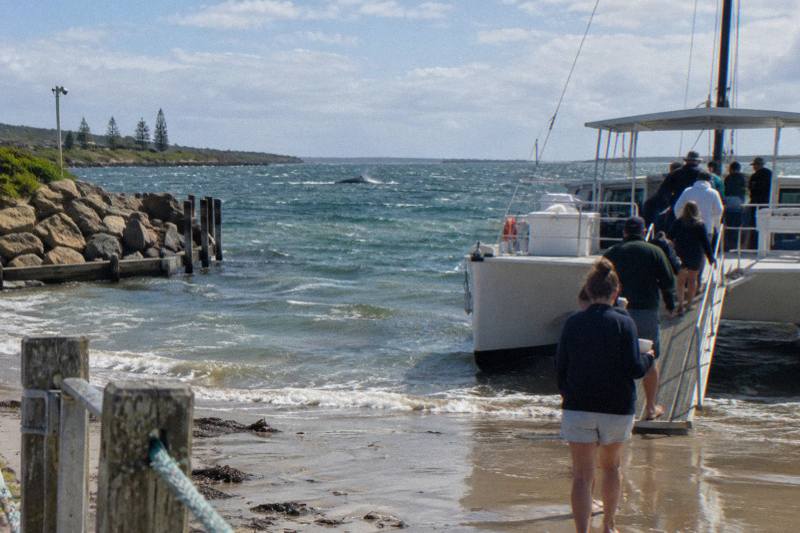
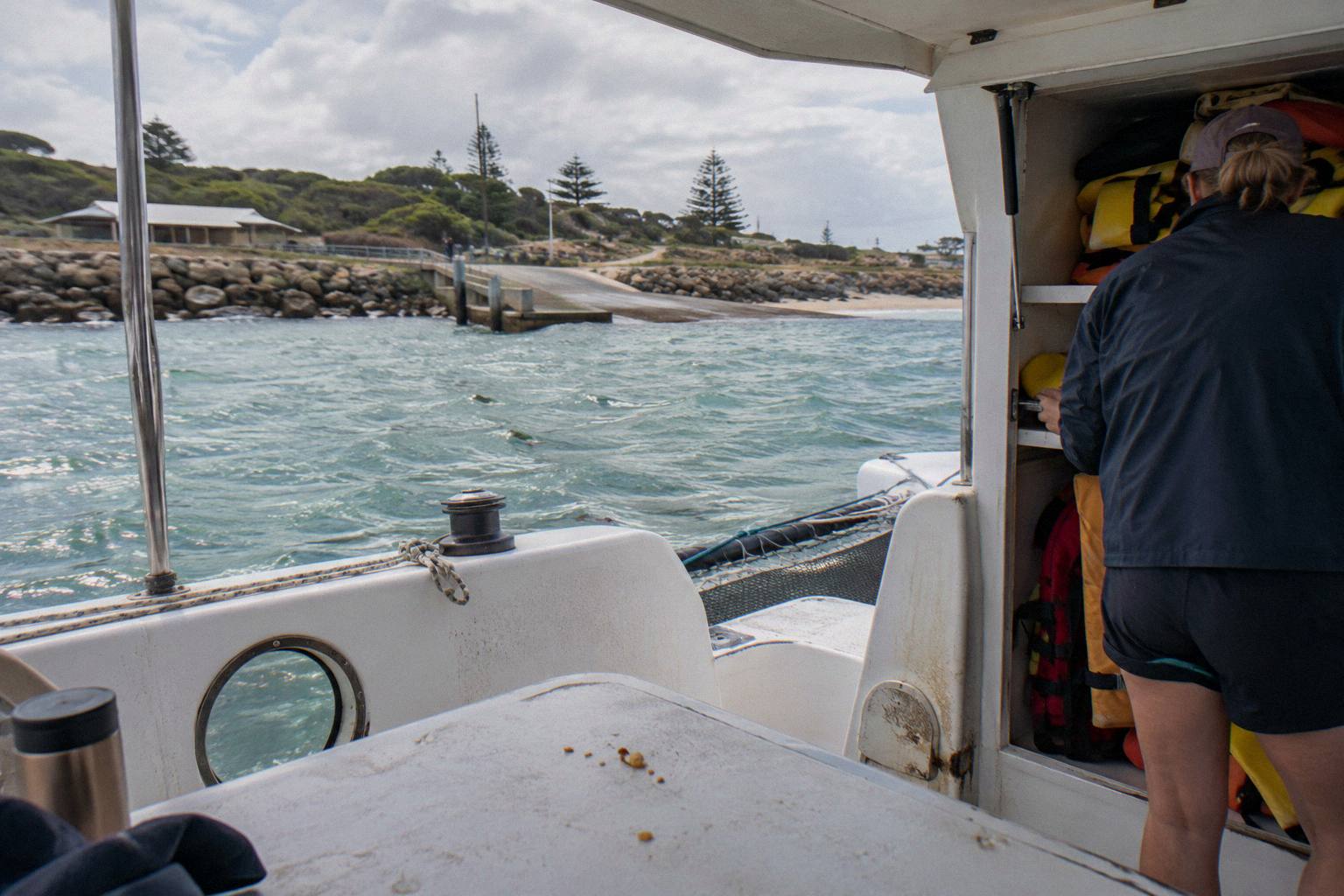
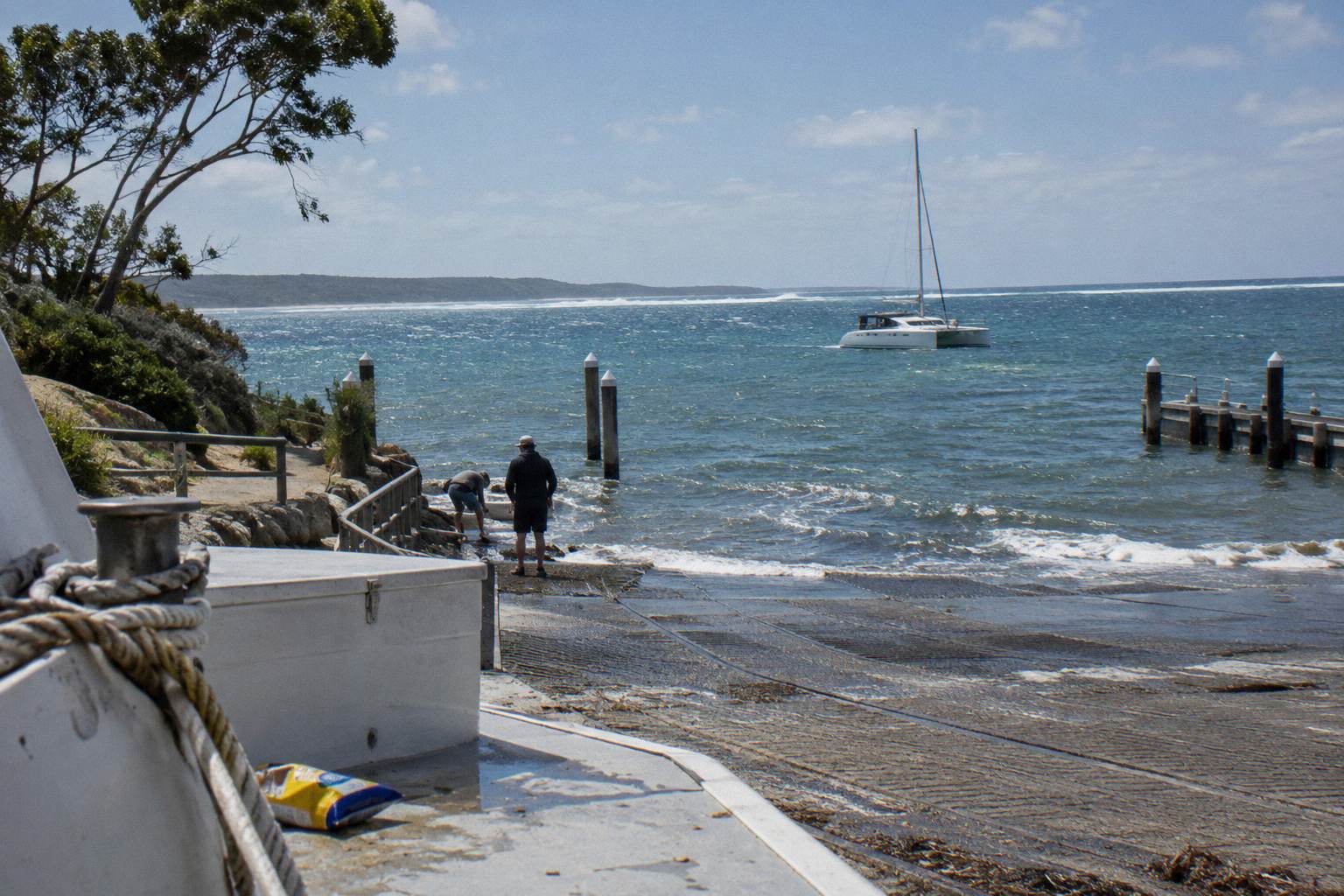
Departure logistics are worth folding into the same calculation. Naturaliste Charters departs from the Professional Fisherman's Boat Ramp opposite 306 Geographe Bay Road in Quindalup, roughly 5 km east of Dunsborough town, and asks guests to arrive 15 to 30 minutes before departure. Boarding is from the beach: guests walk a handrailed ramp onto the Indi Maree, then transfer to the larger Alison Maree, a 23 m catamaran. Guests with limited mobility may need further assistance, and the booking page says the tour is not suitable for mobility impairments. All Sea Charters departs from Geographe Bay Road in Dunsborough, but the exact ramp and clock times are not published on its page, so confirm those details when booking.
How Should You Actually Time A Trip Around This?
Pick September or October for the broadest humpback window, November for mothers and calves resting in the bay, and mid-August onward if your dates are fixed to late winter. Book a cruise with 24-hour free cancellation, and keep at least one spare day in town so weather cannot erase your only chance. Both Dunsborough operators run daily through the season.
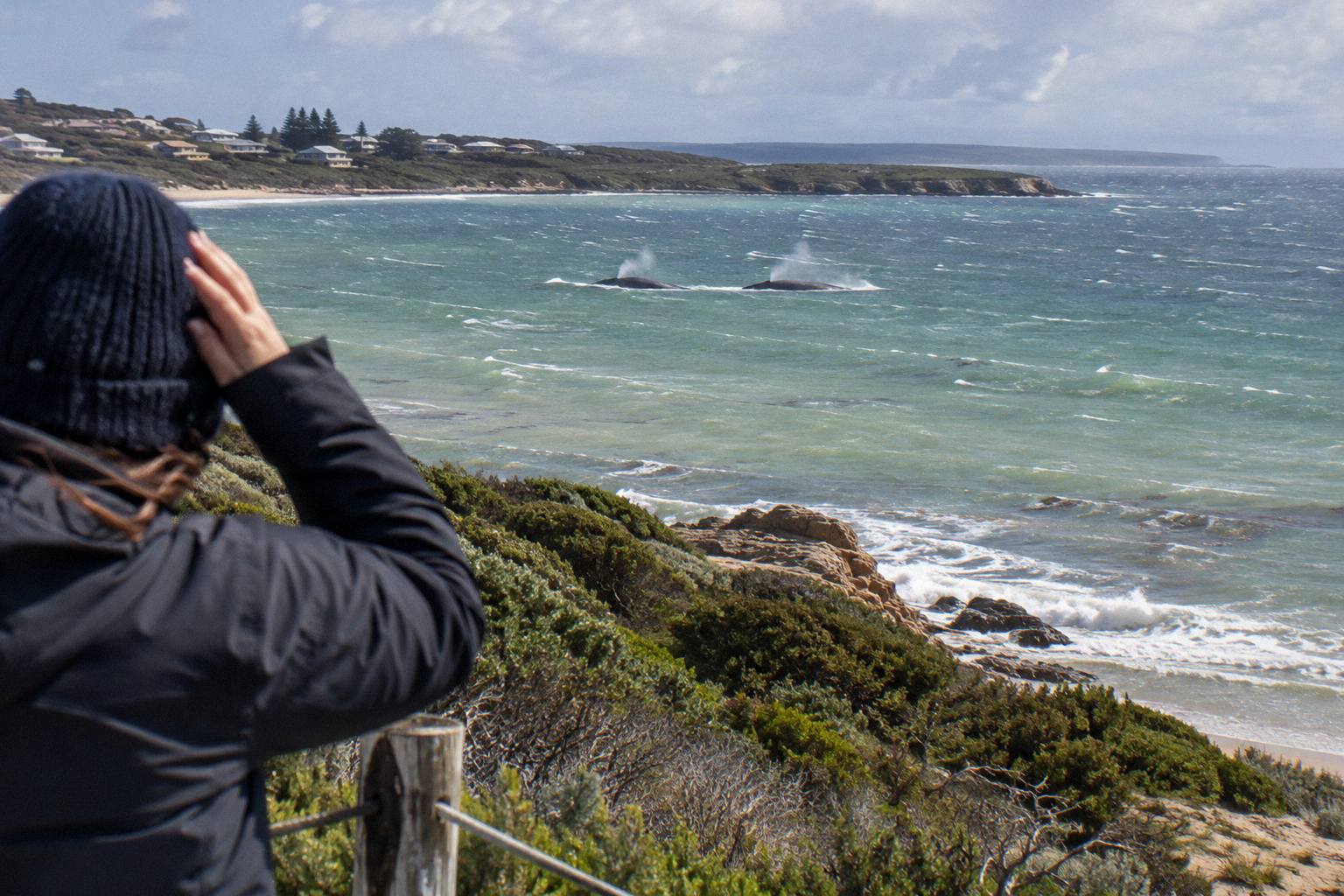
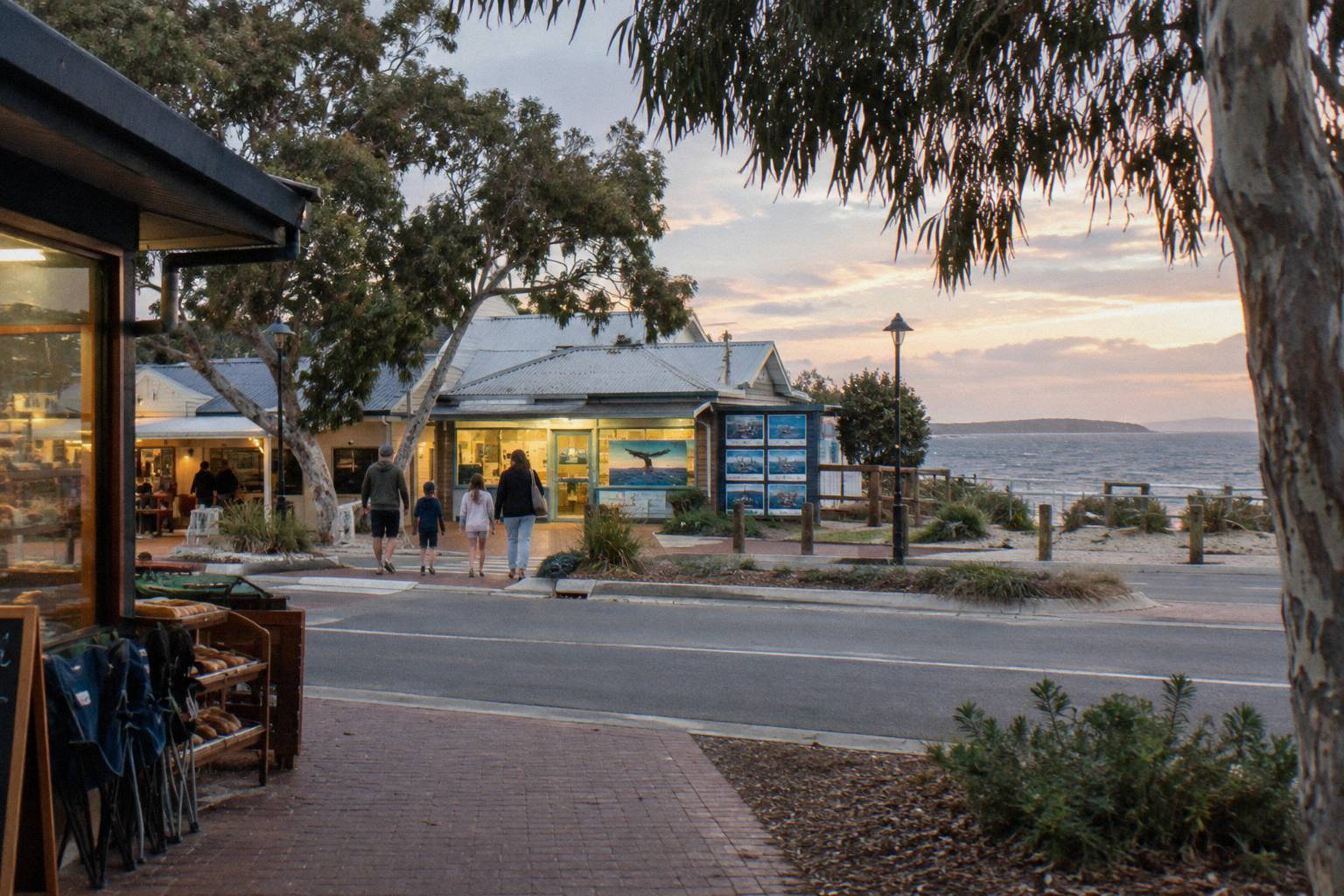
Timing a whale trip is not the same as timing a restaurant. The whales are moving on their own schedule across a months-long window, and your job is to place yourself inside that window with as much slack as possible. Two levers matter most. First, month: inside the September-to-November overlap, with October the month when the operators begin naming the widest mix of species. Second, redundancy: a spare day, so one rough sea state does not end the attempt. The best time of day for a whale cruise in Geographe Bay guide handles the within-day version of the same question.
Weather deserves a sentence of realism. The Bureau of Meteorology's Cape Naturaliste station records mean maximum temperatures rising from 16.6 °C in August to 21.6 °C in November, with mean rainfall falling from 113.0 mm in August to 25.3 mm in November. Late season is warmer and drier, and the BOM climate averages for the Cape Naturaliste station are the primary source for those figures. Pack layers regardless; the advice on what to wear on a whale cruise in Western Australia exists for good reason. Sea state matters as much as rain, and anyone prone to motion sickness should read the guidance in seasickness on a Geographe Bay whale cruise before locking in a date, because a spring swell can turn a good sighting day into a hard two hours.
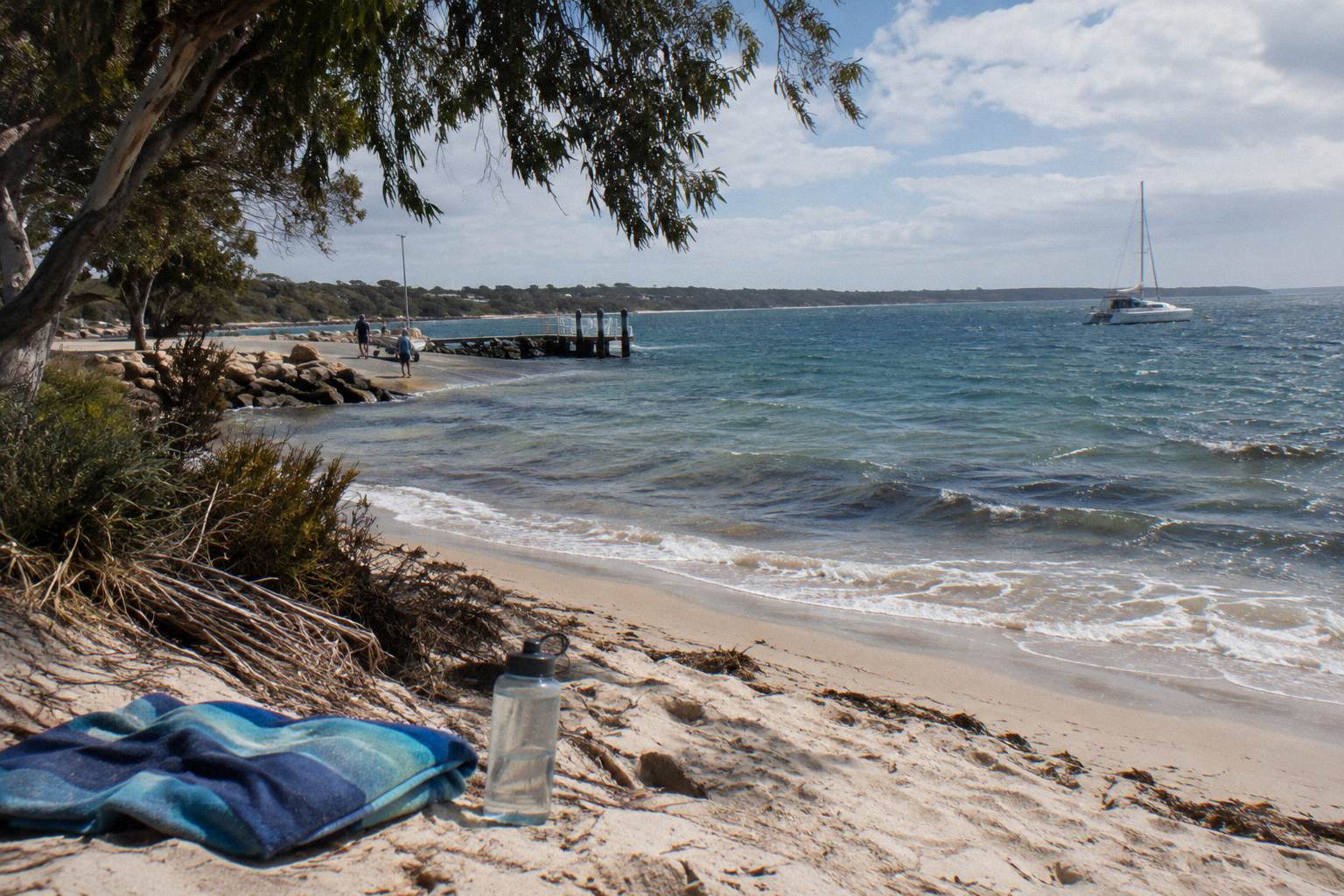
For everything else that sits around the calendar question, whether booking ahead matters and what a cruise actually costs, the deeper planning detail lives in do you need to book a whale cruise in advance and what a whale cruise costs from Dunsborough. This site, Dunsborough Whale Watching, keeps the whole season framework in one place, updated as operator wording changes.
Common Questions About Humpback Migration Timing
What Time Of Year Do Humpback Whales Migrate Past Dunsborough?
From about mid-August to the end of November. Naturaliste Charters describes its Dunsborough season as mid-August to the end of November; All Sea Charters says mid August to early December, with September to early November as the main window. The DBCA notes humpbacks begin their southern migration in this period.
Are Whales In Dunsborough All Year Round?
No. The Dunsborough cruise season runs roughly August to the end of November, and All Sea Charters extends to early December. Between December and April no whale cruise operates from Geographe Bay, though eco boat trips and shore-based coastal tours continue.
Which Month Is Best For Seeing Mothers And Calves?
November is the month most associated with humpback mothers and calves resting in Geographe Bay on the southward return. Operators describe cow-and-calf pairs pausing in the bay through spring, and the season closes about the end of November.
Can You See Blue Whales From Dunsborough?
Blue whales pass through Geographe Bay in spring, mostly from October to December. Naturaliste Charters names them from October onwards and All Sea Charters describes them as occasional. Habitat research confirms the bay is a transit corridor for the Endangered pygmy blue whale.
Is Augusta Or Dunsborough Better In June?
Augusta. Its season runs May to mid-August, while Dunsborough does not start until about mid-August. A June trip should point to Augusta Boat Harbour; a October trip should point to Geographe Bay.